Films People Pull a Fast One Night Beat Reading Room On TV Shop
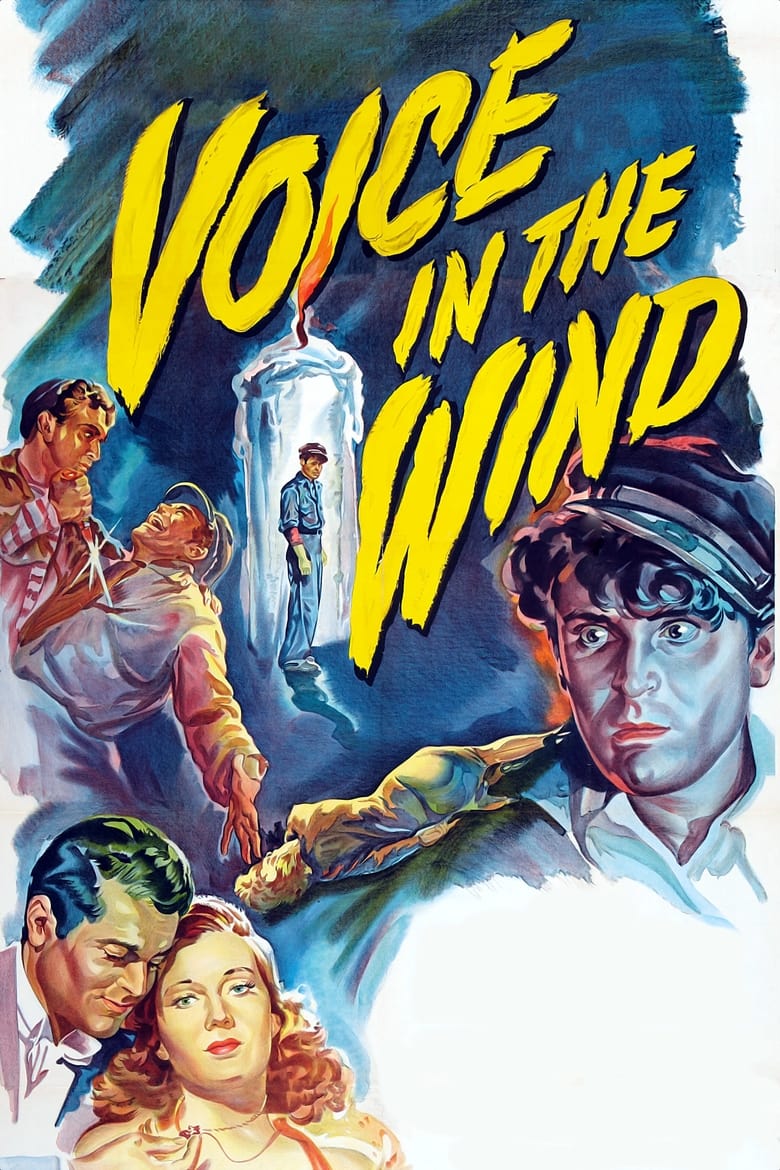
Voice in the Wind 1944
1944 Arthur Ripley-Rudolph Monter Productions
★★★☆☆ Notable
Film Noir · 85 minutes · Black & White

Voice in the Wind

Directed by Arthur Ripley
Year 1944
Runtime 85 min
Studio Arthur Ripley-Rudolph Monter Productions
TMDB 5.5 / 10
"A man without a name carries the weight of everything he was."

Jan Volny is a celebrated Czech concert pianist whose life fractures under Nazi occupation. Forced to perform for his oppressors and witness the destruction of those he loves, he breaks under the pressure – his mind retreating into a dissociative fugue that leaves him stripped of identity and adrift. When we first encounter him on the island of Guadalupe, he is known only as El Hombre, a hollow, silent figure employed at a small café, his past buried beneath layers of psychological damage.

The arrival of Marya, a woman from his former life in Prague, disturbs the equilibrium of his amnesia. She recognizes him; he does not recognize her. Around them gather a cast of displaced and compromised figures – the opportunistic Luigi, the watchful Angelo, the haunted Dr. Hoffman – each carrying their own freight of exile and complicity. Marya's determination to reach Jan is complicated by men who would use her to their own ends, and by the possibility that the man she knew may no longer exist.

Voice in the Wind belongs to a strand of wartime noir concerned less with crime than with psychological devastation – the self as casualty of history. The film uses the genre's formal vocabulary of shadow and dislocation to explore what occupation, collaboration, and loss can do to a person's inner coherence. Its concerns are more European than American, and its melancholy is earned rather than atmospheric, grounding the thriller mechanics in something closer to elegy.
Classic Noir

Arthur Ripley was never a prolific director, and Voice in the Wind reflects both the advantages and limitations of a filmmaker working at the margins of the studio system. Made independently in 1944, the film is shaped by the wartime European émigré sensibility that runs through so much American noir of the period – Lederer, Gurie, Bromberg, Granach, and Naish collectively bring an undertow of genuine displacement to material that might otherwise feel contrived. Michel Michelet's score, heavily inflected with classical piano, is not incidental decoration but structural argument: music is what Jan Volny was, and its return is the film's central dramatic mechanism. Ripley's pacing is deliberate, occasionally to the point of inertia, but the film earns its slowness by treating amnesia not as a plot device but as a condition with specific texture. In the broader context of 1940s noir, Voice in the Wind sits usefully beside the cycle of films – Hollow Triumph, Jealousy, The Chase – in which identity is not a given but a problem, and psychological collapse carries the weight that gunfire carries elsewhere.

– Classic Noir
3 ★★★☆☆ Notable
Credits

The Crew

DirectorArthur Ripley
ScreenplayFriedrich Torberg
MusicMichel Michelet
EditingHolbrook N. Todd
Art DirectionRudi Feld
ProducerRudolph Monter
Performances

The Cast

Close Reading

The Signature Scene

Voice in the Wind – scene
The Café, Night Piano Heard Through Glass

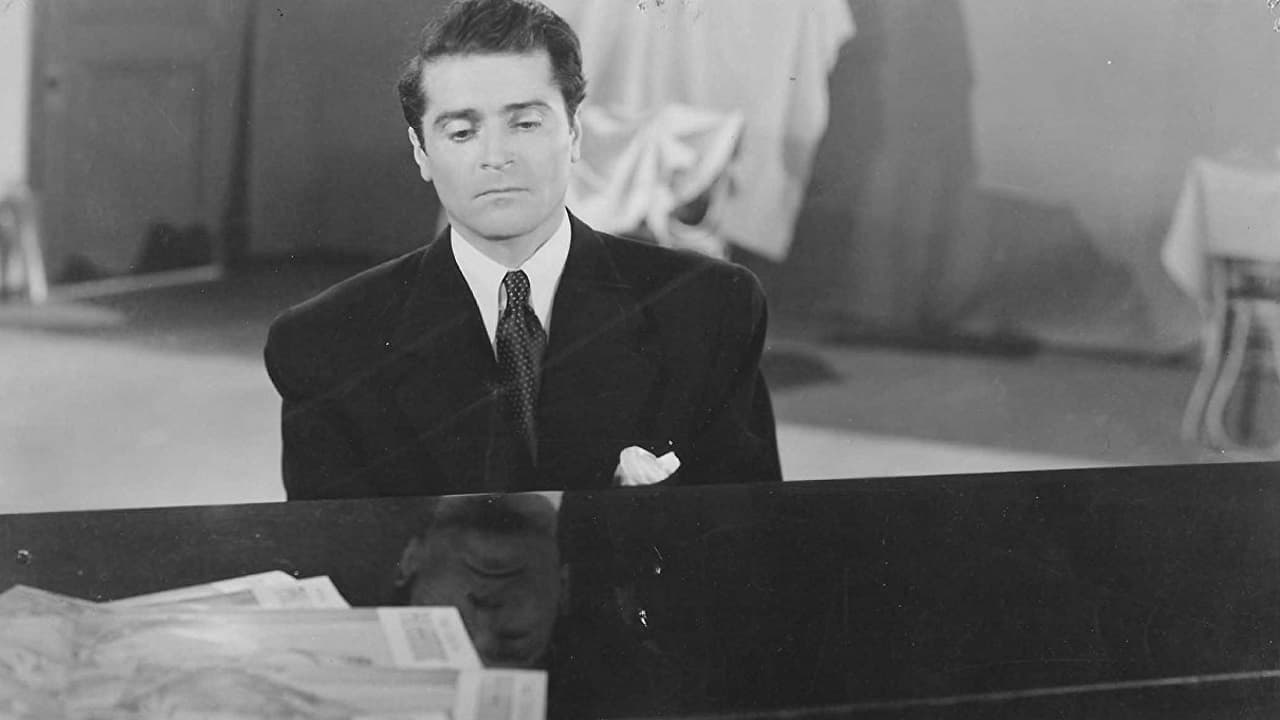
Marya stands outside the café, separated from Jan by a pane of glass that the camera holds as both barrier and mirror. The light inside falls on Jan at the keyboard – a single overhead source that isolates him in a pool of warm yellow against the surrounding dark, leaving his face in partial shadow when he looks up. The frame holds her in cool exterior darkness, his reflection ghosting across her face. Ripley does not cut; the sustained single shot forces the viewer to inhabit her position, watching a man who does not know he is being watched.

The scene crystallizes the film's central problem: recognition that cannot be reciprocated. Marya sees Jan; Jan sees nothing of what she sees. The glass is not merely compositional – it figures the membrane between his former self and his present vacancy, between the life they shared and the erasure that occupation imposed. That the piano is the instrument of this almost-recognition locates identity in the body's memory rather than the mind's, and gives the film its most precise statement of what it has lost and what it is mourning.

Visual Language

The Cinematography

🎞️
Director of Photography – Director of Photography

The cinematographer of Voice in the Wind remains unconfirmed in reliable sources, a gap that is itself telling – independent productions of this period often worked with uncredited or contract technicians whose contributions went undocumented. What the film's visual record reveals is a consistent preference for low-key interiors, with single-source practical lighting used to carve figures out of otherwise undifferentiated dark. The Guadalupe café settings have a studio flatness that the lighting partially overcomes by concentrating attention on faces rather than environments. Shadow work is most assured in the scenes involving Jan's psychological episodes, where pools of darkness encroach on the frame in ways that literalize mental fragmentation. Exterior shots are sparse and functional. The overall visual register is less expressionist than it is austerely diagnostic – the camera observes rather than distorts, which suits a film whose argument is that psychological damage looks ordinary from the outside and catastrophic from within.

In the Catalogue

Themes & Motifs

Availability

Where to Watch

Also in the Directory

See Also