Films People Pull a Fast One Night Beat Reading Room On TV Shop
Jealousy 1953
1953 Excelsa Film
★★★☆☆ Notable
Film Noir · 86 minutes · Black & White

Jealousy

Directed by Pietro Germi
Year 1953
Runtime 86 min
Studio Excelsa Film
TMDB 6.4 / 10
"Possession hardens into obsession, and obsession into something darker still."

In rural Sicily, the Marchese di Roccaverdina is a landowner whose authority over his estate is absolute – or so he believes. When Agrippina, a woman bound to him by dependency and desire, moves beyond his reach, the Marchese finds that the control he has exerted over his land and his people extends no further than his own volatile temperament. Pietro Germi's adaptation of Luigi Capuana's novel situates its drama in a landscape of baked earth and rigid social hierarchy, where class and custom function as a kind of fatalism.

Don Silvio, a local priest, and Contessina Zosima represent the social world that closes around the Marchese like a verdict. The women in his orbit – Agrippina, Santa, the formidable Mamma Grazia – are not passive figures but agents whose choices accelerate his unraveling. As the Marchese's jealousy curdles into paranoia, the film traces the widening gap between the man he believes himself to be and the man his actions reveal.

Germi positions the film at an intersection of Italian neorealism and the psychological crime drama, drawing on the Sicilian verismo tradition while inflecting it with the moral architecture of noir. The guilt that accumulates here is not merely legal but existential – a weight the protagonist carries through a community that watches, waits, and ultimately judges.
Classic Noir

Germi made Jealousy at a pivotal moment in postwar Italian cinema, when the neorealist impulse was beginning to absorb genre conventions rather than reject them. The result is a film that refuses easy categorization: it has the surface texture of regional social drama but the interior logic of noir, where a man's ruin is engineered not by external conspiracy but by the mechanisms of his own character. The Sicilian setting is not exotic decoration; it is structurally necessary, supplying a code of honor and shame that the Marchese's behavior violates and then desperately tries to conceal. Erno Crisa brings a tightly controlled rigidity to the role that serves the material well – this is a man whose collapse is all the more legible because he works so hard to suppress it. The film occupies a modest but genuine place in the broader Italian noir tradition, sitting between the raw urgency of Visconti's Ossessione and the more stylized productions that would follow in the decade ahead.

– Classic Noir
3 ★★★☆☆ Notable
Credits

The Crew

DirectorPietro Germi
ScreenplayGiuseppe Berto
CinematographyLeonida Barboni
MusicCarlo Rustichelli
EditingRolando Benedetti
CostumesCarlo Egidi
Performances

The Cast

Close Reading

The Signature Scene

Jealousy – scene
The Marchese Alone at Dusk Shadow Across the Threshold

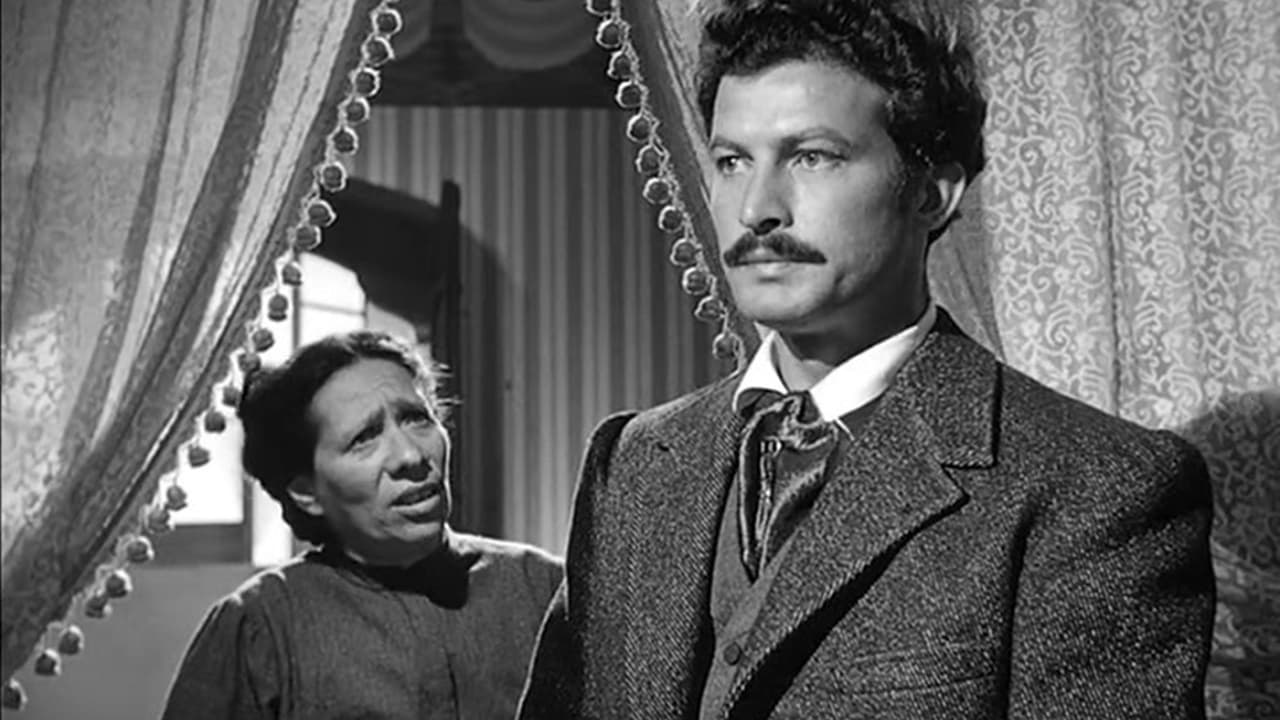
Germi and cinematographer Leonida Barboni compose the shot from a low angle, placing the Marchese in the doorway of the estate with the last light falling obliquely across the threshold. The interior is dark; the exterior carries a flat, exhausted brightness. The frame is divided – not symmetrically, but with the weight of the darkness pulling inward. The camera holds, refusing to cut away, letting the architecture do the work that dialogue has already finished.

The scene condenses the film's central argument: the Marchese stands at the boundary between the social role he inhabits and the psychological state that has consumed him. The doorway is at once a position of dominance – he surveys his land – and a kind of trap. He cannot move forward into the light without being seen for what he is, and he cannot retreat without acknowledging what waits for him in the dark.

Visual Language

The Cinematography

🎞️
Leonida Barboni – Director of Photography

Leonida Barboni brings to Jealousy a disciplined economy that suits Germi's refusal of melodramatic excess. Working extensively on location in Sicily, Barboni uses the landscape not as backdrop but as moral environment – the harsh midday light flattening social distinctions even as the narrative insists on their rigidity, and the interiors rendered in shadow ratios that track the Marchese's psychological deterioration. There is little showiness in the lighting setups; Barboni favors a naturalistic base from which he departs only when the drama demands it. Close-ups are reserved for moments of concealment or revelation, the lens moving close enough to register what a character is suppressing rather than what he is saying. The transition from exterior location work to the enclosed studio-like quality of the estate interiors mirrors the protagonist's narrowing world, a visual logic that grounds the film's psychological argument in physical space without calling attention to itself.

In the Catalogue

Themes & Motifs

Availability

Where to Watch

Also in the Directory

See Also