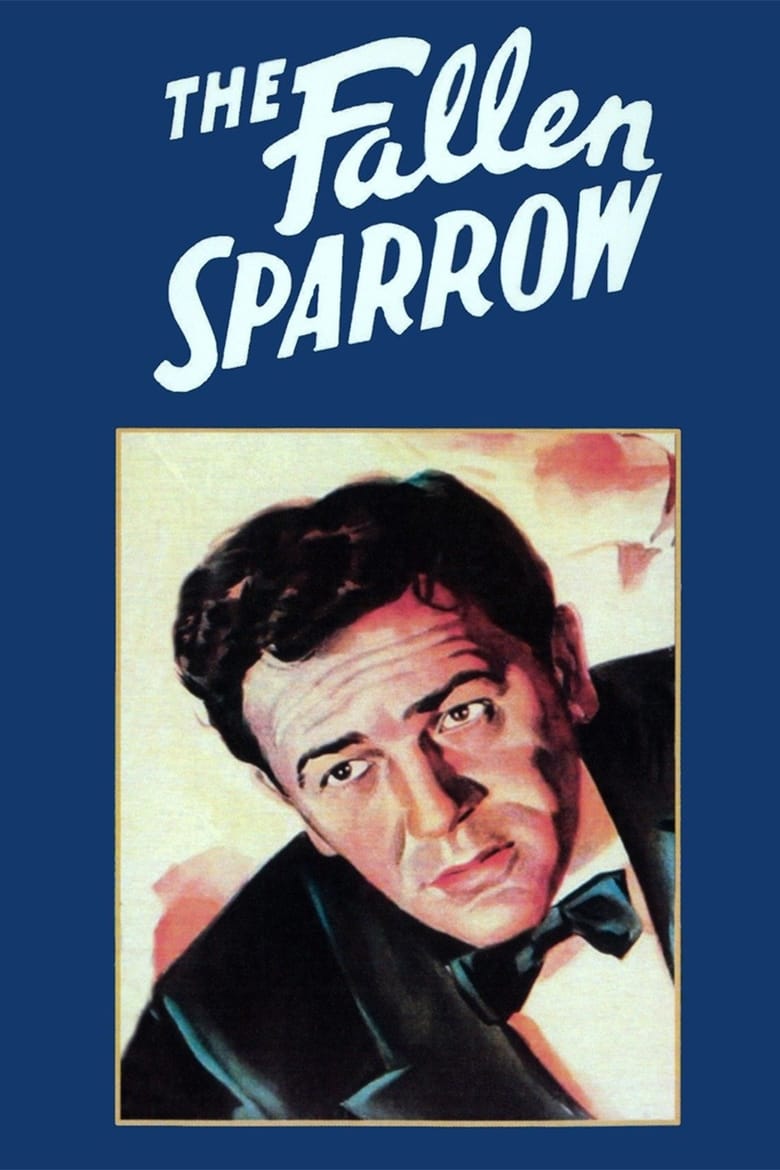
John 'Kit' McKittrick, an American veteran of the Spanish Civil War, returns to New York after years of captivity and psychological torment at the hands of fascist interrogators. Scarred by what was done to him in a Spanish prison – and haunted by a recurring terror that manifests as paralysis in the night – Kit arrives home to find that his old friend and fellow fighter has died under suspicious circumstances. The death is ruled a suicide, but Kit refuses to accept it, drawn into an investigation that pulls him back into the world of displaced Europeans and ideological refugees who populate Manhattan's upper social circles.
Kit's search brings him into contact with Toni Donne, a woman of uncertain loyalties who moves through the same rarefied world, and with Dr. Christian Skaas, a cultivated European with a clubfoot and a manner that conceals more than it explains. The social milieu – cocktail parties, luxury apartments, accented strangers who have reinvented themselves in America – becomes a hall of mirrors in which Kit cannot distinguish ally from enemy. His psychological fragility, deliberately induced by his former captors, is the real weapon being used against him: the enemy does not need to kill him if they can make him doubt his own perceptions.
The Fallen Sparrow belongs to a cycle of wartime noirs in which the enemy is not the criminal underworld but the ideological residue of European fascism transplanted to American soil. The film is less interested in procedural detection than in the interior state of a man who has been systematically unmade and must reconstitute himself under pressure. It uses the conventions of the thriller – pursuit, deception, the femme fatale – to explore what trauma does to identity, and what it costs to resist an adversary who has already been inside your mind.
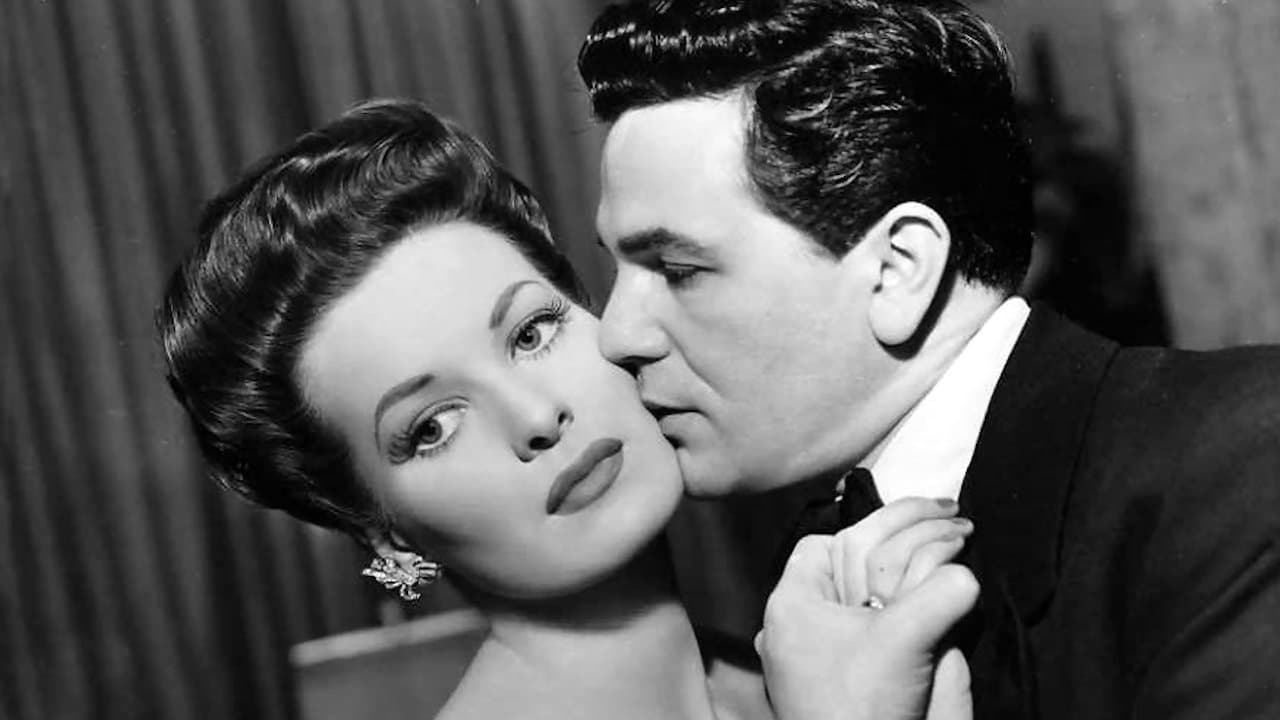
The Fallen Sparrow arrives in 1943 as one of the more psychologically specific noirs of the wartime period, adapting Dorothy B. Hughes's novel with fidelity to its central concern: the long aftermath of political torture. John Garfield brings genuine interior damage to Kit McKittrick, a performance grounded in physical restraint rather than melodramatic display. Walter Slezak's Dr. Skaas is among the era's more persuasive screen villains – educated, ironic, patient – and the film is shrewd enough to make his menace intellectual rather than brutal. Where the film falls short of its ambitions is in the management of its female characters, whose motivations are subordinated to the requirements of plot mechanism rather than developed with the same care given to Kit's psychology. Richard Wallace's direction is competent without being distinctive, and the film occasionally loses tonal coherence when it drifts toward conventional thriller plotting. What it achieves nonetheless is a serious engagement with the idea that fascism's damage to individuals persists beyond the political moment – a concern directly legible to its original audience.
– Classic Noir
Kit lies in bed in his darkened hotel room, the frame composed so that the ceiling presses low and the walls offer little lateral relief. Nicholas Musuraca holds the camera close and nearly still, the light reduced to a single source that catches Garfield's face in partial profile. When the sound begins – a rhythmic dragging, the noise that conditioned terror during Kit's imprisonment – the camera does not cut away to find a source. It stays on the face, registering the physiological onset of fear: the stiffening, the labored breath, the eyes fixed on nothing. The shadow work here is not decorative; it is the visual equivalent of a mind beginning to lose its grip on the boundary between past and present.
The scene argues, without dialogue, that Kit's real imprisonment is ongoing and internal. His captors understood that a man who has been broken in a particular way will break again along the same fault line when the right stimulus is applied. The film's central dramatic question – whether Kit can function as a rational investigator when his rationality has been deliberately damaged – is posed here in purely visual terms. The noir convention of the threatened protagonist is given a psychological dimension that most contemporaneous thrillers do not attempt.
Nicholas Musuraca, whose work on Cat People and Out of the Past established him as one of RKO's most resourceful cinematographers, brings a disciplined economy to The Fallen Sparrow that serves the story's moral logic directly. Working on studio-built interiors that simulate both New York apartments and the remembered geography of a Spanish prison cell, Musuraca favors deep shadow with controlled fall-off rather than the expressionist extremes sometimes associated with the period. His lighting setups for Garfield isolate the actor within the frame, using pools of light that define a perimeter beyond which threat is merely implied. The choice to keep many of Kit's terror sequences in near-darkness – resisting the temptation to illustrate what frightens him – is a cinematographic decision that reinforces the film's thematic argument about the unseeable nature of psychological damage. Wide-angle compositions in the social scenes flatten the depth of the frame, making the European exile milieu feel airless and watched, an environment where spatial openness offers no safety.
The most reliable current home for the film, presented without the compression artifacts that affect many streaming transfers of RKO titles from this period.
TCMBroadcast / Streaming via MaxTCM airs the film periodically as part of its wartime noir programming; check the schedule or the Max platform for on-demand availability.
Archive.orgFreePublic domain copies circulate here with variable image quality – adequate for research purposes but not a preferred viewing experience.