When Joyce Willecombe, a secretary traveling by train, notices two suspicious passengers carrying concealed weapons, she reports them to the police at Union Station in Los Angeles. Lt. William Calhoun of the railroad police takes her account seriously, and what begins as a routine security matter quickly resolves into a kidnapping investigation. The victim is Lorna Murchison, the blind daughter of a wealthy industrialist, snatched for ransom and now hidden somewhere in the labyrinthine infrastructure beneath and around the station itself.
The kidnapper, Joe Beacom, is a cold and methodical criminal who operates without sentiment. His associate, Marge Wrighter, occupies an uneasy position between complicity and self-preservation, her loyalty contingent on survival rather than affection. Inspector Donnelly, Calhoun's superior, coordinates a widening dragnet while Calhoun pursues the case with a focus that edges toward the personal. The station – its crowds, its noise, its ceaseless movement – functions less as a backdrop than as a structural problem: the quarry can vanish into plain sight at any moment.
Union Station belongs to a cycle of procedural noirs that emerged in the late 1940s, films more interested in institutional method than in individual psychology. The ransom deadline tightens over the film's compact runtime, and the machinery of law enforcement is shown as capable but never infallible. The film's central question is not whether the guilty will be caught but whether the innocent will survive long enough to matter.
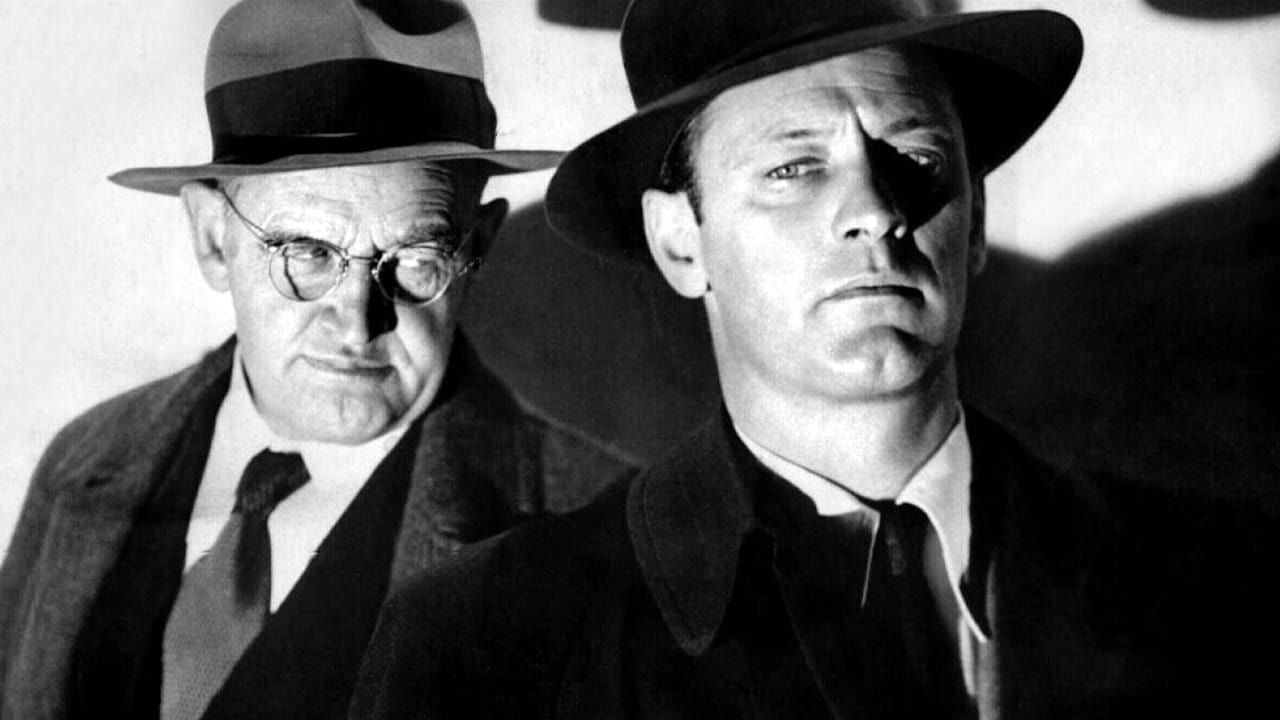
Union Station arrives in the same year as Rudolph Maté's D.O.A., and while the latter has claimed the larger share of critical attention, this film merits serious consideration on its own terms. Maté works the semi-documentary mode that Paramount and other studios had been refining since the mid-1940s – on-location shooting, procedural rhythm, a studied restraint in the performances – and he uses the actual Los Angeles Union Station with enough spatial intelligence that the building becomes a genuine dramatic variable rather than mere production value. William Holden, between Sunset Blvd. and Stalag 17, plays a professional rather than a protagonist burdened by fate, and the film is disciplined enough not to inflate his role beyond what the story requires. Lyle Bettger's Beacom is noteworthy for exactly what he withholds: menace without theatricality. The film is most revealing about its era in its faith in coordinated institutional response, a postwar confidence in systems that noir would steadily erode across the decade.
– Classic Noir
Maté and cinematographer Daniel L. Fapp descend into the holding pens beneath Union Station for a chase sequence that abandons the film's procedural composure in favor of something rawer. The light sources are industrial – bare overhead fixtures that throw hard pools downward, leaving the spaces between cattle pens in near-total shadow. Fapp's camera works at a low angle in tight corridors, compressing the frame so that escape routes appear to close even as they are taken. The cattle themselves become visual noise, bodies shifting unpredictably at the edges of the image.
The sequence locates the film's moral argument in physical space. The station above is ordered, surveilled, governed by timetables and public order; the pens below are chaotic, ungoverned, defined by confinement and animal fear. That the climactic confrontation between law and criminal should occur here rather than in the concourse above suggests what the film understands about where violence actually lives – not in the visible, managed world of institutions, but in the infrastructure those institutions prefer not to examine.
Daniel L. Fapp shoots Union Station with the disciplined realism that semi-documentary noir demanded, but he is not merely dutiful. Working extensively on location at the actual Los Angeles terminal, Fapp exploits the station's architectural contrasts – the grand, light-filled public spaces and the compressed, shadow-heavy service corridors – as a visual argument about surveillance and its limits. In the upper concourse, wide lenses and high-key sources establish legibility and institutional confidence; in the basement levels, Fapp narrows the field and drops the exposure, using practical sources to create discontinuous pools of visibility. The transition between these registers is itself expressive, tracking the investigation's movement from procedure into something more contingent. Shadow work in the climactic sequence is unusually specific: cast shadows from pen railings stripe across faces and walls, fragmenting figures in a way that anticipates the moral disorder about to break through the film's procedural surface.
Tubi has carried Union Station in a clean, uncut print and remains the most accessible free option for this title.
Archive.orgFreeA public domain version is available, though print quality varies and should be treated as a fallback rather than a preferred viewing option.
Amazon Prime VideoRentalA digital rental is available for those seeking a more stable presentation than public domain sources typically provide.