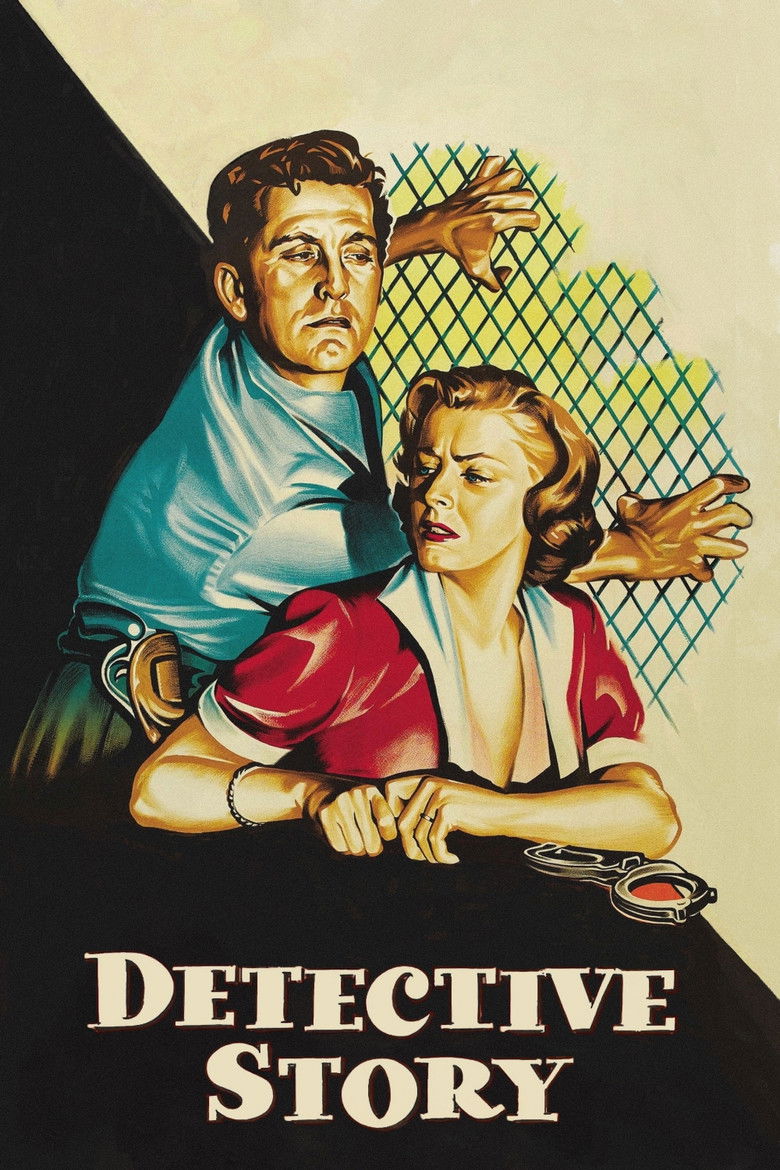
In a single Manhattan detective squad room over the course of one afternoon and evening, Detective James McLeod – rigid, compulsive, and contemptuous of any compromise with the law – processes the ordinary traffic of crime: a petty thief, a pair of amateur burglars, a grieving father. McLeod is the precinct's most effective officer and its most corrosive presence, a man who has made righteousness indistinguishable from cruelty. His commanding officer, Lt. Monaghan, watches McLeod with the wariness of someone who recognises a danger that cannot be disciplined away.
The day turns on the arrival of Dr. Karl Schneider, an abortionist McLeod has pursued for years with something beyond professional diligence. When it emerges that McLeod's own wife, Mary, had dealings with Schneider before their marriage – dealings she concealed from him – the detective's moral architecture begins to crack. The revelation does not soften McLeod; it calcifies him further, forcing Mary into the impossible position of seeking mercy from the one person constitutionally unable to grant it.
Detective Story belongs to a strain of postwar noir that locates corruption not in the underworld but in the enforcer. Adapted from Sidney Kingsley's stage play, the film uses its confined setting as a pressure chamber, compressing questions about guilt, forgiveness, and the violence latent in certainty into a single unrelenting day. The result is a procedural that turns inside out, exposing the detective genre's most uncomfortable question: what happens when the law's instrument is the thing that needs arresting.
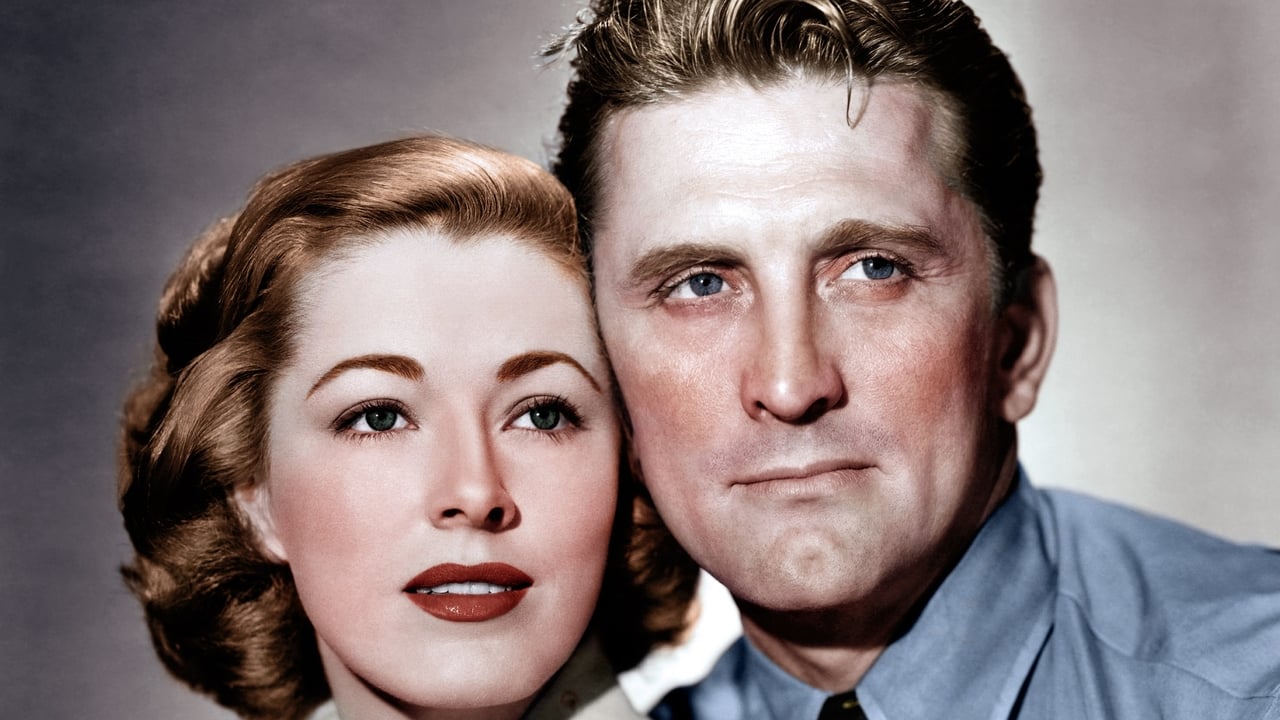
Detective Story occupies an unusual position in the noir cycle – it is studio-bound, adapted from the stage, and largely devoid of the genre's expressionist visual signature, yet it cuts deeper into the pathology of law enforcement than almost any film of its era. William Wyler's strategy is one of accumulation: the precinct fills and empties, cases overlap, minor figures acquire unexpected weight, and McLeod's behaviour grows progressively harder to separate from the criminals he processes. Kirk Douglas gives one of the period's most unsparing performances, making McLeod's rigidity feel less like character flaw than psychic wound. The film's real subject is the Protestant terror of impurity – the man who cannot tolerate contamination in others because he cannot survive the discovery of it in himself. Released in 1951, it registers the postwar moment's anxiety about authority and masculine control without ever becoming allegory. It earns its darkness through specificity.
– Classic Noir
Lee Garmes lights the squad room in flat, institutional terms for most of the film, but in the scene where Mary confronts McLeod with the truth of her past, a single overhead source isolates Eleanor Parker's face against the surrounding activity of the precinct. The camera holds in medium close-up rather than cutting away, denying the viewer the relief of reaction shots. The frame is cluttered with the debris of police work – paperwork, bars, bodies in transit – yet Parker occupies the centre with an absolute stillness that the surrounding noise only amplifies.
The scene makes the argument the whole film has been building: that McLeod's obsession with Schneider is not about justice but about personal contamination, and that Mary has been living inside her husband's judgment without knowing it. Her appeal is not to his love but to his capacity for mercy, and the film's tragic logic turns on the fact that these are not the same thing in McLeod's economy. Garmes keeps the camera close enough that there is nowhere to hide – for Mary, for McLeod, or for the audience watching a marriage disintegrate through the failure of one person to tolerate human imperfection.
Cinematographer Lee Garmes, working with William Wyler on a production that deliberately retained the spatial logic of Sidney Kingsley's stage original, faces a formal problem: how to make a single room cinematically alive for 103 minutes without resorting to artifice. His solution is disciplined restraint. Garmes uses deep-focus compositions that keep multiple planes of action simultaneously legible, allowing background business to comment on foreground drama without cutting. The lighting scheme is largely naturalistic – overhead fluorescents and desk lamps rather than the chiaroscuro expressionism common to the genre – which gives the film a documentary flatness that becomes its own form of pressure. Shadows are not used decoratively; they fall where lights would plausibly fall in a working precinct. This choice aligns the visual language with the film's moral argument: evil here is not shrouded in darkness but conducted in plain institutional light, which proves more disturbing than any shadow play. When Garmes does isolate a face, the effect is earned precisely because the technique has been withheld.
The Criterion Channel's presentation includes the best available transfer and contextual programming that places the film within Wyler's career and the broader postwar noir cycle.
TCMBroadcast/SubscriptionTCM screens Detective Story periodically as part of its classic Hollywood programming; verify current scheduling on the TCM website.
KanopyFree (library card)Kanopy offers free access through participating public libraries and universities; availability of this title varies by institution.