Films People Pull a Fast One Night Beat Reading Room On TV Shop
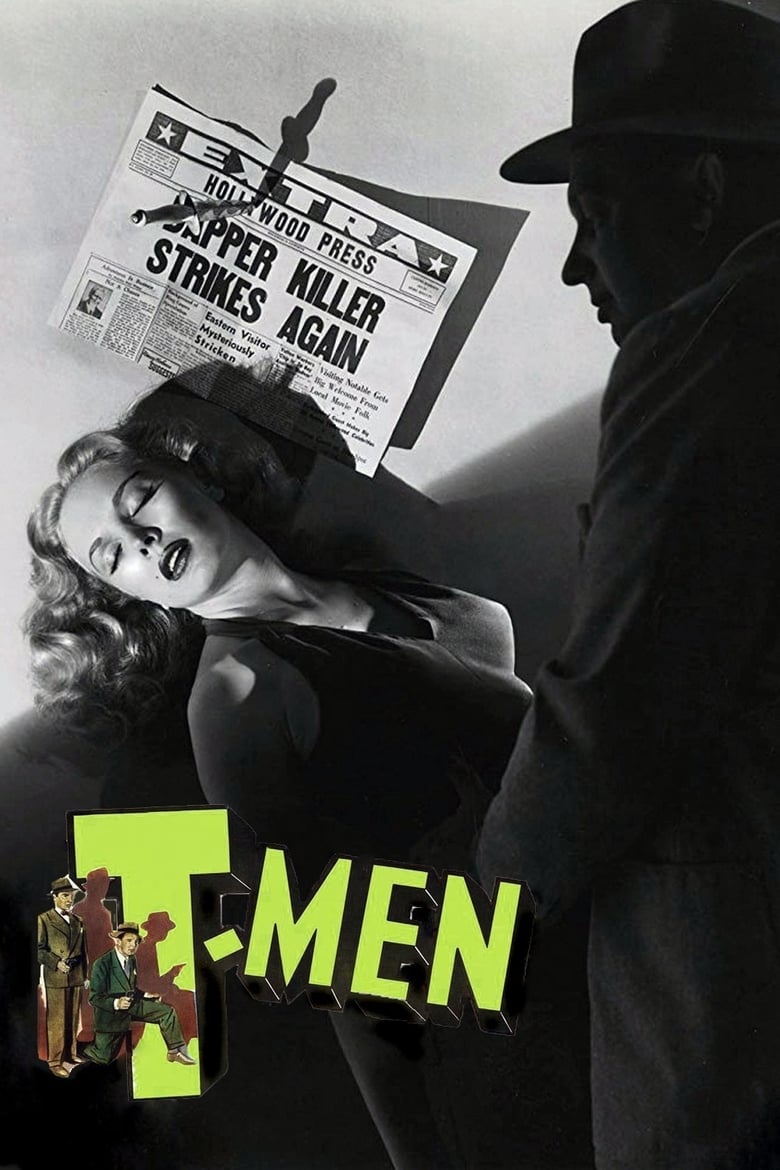
T-Men 1947
1947 Edward Small Productions
★★★☆☆ Notable
Film Noir · 92 minutes · Black & White

T-Men

Directed by Anthony Mann
Year 1947
Runtime 92 min
Studio Edward Small Productions
TMDB 6.8 / 10
"Two federal agents go under so deep that only one may surface."

In postwar America, the Treasury Department dispatches two undercover agents – Dennis O'Brien and Tony Genaro – to infiltrate a sophisticated counterfeiting syndicate operating out of Los Angeles and Detroit. Posing as small-time criminals, the men adopt false identities and sever contact with their former lives, each carrying the knowledge that exposure means death and that the agency will not publicly acknowledge them if they are burned.

As O'Brien and Genaro work their way toward the ring's inner circle, the pressure of sustained deception takes its toll. Tony grows close to a woman connected to the operation, complicating his cover and his judgment, while O'Brien must maintain his criminal persona even as the syndicate commits violence around him. The network's enforcer, Moxie – cold, methodical, and without sentiment – becomes the clearest measure of the danger both men face, a figure whose efficiency makes him more threatening than any amount of bluster.

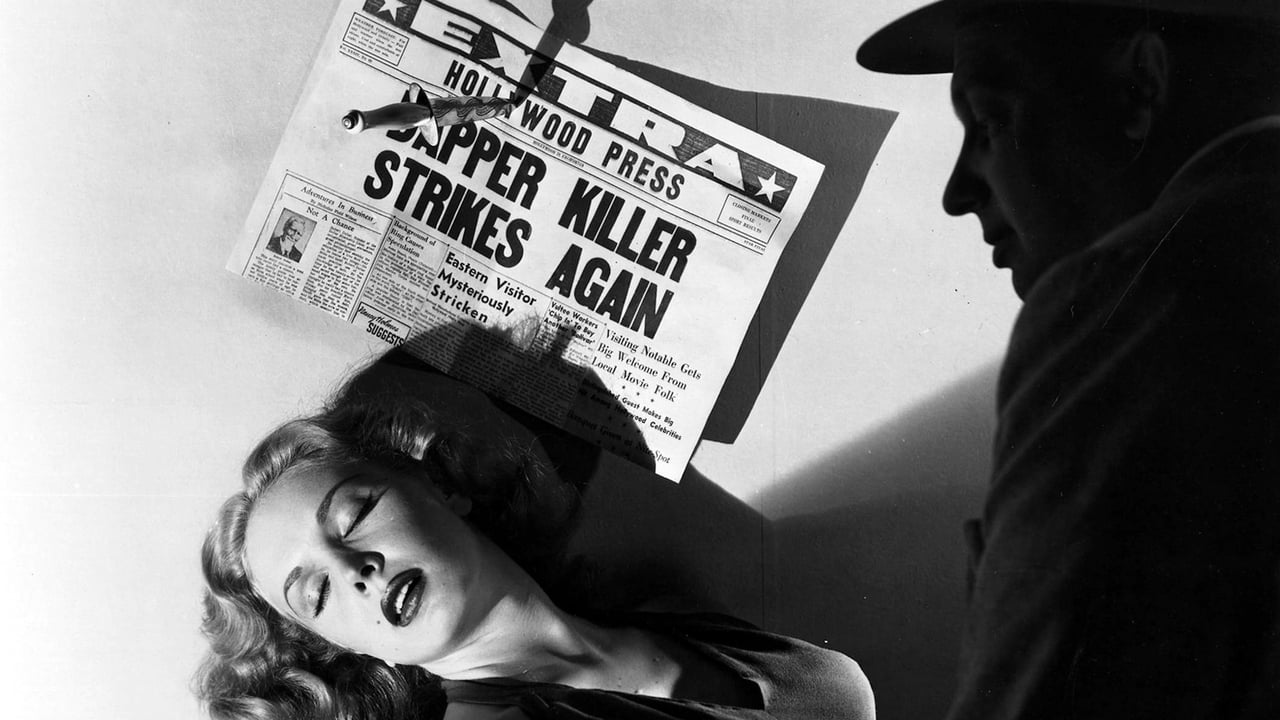
T-Men belongs to the cycle of postwar semi-documentary crime films that dressed procedural realism in noir shadow, using voiceover narration and location footage to assert institutional authority while the cinematography quietly undermined it. The film is less interested in the mechanics of counterfeiting than in what it costs a man to become someone else, and how thin the line is between enforcing the law and inhabiting its opposite.
Classic Noir

Anthony Mann's T-Men arrived in 1947 at the convergence of two competing Hollywood impulses: the semi-documentary form pioneered by The House on 92nd Street and the expressionist shadow-work of full noir. The film is officially a procedural – Treasury agents, forged currency, sanctioned narration – but John Alton's photography refuses the neutrality that form implies. What Mann and Alton produced is a government-endorsed thriller that consistently looks like something the government would rather not see: men dissolved into crime, institutions that protect their agents only in theory, and violence that the procedural framework cannot moralize away. Charles McGraw's Moxie stands as one of the era's more economical portraits of professional menace, and Dennis O'Keefe's performance earns its ambiguity without announcing it. The film does not resolve the tension between its documentary pretensions and its noir instincts – it sustains that tension for ninety-two minutes, which is precisely its achievement.

– Classic Noir
3 ★★★☆☆ Notable
Credits

The Crew

DirectorAnthony Mann
ScreenplayJohn C. Higgins
CinematographyJohn Alton
MusicPaul Sawtell
EditingFred Allen
Art DirectionEdward C. Jewell
ProducerAubrey Schenck
Performances

The Cast

Close Reading

The Signature Scene

T-Men – scene
The Bathhouse Steam Closes Over Everything

Alton shoots the bathhouse sequence in near-abstract terms: clouds of steam diffuse the light source until figures become silhouettes and geometry replaces geography. The frame refuses to establish the space in any stable way – walls appear and dissolve, bodies emerge from white fog and recede back into it. The camera holds at distances that deny the viewer the comfort of close identification, and the sound design amplifies the hiss of steam until it functions as a kind of pressure applied to the scene itself.

The sequence works as the film's moral center precisely because it removes moral legibility. An agent watches a man die, cannot intervene without destroying his cover, and the steam closes over the fact as though it never occurred. Mann frames institutional loyalty and individual conscience not as a conflict that resolves but as a condition of the work – the fog is not metaphor so much as operational reality, the visual equivalent of the oath that brought these men here and cannot bring them back.

Visual Language

The Cinematography

🎞️
John Alton – Director of Photography

John Alton's work on T-Men represents one of the cleaner demonstrations of what his particular approach to low-budget noir photography could accomplish. Shooting on a modest budget for Edward Small Productions, Alton combined genuine location work in Los Angeles and Detroit with studio interiors lit in ways that made the two environments formally indistinguishable – which is itself a thematic statement about the penetration of criminal space into civic space. His signature technique here is the suppression of fill light: shadows are not shaped so much as they are permitted, left to pool where geometry dictates. Deep focus is used selectively rather than systematically, so that rack focus becomes an event – a deliberate reallocation of narrative attention rather than a stylistic default. The bathhouse sequence relies on practical steam as a scattering medium, diffusing a single overhead source until the frame loses documentary legibility entirely. Throughout, Alton's lighting serves Mann's central argument: that undercover work is a form of moral dissolution, and that the camera's job is to make that dissolution visible.

In the Catalogue

Themes & Motifs

Availability

Where to Watch

Also in the Directory

See Also