Films People Pull a Fast One Night Beat Reading Room On TV Shop
My Name Is Julia Ross 1945
1945 Columbia Pictures
★★★☆☆ Notable
Film Noir · 65 minutes · Black & White

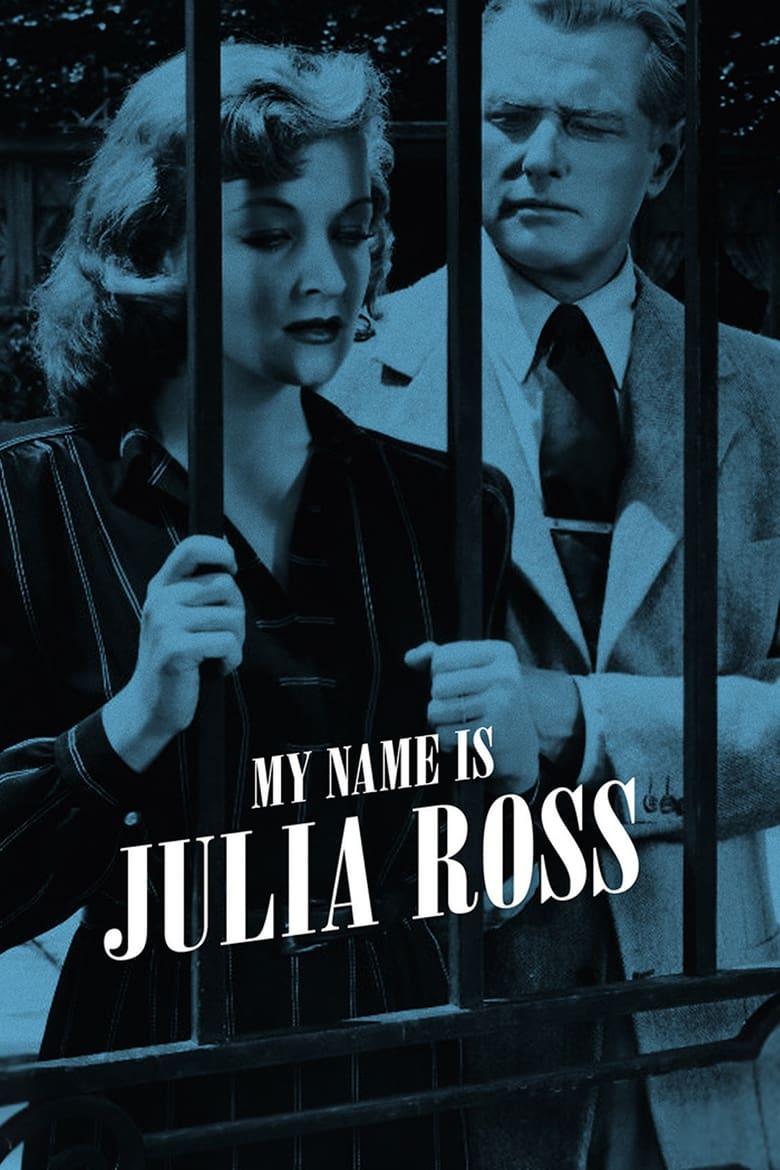
My Name Is Julia Ross

Directed by Joseph H. Lewis
Year 1945
Runtime 65 min
Studio Columbia Pictures
TMDB 6.7 / 10
"A woman wakes in a stranger's house and finds she has become someone else entirely."

Julia Ross is a young London woman, out of work and short on options, who answers a newspaper advertisement for a live-in secretarial position. She is hired immediately by a well-appointed widow, Mrs. Hughes, and moves into the household that same evening. When Julia wakes the following morning, she finds herself in a coastal Cornish manor, her own clothes replaced, her name denied, and the servants instructed to address her as Marion Hughes – the dead wife of Mrs. Hughes's son Ralph.

Ralph Hughes is a cold, imperious man with violence close to the surface, and it becomes clear that Julia has been installed in the house to serve a specific and lethal purpose. Mrs. Hughes, despite her genteel manner, is complicit in the scheme, her maternal devotion to Ralph having long since crossed into something pathological. Julia's attempts to signal the outside world – a letter, a cry from a window – are methodically intercepted, and the isolation of the cliff-top house becomes its own instrument of control.

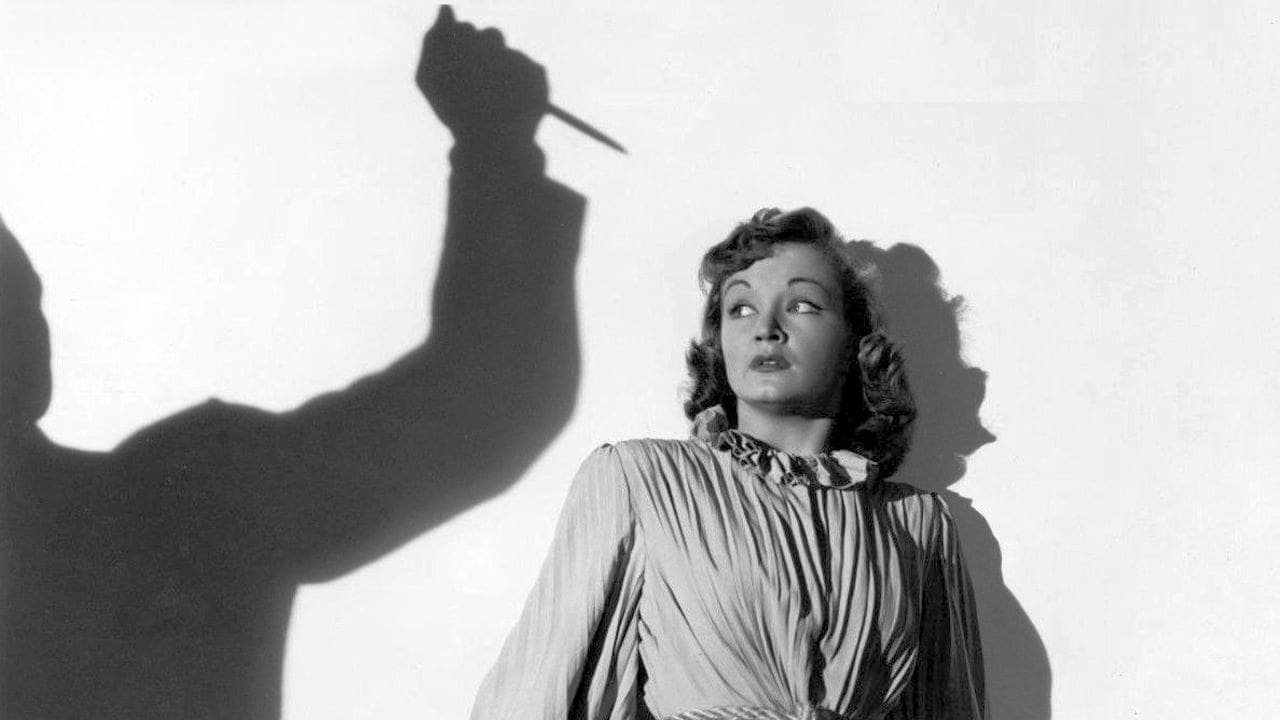
The film belongs to the subgenre of the imprisoned woman, a noir variant that draws as much from Gothic fiction as from the hard-boiled tradition. What distinguishes it is the economy with which Lewis constructs dread from domestic space and the precision of its three central performances. The question is not merely whether Julia will escape but whether the rational world beyond the manor walls will prove capable of hearing her at all.
Classic Noir

Made for Columbia's B-unit on a short schedule and a budget that precluded location shooting, My Name Is Julia Ross achieves what many better-funded productions fail to: a coherent and sustained atmosphere of entrapment that never mistakes speed for sloppiness. Joseph H. Lewis, still years from Gun Crazy, demonstrates here his ability to use confined studio space as a psychological condition rather than a practical limitation. The film draws on the wartime Gothic cycle – Rebecca, Gaslight, Secret Beyond the Door – but strips that mode down to its functional core. May Whitty's Mrs. Hughes is the performance that anchors the film; her politeness never cracks, which is precisely what makes her frightening. George Macready, whose face carried an almost decorative cruelty, plays Ralph as a man whose capacity for violence is less a secret than a fact everyone around him has agreed to manage. Nina Foch holds the centre with intelligence rather than hysteria, a choice that keeps the film from tipping into melodrama. At sixty-five minutes, it wastes nothing.

– Classic Noir
3 ★★★☆☆ Notable
Credits

The Crew

DirectorJoseph H. Lewis
ScreenplayMuriel Roy Bolton
CinematographyBurnett Guffey
MusicMischa Bakaleinikoff
EditingHenry Batista
Art DirectionJerome Pycha Jr.
CostumesJean Louis
ProducerWallace MacDonald
Performances

The Cast

Close Reading

The Signature Scene

My Name Is Julia Ross – scene
The Clifftop Window A Signal No One Reads

Lewis frames Julia from outside the manor window, the camera positioned in the grey coastal light as she presses a written note against the glass. The composition places her behind the pane as if behind a barrier that is simultaneously transparent and absolute. Guffey's lighting keeps the interior slightly warmer than the exterior world, a reversal of the usual noir logic – the house is not dark so much as sealed, and the outside offers cold clarity rather than sanctuary. The note flutters; a figure passes below on the path.

The scene distills the film's central argument: visibility is not the same as legibility. Julia can be seen, but her situation cannot be read by anyone without prior knowledge of what they are looking at. This is the particular terror Lewis is working with – not the monster in the dark but the prison that looks, to an uninformed observer, like an ordinary house. Her predicament depends entirely on the social assumption that a woman in a well-kept home is where she belongs.

Visual Language

The Cinematography

🎞️
Burnett Guffey – Director of Photography

Burnett Guffey, who would later shoot From Here to Eternity and Bonnie and Clyde, was at this point an adaptable craftsman working within the constraints of Columbia's B schedule, and My Name Is Julia Ross shows him making productive use of those constraints. The studio-bound Cornish manor is lit to suggest perpetual overcast, with diffuse sources that flatten shadow rather than dramatise it – a deliberate choice that makes the house feel airless rather than threateningly dark. Guffey reserves harder, more directional light for the moments when Ralph's true nature surfaces, the increased contrast functioning as a brief puncture in the film's otherwise even surface. Close-ups of Nina Foch are composed to emphasise alertness rather than fear, the camera staying close without becoming oppressive. The cliff exteriors, achieved through process work, are convincing enough because Guffey matches their grey tonal register to the interior photography, maintaining a consistent visual mood that serves the story's argument about how ordinary spaces become instruments of coercion.

In the Catalogue

Themes & Motifs

Availability

Where to Watch

Also in the Directory

See Also