Films People Pull a Fast One Night Beat Reading Room On TV Shop
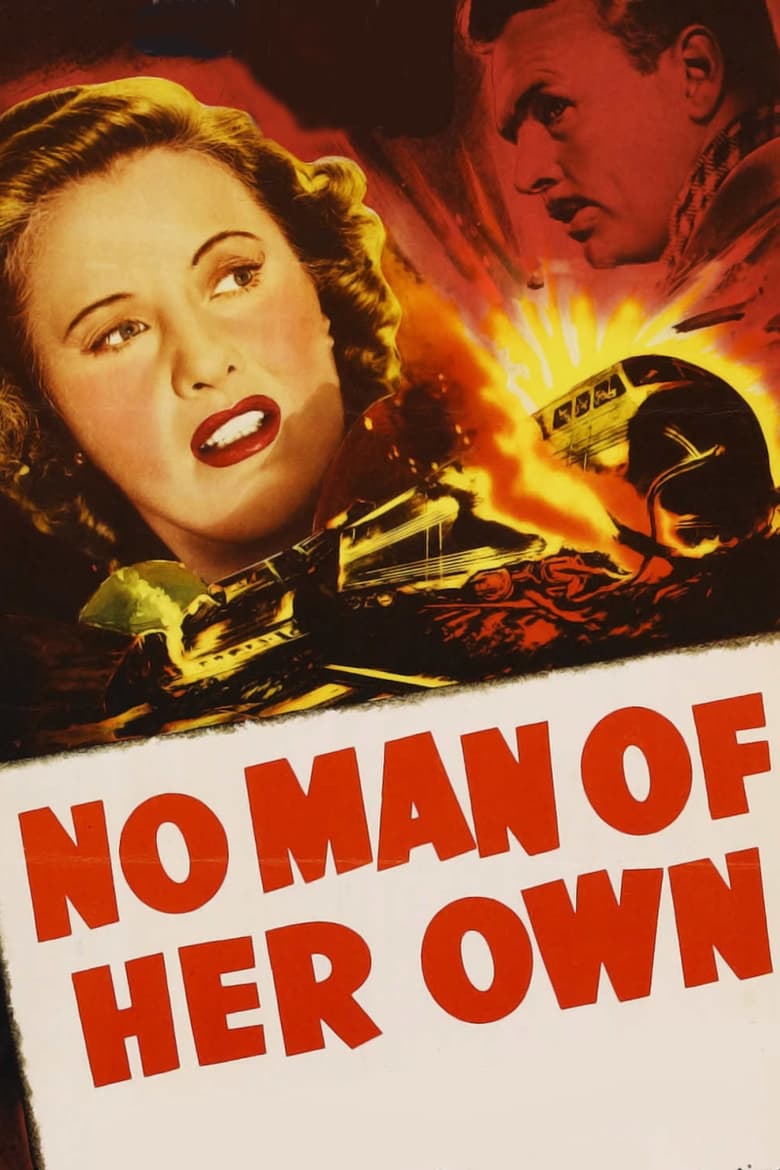
No Man of Her Own 1950
1950 Paramount Pictures
★★★☆☆ Notable
Film Noir · 98 minutes · Black & White

No Man of Her Own

Directed by Mitchell Leisen
Year 1950
Runtime 98 min
Studio Paramount Pictures
TMDB 6.9 / 10
"A dead woman's name is a thin disguise for a life already compromised."

Helen Ferguson is a pregnant woman abandoned by her con-man lover Stephen Morley when she boards a train heading east with nothing but desperation and a borrowed future. In a catastrophic rail accident, the real Helen Ferguson – a young woman traveling with her husband – is killed, and the survivor, dazed and carrying forged identity papers, is taken in by the dead woman's wealthy in-laws, the Harkness family of Caulfield, who have never met their son's wife. She accepts the misidentification, names the child as theirs, and settles into a life of borrowed grace in a house that was never meant for her.

The deception holds until Stephen Morley resurfaces, now aware of the imposture and prepared to use it as leverage. The woman who reinvented herself as Helen Ferguson must navigate the competing claims of a family that has genuinely come to love her, a man who regards her secret as a financial instrument, and her own conscience, which has grown complicated by real attachment. Her relationship with Bill Harkness, the family's upright and quietly perceptive son-in-law, further tightens the moral knot, since his affection for her is honest while her position in his household is entirely fabricated.

No Man of Her Own belongs to the postwar cycle of noir that centers on women who are simultaneously victims and agents of their own undoing – figures who neither fully deserve the trap they inhabit nor escape responsibility for it. Adapted from Cornell Woolrich's novel I Married a Dead Man, the film uses identity theft not as thriller mechanics but as a sustained meditation on what a life constructed from falsehood costs its architect, and whether survival itself can constitute a form of guilt.
Classic Noir

Mitchell Leisen is not a director typically catalogued alongside the presiding figures of American noir, and that displacement has cost No Man of Her Own its proper critical standing. The film draws on the Woolrich source with more fidelity to its emotional logic than is common in adaptations of that period, retaining the author's characteristic sense that fate operates not through grand malevolence but through the accumulated pressure of small, irreversible choices. Barbara Stanwyck gives a performance of disciplined restraint – this is not the calculating Phyllis Dietrichson of Double Indemnity but a woman whose guilt is more ambiguous, rooted in need rather than greed. Lyle Bettger's Stephen Morley is effective precisely because he is not melodramatic; he is merely opportunistic in the way that certain men are constitutionally opportunistic. The film's treatment of class – the Harkness household as a site of genuine warmth that the protagonist can access only through fraud – gives the noir trap an additional layer of social irony that distinguishes it from more mechanically plotted entries in the cycle.

– Classic Noir
3 ★★★☆☆ Notable
Credits

The Crew

DirectorMitchell Leisen
ScreenplayMitchell Leisen
CinematographyDaniel L. Fapp
MusicHugo Friedhofer
EditingAlma Macrorie
Art DirectionHenry Bumstead
CostumesEdith Head
ProducerRichard Maibaum
Performances

The Cast

Close Reading

The Signature Scene

No Man of Her Own – scene
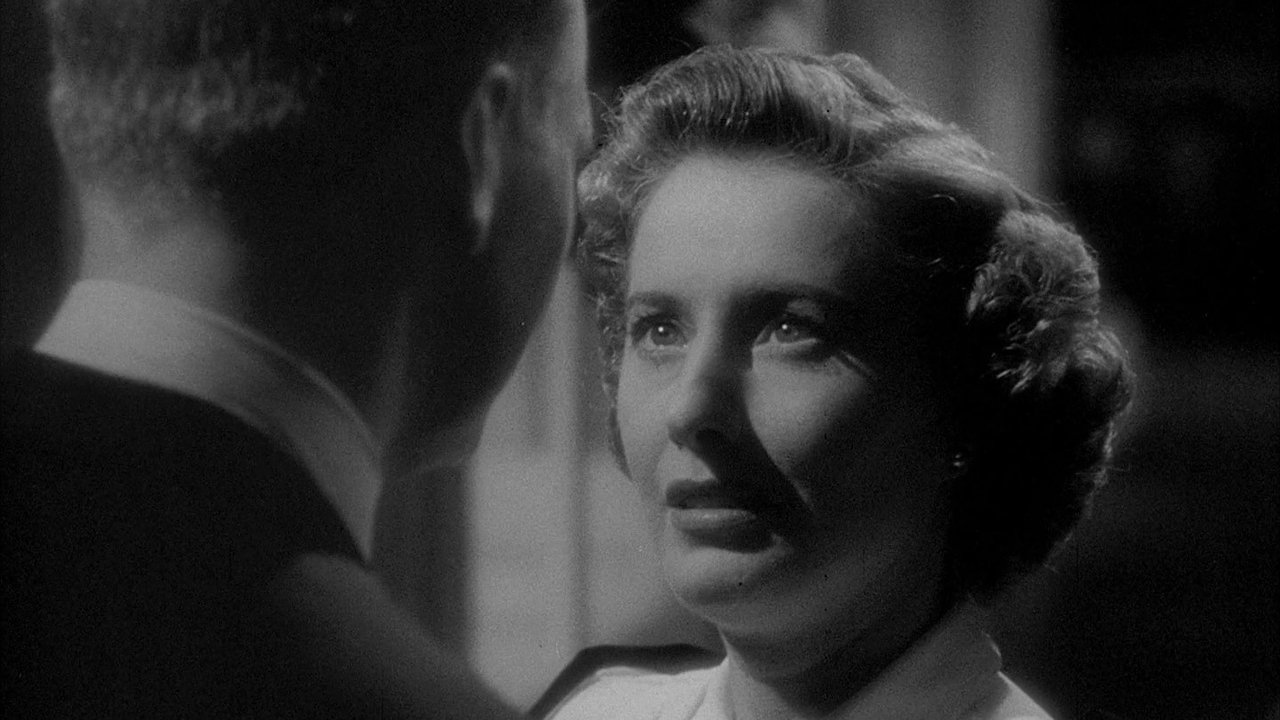
The Harkness Sitting Room Recognition Across a Threshold

Leisen and cinematographer Daniel L. Fapp frame the scene with the protagonist positioned slightly below the eyeline of the assembled Harkness family, the camera catching her from a low angle that places the room's warm domestic architecture – bookshelves, lamplight, heavy curtains – around her like a setting that does not quite fit the stone it holds. The light on Stanwyck's face is soft but directional, leaving one side in shadow in a manner that is compositionally deliberate rather than incidental: she is half-legible, half-concealed, and the frame makes that condition literal. The family's faces are lit fully, openly, in contrast.

The scene articulates the film's central argument without dialogue: the impostor is not a monster who has invaded a good family but a damaged person who has been admitted to warmth she did not earn and cannot, in honesty, keep. The shadow on her face is not villainy but exposure deferred – a visual promissory note on the reckoning the film is building toward. It is the moment at which the audience understands that the film's sympathy and its moral judgment are not in conflict but are the same gesture.

Visual Language

The Cinematography

🎞️
Daniel L. Fapp – Director of Photography

Daniel L. Fapp's work on No Man of Her Own operates within the Paramount studio grammar of the period – controlled interiors, carefully motivated practical light sources, a preference for medium shots that contain rather than liberate their subjects – but he uses those conventions with purpose. The train crash sequence demonstrates his range: a brief excursion into expressionist fragmentation before the film settles into the more measured visual rhythm of the domestic scenes that follow. In the Harkness interiors, Fapp employs a key-light and fill ratio that shifts subtly depending on which version of the protagonist is being revealed: the fraudulent widow reads in warmer, more enveloping light when she is most integrated into family life, and in harsher, more lateral light when Morley's threat brings her real identity into proximity with the surface she has constructed. It is cinematography in service of moral legibility rather than stylistic display, and it is more precise in that function than it is usually given credit for.

In the Catalogue

Themes & Motifs

Availability

Where to Watch

Also in the Directory

See Also