Films People Pull a Fast One Night Beat Reading Room On TV Shop
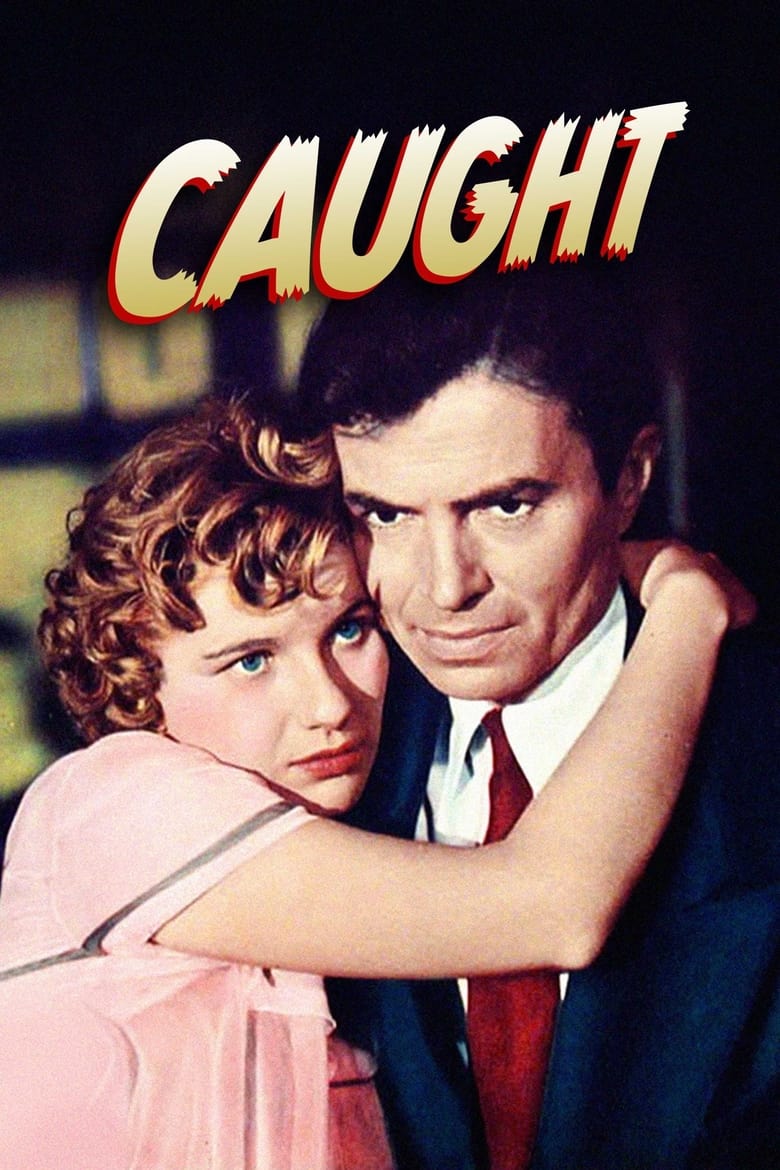
Caught 1949
1949 Metro-Goldwyn-Mayer
★★★☆☆ Notable
Film Noir · 88 minutes · Black & White

Caught

Directed by Max Ophüls
Year 1949
Runtime 88 min
Studio Metro-Goldwyn-Mayer
TMDB 6.6 / 10
"A woman trades her poverty for a cage, and finds no comfort in either."

Leonora Eames is a department store model with modest ambitions and a copy of a charm school brochure she treats like a scripture. When she catches the eye of Smith Ohlrig, a mercurial and fabulously wealthy industrialist, she mistakes proximity to money for the life she has rehearsed in her imagination. Their marriage is swift, joyless, and transactional from the first – Ohlrig, played by Robert Ryan with cold, coiled menace, marries her not out of desire but to spite his psychiatrist's suggestion that he is incapable of genuine human connection.

Pregnant and effectively marooned inside Ohlrig's vast estate, Leonora takes a job as a receptionist in a small Manhattan medical practice run by Larry Quinada, a doctor who works among the poor by choice rather than circumstance. Quinada – quiet, direct, played by James Mason with characteristic restraint – offers Leonora something Ohlrig never could: the possibility of being seen as a person rather than a possession. The film's central tension is not whether Leonora will leave her husband, but whether she can survive the attempt, and what claims Ohlrig's money still holds over her once she tries.

Caught belongs to that strand of postwar noir concerned less with crime than with suffocation – the slow erosion of selfhood inside institutions that are supposed to protect. Ophüls frames marriage here as a legally sanctioned form of entrapment, and the film's moral architecture is built around the question of whether escape is possible when one's captor controls the material conditions of survival. The film stands apart from harder-edged contemporaries by directing its suspense inward, into the psychology of a woman who must first admit to herself the full nature of what she entered before she can begin to leave it.
Classic Noir

Caught arrives at a precise and uncomfortable intersection between women's melodrama and psychological noir, and Ophüls – working only his second American film – refuses to resolve the tension in either direction. Robert Ryan's Ohlrig, reportedly modeled in part on Howard Hughes, is among the period's most persuasive portraits of wealth as pathology: a man whose psychiatrist functions less as healer than as enabler of self-mythology. The film's critique is structural rather than moral. It does not condemn Leonora for her initial ambition; it examines the mechanisms by which aspiration is manufactured and monetized. James Mason's Quinada represents integrity without sentimentality, a figure whose decency is rendered credible precisely because Ophüls refuses to romanticize it. Lee Garmes's cinematography keeps the visual register cool and precise, allowing the mise-en-scène to carry the emotional weight that the screenplay sometimes holds at arm's length. Caught did not find a wide audience in its moment, but its analysis of class, autonomy, and the economics of marriage has aged into something close to necessity.

– Classic Noir
3 ★★★☆☆ Notable
Credits

The Crew

DirectorMax Ophüls
ScreenplayArthur Laurents
CinematographyLee Garmes
MusicFriedrich Hollaender
EditingRobert Parrish
Art DirectionFrank Paul Sylos
CostumesOrry-Kelly
ProducerWolfgang Reinhardt
Performances

The Cast

Close Reading

The Signature Scene

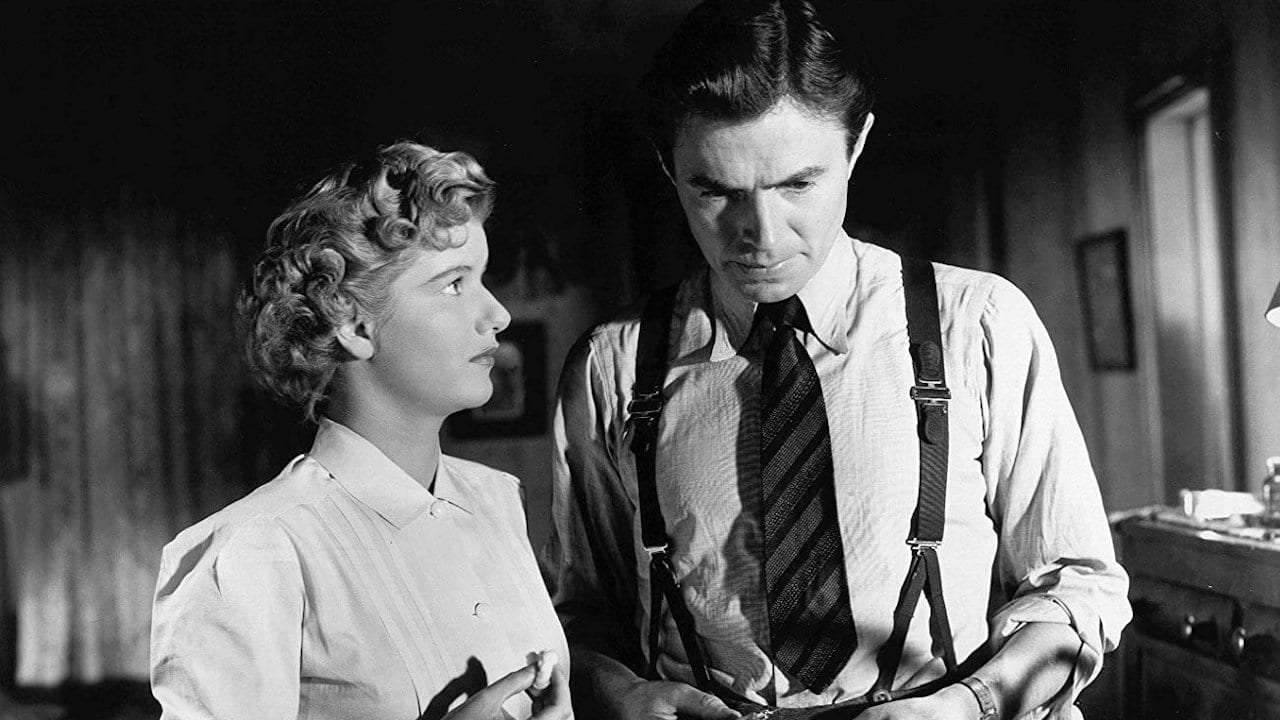
Caught – scene
The Ohlrig Estate, Night Alone Inside the Glass

Ophüls places Leonora at the far end of a vast, underlit room, the camera withdrawing rather than advancing as she moves through it – a staging that makes the space itself feel predatory. Garmes lights the room from sources that suggest wealth rather than warmth: hard reflections off lacquered surfaces, pools of shadow that the furniture casts like conspirators. The geometry of the frame is divided between what Leonora occupies and what she does not, and what she does not occupy is most of the image.

The scene makes an argument that the screenplay cannot quite state outright: that the house is not a home but a demonstration of ownership, and that Leonora's presence in it is ornamental rather than human. Her isolation here is not dramatic in the conventional sense – there is no confrontation, no raised voice. The threat is architectural. Ophüls understood that the most durable prisons are the ones whose walls you chose to walk between.

Visual Language

The Cinematography

🎞️
Lee Garmes – Director of Photography

Lee Garmes, whose career stretched back to Josef von Sternberg's atmospheric studio work of the early 1930s, brings to Caught a lighting strategy that consistently subordinates glamour to unease. Working on controlled studio sets that Ophüls dressed with deliberate excess – oversized furniture, cavernous interiors, windows that frame rather than illuminate – Garmes uses low-key, directional light to undercut the surface luxury of the Ohlrig world. Shadows fall across faces at moments of apparent security, and the medical practice sequences, by contrast, are rendered in a cooler, flatter light that registers as relief rather than austerity. Ophüls's characteristic fluid camera movement is present but restrained relative to his European work; here the camera's mobility is tied to Leonora's psychology, advancing when she has agency, withdrawing or circling when she does not. The result is a visual grammar in which composition and movement carry the film's moral argument about confinement and autonomy with more consistency than any single scene of confrontation.

In the Catalogue

Themes & Motifs

Availability

Where to Watch

Also in the Directory

See Also