When a fellow officer is killed during a routine waterfront investigation, detective Johnny Damico – played by Broderick Crawford with his characteristic blunt authority – volunteers to go undercover and penetrate the criminal syndicate responsible. Shedding his badge and his name, he assumes a new identity inside the organization, working his way toward the men at the top while Lieutenant Banks and the department watch from a careful distance. Mary Kiernan, a woman with ties to both worlds, complicates his position from the start.
As Damico burrows deeper into the syndicate's operations, the human architecture around him sharpens into focus: Smoothie, an operator of practiced menace; Gunner, a volatile enforcer played with contained ferocity by Neville Brand; and Joe Castro, Ernest Borgnine in an early screen role, projecting the casual brutality that would mark his career. The longer Damico inhabits his false identity, the more his relationships – with the criminals who trust him, with Mary who suspects him, with the department that has effectively disowned him – begin to exert competing moral pressures.
The Mob belongs to the cycle of procedural-inflected noirs that Columbia produced in the early 1950s, films less interested in doomed romanticism than in the institutional mechanics of crime and its suppression. Robert Parrish keeps the narrative moving without sentimentality, and the film earns its tension not from stylized excess but from the sustained discomfort of a man performing loyalty to people he intends to destroy.
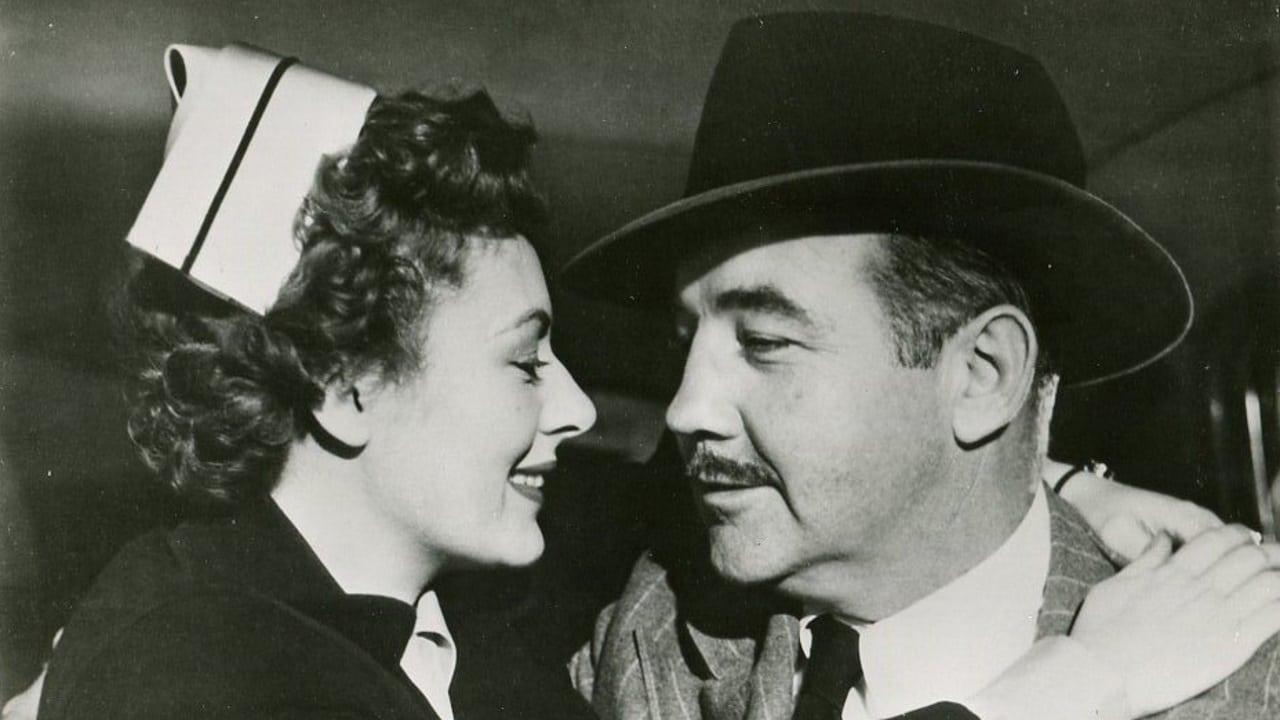
The Mob arrives at a transitional moment in American crime cinema, when the classical noir template was absorbing the influence of the semi-documentary procedural. Robert Parrish, a former editor with an economy of means that rarely wastes a cut, keeps the film tethered to the ground-level textures of police work and organized crime rather than the expressionist fever of earlier noir. Crawford, fresh from his Oscar for All the King's Men, brings a physical and moral weight to Damico that the script occasionally undersells; his performance grounds what might otherwise read as a programmatic thriller. The supporting cast is notable beyond its individual parts – Brand and Borgnine, both then at early stages of prominent careers, give the syndicate's inner circle a credible and unpredictable menace. The film reveals something accurate about its era: that postwar American institutions, including law enforcement, could sustain a fundamental moral ambiguity beneath their procedural surfaces. It does not resolve that ambiguity so much as document it.
– Classic Noir
Joseph Walker frames the scene in a wide industrial interior where ceiling light falls in broken planes across stacked cargo, leaving the margins of the frame in deep shadow. The camera holds its distance as two figures face each other across an unlit gap, refusing the close-up that would anchor sympathy or provide relief. When the angle does shift, it does so laterally rather than inward, tracking along the wall so that the men remain dwarfed by the space around them – a compositional choice that quietly insists on their smallness within the machinery of the syndicate.
The scene concentrates the film's central argument: that the undercover operative occupies a moral no-man's-land in which performance and conviction have become indistinguishable. Damico cannot break cover without triggering violence, but sustaining cover requires a complicity he can no longer fully contain. What Walker's camera records – without editorializing – is the cost of that position written in posture and stillness. The outcome of the standoff matters less than what the standoff discloses about the nature of institutional loyalty.
Joseph Walker, who had spent decades as Frank Capra's principal cinematographer, brings to The Mob a restraint that works against easy expressionism and in favor of documentary legibility. His work here favors moderate focal lengths that keep environments in play behind the actors, resisting the shallow-focus isolation common to more stylized noir. Lighting setups lean on single hard sources angled to produce long, directional shadows without the theatrical excess those shadows might carry in another film – the effect is less dreamlike than diagnostic. Location shooting along the waterfront gives several sequences a density of ambient texture that studio work would have smoothed away, and Walker uses that texture to anchor the narrative's claims to institutional realism. Where shadow appears, it tends to fall across the spaces between people rather than on faces, which keeps the film's moral geometry spatial rather than psychological – an approach consistent with Parrish's procedural instincts and with the broader argument the film makes about crime as an organized system rather than a product of individual pathology.
Tubi has carried a number of Columbia B-noirs from this period and is the most likely free streaming home for The Mob; confirm availability before viewing as catalogue shifts.
Archive.orgFreeIf the film has entered the public domain, Archive.org would offer a direct, no-registration stream, though print quality varies considerably.
TCMSubscriptionTCM periodically programs early-1950s Columbia crime films in thematic blocks; check the schedule and Max for on-demand availability following broadcasts.