Films People Pull a Fast One Night Beat Reading Room On TV Shop
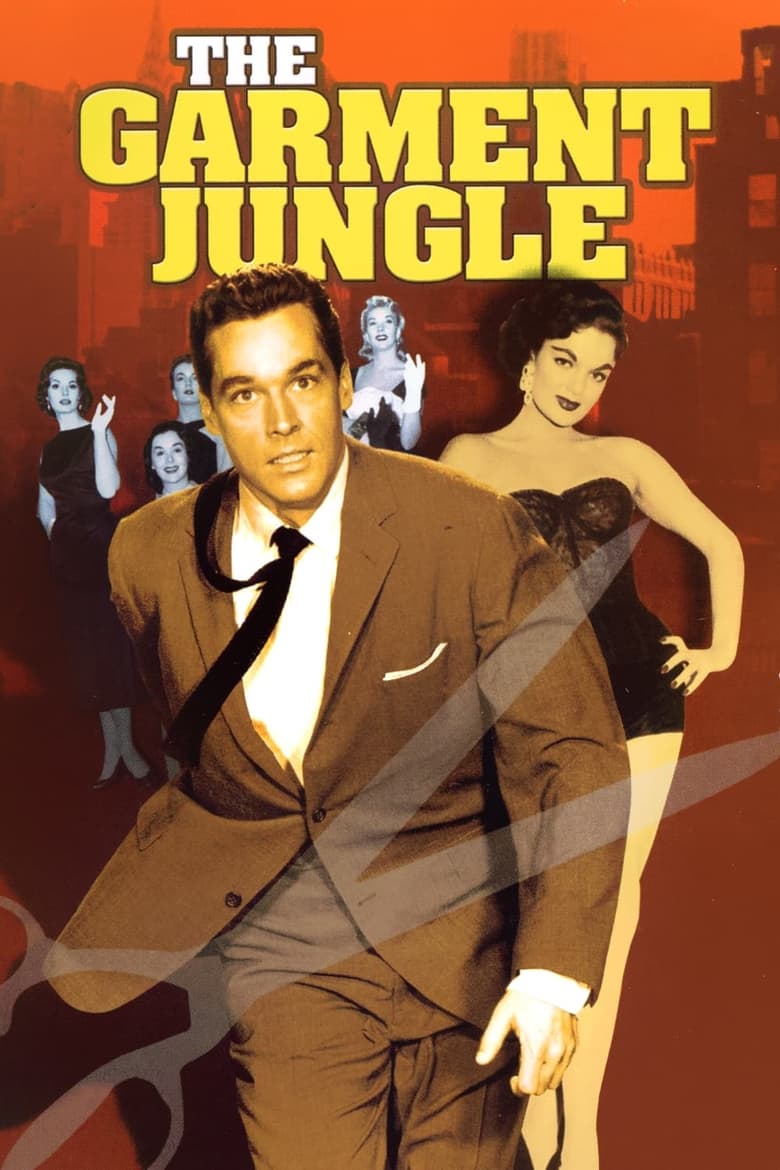
Garment Jungle 1957
1957 Columbia Pictures
★★★☆☆ Notable
Film Noir · 88 minutes · Black & White

Garment Jungle

Directed by Vincent Sherman
Year 1957
Runtime 88 min
Studio Columbia Pictures
TMDB 6.5 / 10
"In the garment district, a man's silence costs more than his conscience can pay."

Walter Mitchell (Lee J. Cobb) runs a mid-sized garment manufacturing operation in New York, keeping the union out of his shop through an arrangement with Artie Ravidge (Richard Boone), a syndicate enforcer whose methods run from intimidation to murder. When Walter's son Alan (Kerwin Mathews) returns from military service and takes a position in the business, he walks into a world his father has carefully obscured – one where workers are beaten for organizing and where the line between commerce and organized crime has long since dissolved.

Alan's growing relationship with Theresa Renata (Gia Scala), widow of a union organizer killed on Ravidge's orders, sharpens his understanding of what his father's business arrangements actually cost. Walter, convinced that accommodation with Ravidge is the only practical means of survival, refuses to see the arrangement as corruption. Caught between loyalty to his father and the evidence accumulating around him, Alan is forced to choose a position that the business world his father inhabits regards as naïve at best and suicidal at worst. Ravidge, sensing the pressure, moves to consolidate his hold on the operation.

The Garment Jungle belongs to the cycle of late-1950s social-problem noirs that use the crime film's architecture to examine institutional corruption – the kind that operates not in back alleys but in respectable offices with legitimate ledgers. The film's central tension is less about whether crime will be exposed than about what it takes for a man shaped by postwar pragmatism to call what he has accepted by its right name.
Classic Noir

The Garment Jungle arrived at the tail end of the classical noir cycle and bears the marks of a production under pressure – director Robert Aldrich was replaced by Vincent Sherman during shooting, a friction that leaves its traces in the film's uneven rhythm. Yet the film earns its place in the genre's record. Lee J. Cobb's Walter Mitchell is among the period's more persuasive portraits of complicity: not a villain by temperament but a man whose practical accommodations have hardened into moral incapacity. Richard Boone plays Ravidge with a coiled, bureaucratic menace that keeps the film from slipping into melodrama. The film's real subject is the ideology of anti-unionism in postwar American business culture – the way respectable men convinced themselves that syndicate muscle was simply the cost of doing business. Joseph F. Biroc's cinematography holds the industrial settings in a flat, unromantic light that suits the film's argument. The result is a picture that functions simultaneously as crime thriller and as a period document of labor-capital conflict.

– Classic Noir
3 ★★★☆☆ Notable
Credits

The Crew

DirectorVincent Sherman
ScreenplayHarry Kleiner
CinematographyJoseph F. Biroc
MusicLeith Stevens
EditingWilliam A. Lyon
Art DirectionRobert Peterson
CostumesJean Louis
ProducerHarry Kleiner
Performances

The Cast

Close Reading

The Signature Scene

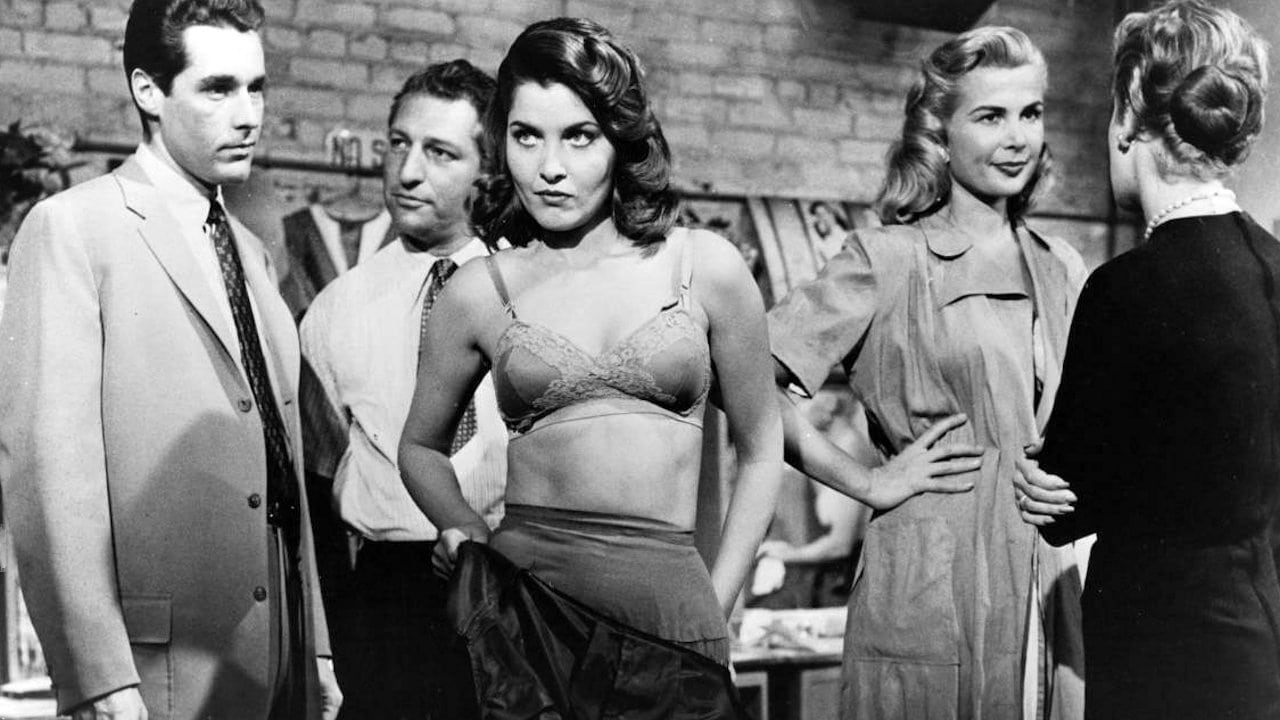
Garment Jungle – scene
The Factory Floor Confrontation Light Falling Through Machinery

Biroc frames the scene from a low angle among the cutting tables and pressing machines, industrial light falling in hard verticals through overhead fixtures and casting the floor in alternating bands of illumination and shadow. The depth of the frame is deliberately cluttered – bolts of fabric, equipment, the figures of workers held at distance – so that Ravidge, when he moves through the space, appears to own it in a way that Walter, standing in his own factory, does not. The camera holds rather than cuts, letting the geography of the room make its argument.

What the scene establishes is a power topology that Walter has refused to name. The factory is nominally his, but the arrangement with Ravidge has ceded its actual authority to the syndicate. The workers visible in the background are not incidental – their stillness, their awareness of Ravidge's presence without acknowledging it, registers the atmosphere of low-level terror that has become the shop floor's normal condition. The scene makes visible, in spatial terms, what the film's dialogue is still circling.

Visual Language

The Cinematography

🎞️
Joseph F. Biroc – Director of Photography

Joseph F. Biroc brings to The Garment Jungle a documentary inflection that distinguishes it from the more expressionist noir cinematography of the decade's earlier films. Shooting on location in the New York garment district as well as on Columbia studio sets, Biroc uses available industrial light as a compositional element rather than simply a practical source – the overhead fluorescents and the flat daylight of factory windows create an environment without glamour, where shadows fall not dramatically but functionally, as they would in a working building. His lens choices favor a slightly wider field of view than was conventional for noir interiors, which has the effect of keeping characters embedded in their environments rather than isolated within them. This is a deliberate moral choice: the film is about systemic corruption, and Biroc's frames insist that no one in this world stands free of the structures surrounding them. The visual language supports Sherman's argument that complicity is architectural as much as personal.

In the Catalogue

Themes & Motifs

Availability

Where to Watch

Also in the Directory

See Also