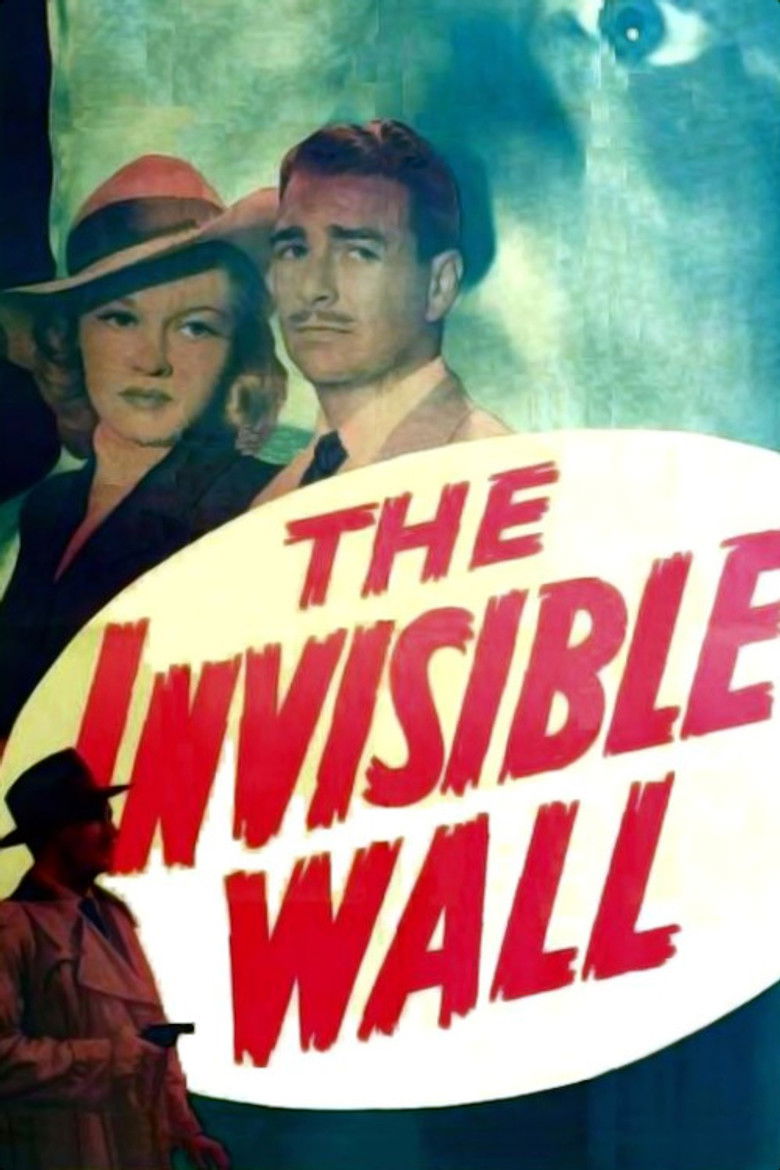
Harry Lane, a small-time investigator working the edges of respectability, takes a job with Richard Elsworth, a prosperous businessman whose surface calm conceals something darker beneath. When a woman connected to Elsworth turns up dead and the evidence begins to arrange itself in inconvenient ways, Harry finds himself drawn into a web of financial corruption and deliberate misdirection that reaches well beyond a single homicide.
Mildred Elsworth, Richard's wife, occupies the uneasy center of the film's shifting allegiances. Her loyalties are never entirely legible, and Harry cannot determine whether she is a victim, a conspirator, or simply a woman trying to survive a marriage built on concealment. Roy Hanford and the syndicate figure Marty Floyd apply pressure from the outside, while Al Conway, a blunt instrument in the employ of those higher up, enforces silence through the threat of violence.
Invisible Wall belongs to the lower tier of postwar noir – the B-picture world of tight budgets, compressed storytelling, and institutional corruption treated as ordinary fact. It is less concerned with psychological interiority than with the mechanics of entrapment, positioning Harry Lane not as a hero who defeats the system but as a man who must simply outlast it long enough to matter.
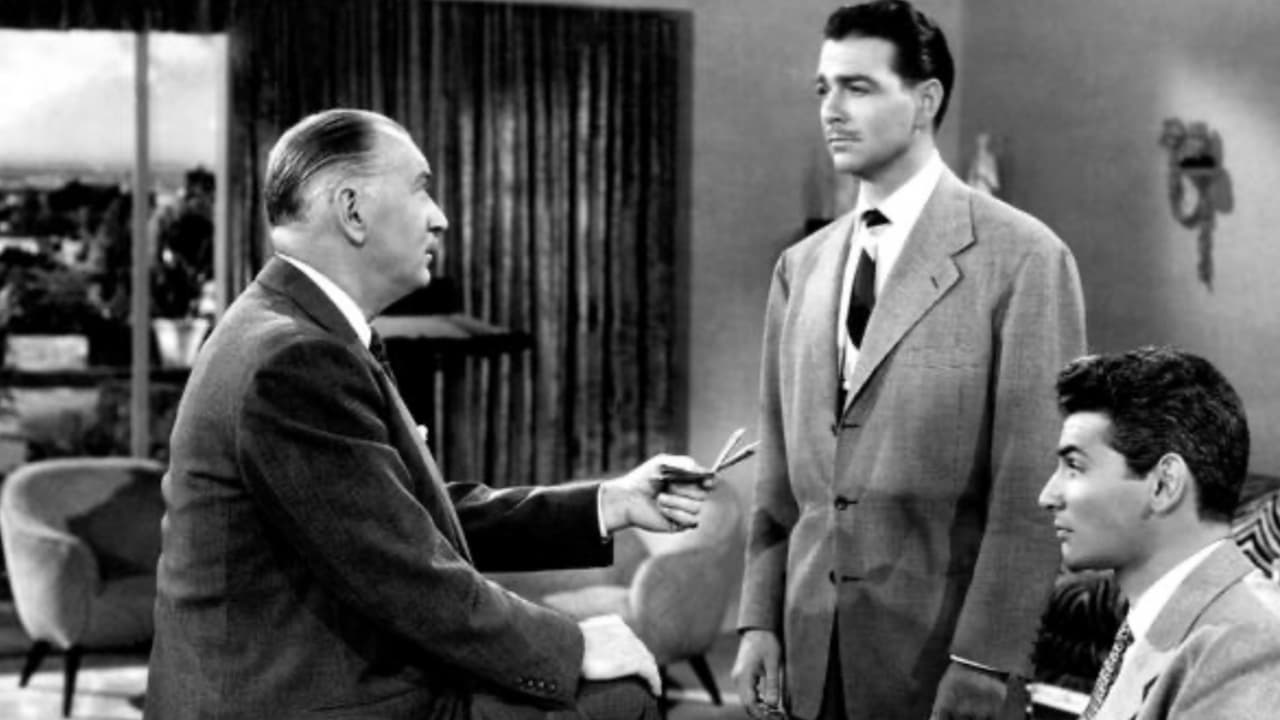
Invisible Wall is a competent entry in the Sol M. Wurtzel school of economy noir – films produced fast, on narrow margins, with a frank understanding that efficiency is its own form of craft. Eugene Forde, who spent much of his career directing Charlie Chan pictures and second-feature thrillers, handles the material without pretension. The film's central argument is structural: that corruption in postwar American commerce is not aberrant but systemic, a wall built so gradually that no single person feels responsible for it. Don Castle, underrated throughout his career, brings a watchful stillness to Harry Lane that suits a story about a man who survives by reading rooms rather than dominating them. Jeff Chandler, in an early supporting role before his Universal contract elevated him to leading-man status, uses his physical presence economically. The film will not satisfy viewers seeking the moral complexity of the major studios' noir output, but as a document of how genre conventions filtered through the B-picture economy, it rewards attention.
– Classic Noir
Benjamin H. Kline lights the warehouse sequence with a single dominant source – a hanging industrial lamp that carves deep shadows across the corrugated walls and leaves the far edges of the frame in near-total darkness. The camera holds at a medium distance, refusing the close-up that would soften the geometry, so the figures are rendered as shapes within a pattern of angular shadow. When Conway moves, the light catches one side of his face and leaves the other in blackness, an arrangement that is compositionally deliberate rather than incidental.
The scene functions as the film's most direct statement about power and visibility. Harry Lane stands in the lit center of the frame, exposed, while the men who want him silent move along the periphery where the light cannot fully reach them. The composition externalizes the film's argument: the corrupt operate in the space between visibility and darkness, while those they target are left with nowhere to conceal themselves.
Benjamin H. Kline was a studio journeyman whose career stretched from silents through the television era, and on Invisible Wall he works within the strict constraints of B-picture production – limited shooting days, standing sets, minimal location work – with the practiced efficiency of someone who understood that shadow is cheaper than light. His approach throughout is to work with available set architecture, using doorframes, stairwells, and overhead fixtures to produce the contrast ratios that noir demands without the elaborate rigging a major production would allow. The result is a lighting grammar that feels contingent rather than designed, which paradoxically reinforces the film's moral atmosphere: this is a world where darkness is the default condition and light is the exception. Kline does not attempt the expressionist extremity of a John Alton, but his restraint serves a story about ordinary institutional corruption more honestly than stylistic excess would.
The film is in the public domain and available in multiple transfers on the Internet Archive; quality varies by upload, but several watchable prints circulate.
TubiFreeTubi periodically carries public-domain B-noir titles of this era; availability may shift, so confirm before seeking.
Amazon Prime VideoSubscriptionClassic B-picture noir titles from this period appear intermittently on Prime through third-party channels; check current availability.