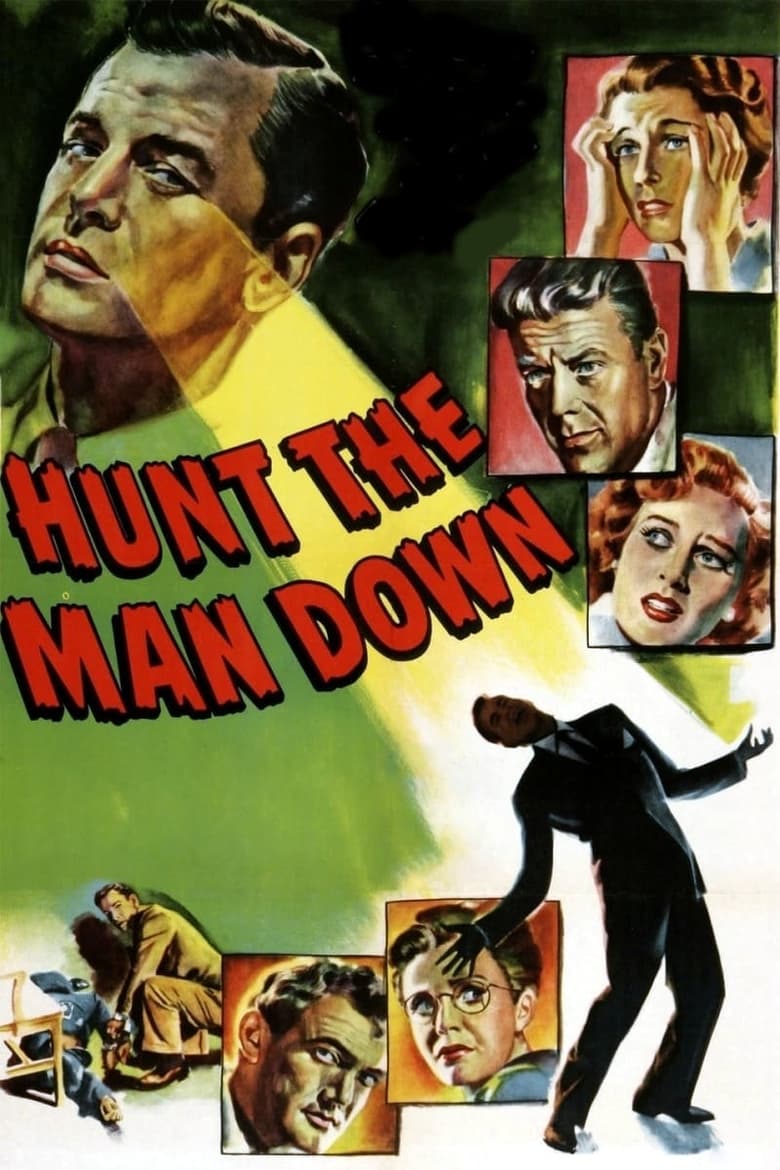
Public defender Paul Bennett is assigned to represent a drifter who has been picked up on a vagrancy charge, only to discover that his client is a fugitive wanted for a twelve-year-old murder. The man, who has been living under an assumed identity, claims he is innocent of the killing and that the real guilty party is still at large. Bennett, bound by professional obligation and increasingly persuaded by the man's account, takes the case and begins tracing the witnesses who testified at the original trial.
The investigation pulls Bennett into a web of concealed identities and long-buried grievances. Several of the original witnesses have reinvented themselves entirely, and none are willing to revisit the past. A woman named Alice McGuire holds a connection to the case that implicates her own family, while others with knowledge of the original crime have strong reasons to see the convicted man remain forgotten. Allegiances shift as Bennett presses forward, and the line between protecting a client and exposing dangerous people becomes harder to hold.
Hunt the Man Down operates within the procedural wing of noir, where the machinery of the legal system serves as both shield and obstacle. The film is less interested in doomed romanticism than in the institutional patience required to undo a miscarriage of justice, placing it alongside a strand of late-forties and early-fifties noir that found its tension in courtrooms and depositions rather than back alleys.
Hunt the Man Down occupies a modest but legible position within RKO's noir output, functioning as a procedural counterweight to the studio's more expressionist work of the same period. George Archainbaud directs without distinguishing himself stylistically, but the script's architecture is reasonably sound, and the premise – a public defender excavating a wrongful conviction across twelve years of buried testimony – engages seriously with the gap between legal process and actual justice. Gig Young brings a measured intelligence to Bennett that resists the hard-boiled mannerisms common to the form; he is a man who works with documents and depositions rather than fists, which gives the film an unusual procedural texture. Nicholas Musuraca's photography, even within the constraints of a modest budget and short running time, supplies the visual credibility the direction alone might not sustain. The film does not press deeply enough on its own implications to rank among the period's serious achievements, but it reflects a genuine postwar preoccupation with institutional fallibility and the fragility of identity under pressure.
– Classic Noir
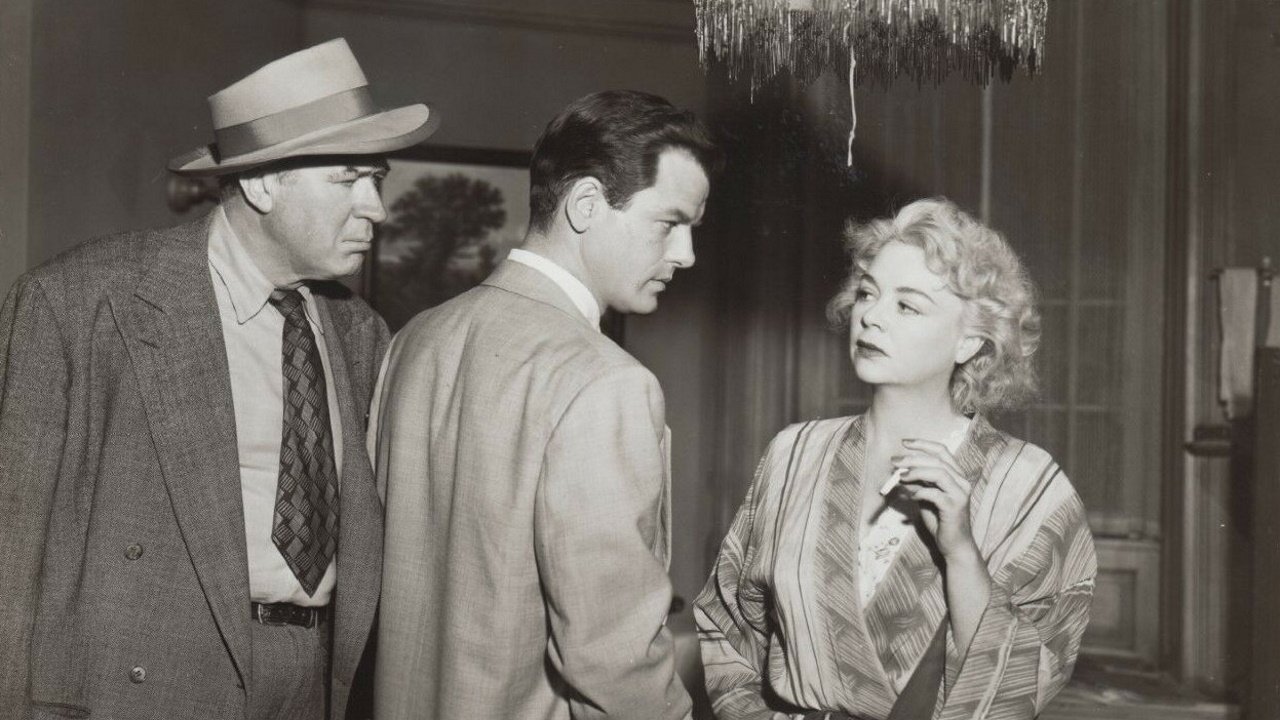
Musuraca lights the scene with a deliberate flatness that refuses the characters easy shadow to hide in. The frame is tight, the depth compressed, and what peripheral darkness exists is pushed to the edges rather than carved through the center. The camera holds on faces longer than is comfortable, cutting slowly between Bennett and the witness in a pattern that emphasizes stasis over action – two people trapped in a room by what they both already know.
The scene is less about revelation than about the cost of withholding it. The witness's reluctance is not portrayed as villainy but as the rational behavior of someone who rebuilt a life on the assumption that the past had stayed buried. Bennett's persistence, rendered without triumph, underscores the film's quiet argument: that justice administered late is a different thing entirely from justice administered correctly, and that the intervening years belong to no one.
Nicholas Musuraca, whose work on Out of the Past and The Spiral Staircase had already established him as one of Hollywood noir's most resourceful cinematographers, brings a controlled economy to Hunt the Man Down that suits its procedural temperament. Working within the tight schedule and budget constraints typical of RKO's B-unit productions, Musuraca relies on high-contrast key lighting to distinguish morally compromised spaces from the more neutral institutional environments where Bennett operates. The investigative sequences are shot with a flatter, more documentary inflection – slightly deeper focus, less dramatic raking light – while scenes involving witnesses and their hidden pasts revert to harder chiaroscuro. This visual grammar is not arbitrary: it maps the film's moral logic, treating concealment as something that registers in how light falls on a face. Location and studio work are blended without conspicuous seams, and Musuraca's lens choices keep the frame from feeling either cramped or artificially opened, a discipline that holds the film's modest ambitions together with quiet authority.
Hunt the Man Down is available as a public domain title on Archive.org, making it freely accessible without an account.
TubiFreeTubi regularly carries RKO public domain titles from this era; availability may vary by region.
Amazon Prime VideoSubscriptionAvailable through Prime Video's rotating catalog of classic noir titles, though streaming quality may differ from a restored print.