Max Anderson (Paul Kelly) is a newspaper reporter with no scruples and considerable ambition. When he encounters Linda Vale (Maris Wrixon), a wealthy young woman whose fragile health makes her an easy mark, he engineers a marriage calculated to secure her fortune. Standing between Max and a clean score is Belle Martin (Anne Gwynne), his current mistress, a woman who knows him well enough to be dangerous. Joe Eykner (Douglas Fowley), a small-time operator with connections to the city's underworld, completes the circle of mutual dependence and mutual threat.
Max's plan requires Linda's death to look natural, and he moves toward that end with the cold patience of a man who has spent years watching powerful people lie in print. Belle, promised a future that keeps receding, begins to understand her own expendability. Joe, meanwhile, has interests that do not perfectly align with Max's, and the criminal compact between them develops the familiar noir stress fractures: each man holds something over the other, and loyalty is purely a function of what has not yet gone wrong. Dr. Lawson (Selmer Jackson) and underworld figure Red Hogan (Cy Kendall) inhabit the edges of the scheme, their presence a reminder that corruption in this world is never contained to two people.
Glass Alibi belongs to the Republic Pictures tradition of lean, low-budget noir – films built on compressed running times and performers who understood how to carry moral weight without surplus gesture. The film draws on the insurance-and-inheritance strand of the genre, a lineage that runs from Double Indemnity through dozens of B-picture variations, and it is interested less in detection than in the internal logic of a scheme that depends on everyone involved being willing to betray everyone else. The question the film poses is not whether Max will be caught but which of his own arrangements will unravel him first.
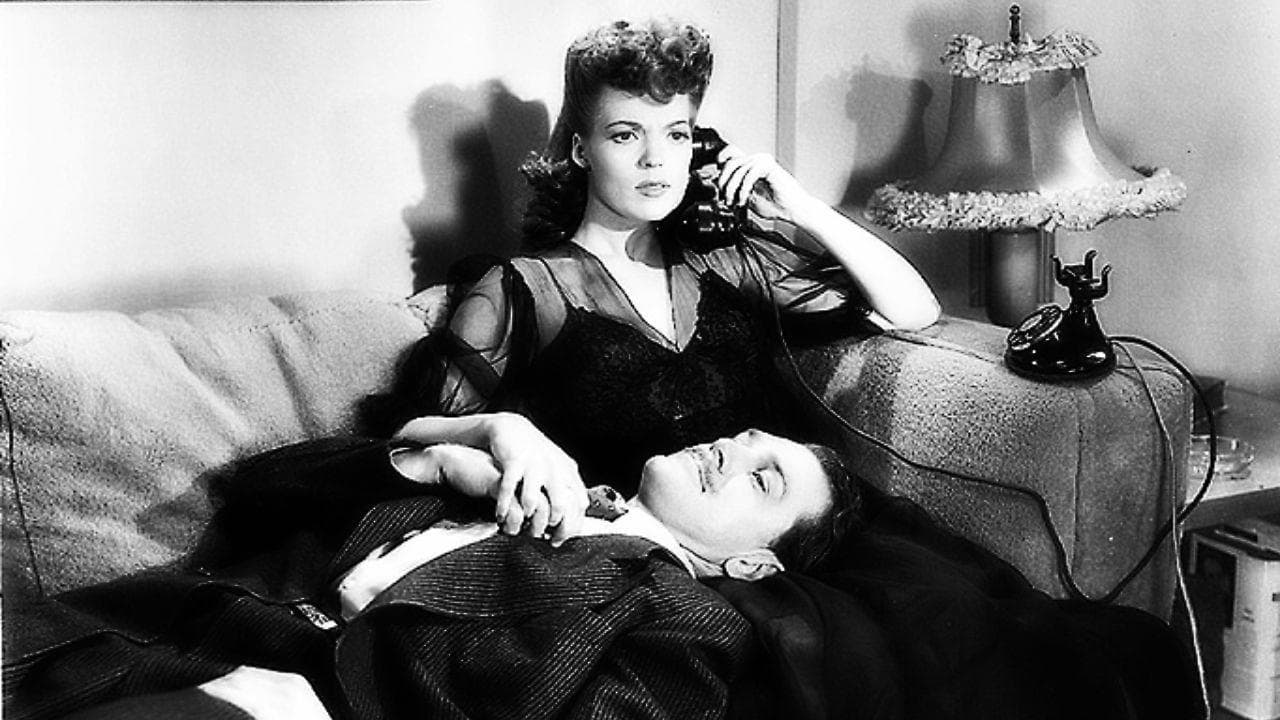
Glass Alibi is a minor entry in the Republic noir cycle, but minor need not mean negligible. W. Lee Wilder – working in the shadow of his more celebrated brother Billy – demonstrates here a functional command of the form: he keeps the film moving, trusts his performers to carry subtext, and never allows the modest budget to become an excuse for slack pacing. Paul Kelly's Max Anderson is the film's genuine asset, a performance built on suppressed contempt rather than theatrical menace. Kelly was never a marquee name, but he understood how to play men whose corruption is bureaucratic rather than passionate – men who lie not from desperation but from habit. Douglas Fowley's Joe Eykner provides effective counterweight, representing the nervous, improvisational criminality that Max's cold planning ultimately cannot account for. The film's 68-minute runtime reflects the Republic production model of the mid-1940s, and that compression is largely a structural virtue: there is no room for the story to breathe in ways that would expose its thinner seams. As a document of how noir themes circulated through B-picture production in the immediate postwar years, Glass Alibi earns its place in the catalogue.
– Classic Noir
Henry Sharp frames the scene in a cramped interior that presses the two figures toward the center of the frame, the light source placed high and to one side so that Max's face is half in shadow while Belle's is exposed – a visual shorthand for the asymmetry of their arrangement. The camera holds on a medium two-shot longer than conventional cutting rhythms would allow, the static composition making the apartment feel like an enclosure neither character can simply leave. When the camera finally moves, it is a slow push toward Belle rather than Max, a quiet editorial choice that locates the scene's dramatic weight in observation rather than action.
What the scene discloses is the precise moment when Belle stops calculating her options and begins to calculate her risks – a distinction the film treats as the difference between complicity and survival. It is the scene that most clearly articulates Glass Alibi's central argument: that in a world organized around mutual blackmail, the person with the clearest view of what is actually happening is not the most powerful but the most endangered. Belle's knowledge is her leverage, and her leverage is her vulnerability.
Henry Sharp was a cinematographer with roots in the silent era who brought to Republic's B-pictures a disciplined economy of means that the budgets demanded but that not every practitioner delivered. On Glass Alibi, Sharp works primarily in studio interiors, using tight pools of incandescent light against underlit backgrounds to create a sense of constriction that mirrors the narrative's central dynamic: everyone in this story is operating in a space that is smaller than they believe. The lens choices favor the standard focal lengths of the period, but Sharp's preference for placing lights at acute angles to the subject – raking light across faces rather than filling them – produces a moral visual grammar in which knowledge and concealment are literally the same as illumination and shadow. There is no location photography to speak of, and Sharp turns that limitation into coherence: the world of Glass Alibi is entirely constructed, which is finally what the film is about.
Glass Alibi is in the public domain and available as a free stream or download via the Internet Archive, making this the most accessible version for most viewers.
TubiFreeTubi has carried Republic Pictures public domain titles from this era; confirm current availability as catalogues rotate.
Amazon Prime VideoSubscriptionPublic domain prints of mid-1940s Republic titles appear periodically on Prime; transfer quality varies and should be verified before viewing.