Films People Pull a Fast One Night Beat Reading Room On TV Shop
Fall Guy 1947
1947 Monogram Pictures
★★★☆☆ Notable
Film Noir · 18 minutes · Black & White

Fall Guy

Directed by Reginald Le Borg
Year 1947
Runtime 18 min
Studio Monogram Pictures
TMDB 5.2 / 10
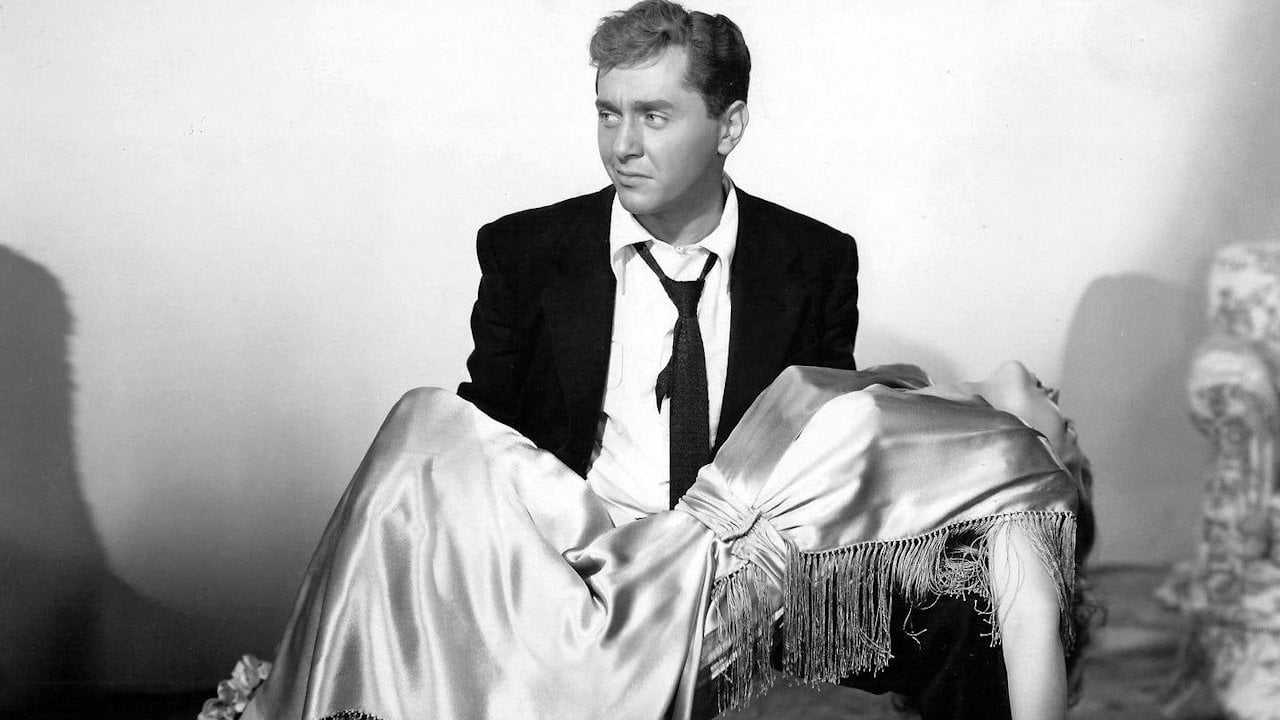
"A man steps in to help a stranger and finds himself holding the knife."

Floyd Parkson (Leon Ames), a respectable professional with no obvious reason to court trouble, becomes entangled in a homicide investigation after placing himself in the wrong company at the wrong moment. The police find him with means, proximity, and no clean alibi. His attorney, the cautious Mr. Nedsen (Will Wright), works to construct a defense while the District Attorney (Morris Ankrum) presses a case built on circumstance and inference.

At the center of the case stand Joe Brent (Paul Langton) and his wife (Marjorie Davies), whose domestic situation carries its own unspoken tensions. As the investigation tightens, the question of who is protecting whom becomes harder to answer. Parkson, presented initially as a man who simply made a poor decision, begins to look like someone whose judgment may not be as sound as his manner suggests.

Working within the compressed format of the MGM short subject, Fall Guy operates as a tight procedural study in circumstantial guilt, placing a middle-class protagonist inside machinery designed to grind down innocence and culpability alike. It belongs to a subgenre that used limited runtime and studio resources to strip noir to its functional skeleton: a man accused, a system in motion, and doubt that does not resolve neatly.
Classic Noir

Fall Guy occupies an instructive corner of the MGM short-subject program, a production context that rarely attracted critical attention but consistently generated efficient, economical genre work. At eighteen minutes, the film has no room for the baroque atmosphere or psychological sprawl that distinguishes feature noir; what it offers instead is procedural compression, a demonstration that the genre's essential architecture – accusation, institutional pressure, compromised loyalty – can be erected and stress-tested in the span of a two-reel subject. Leon Ames brings a particular utility to Parkson: not an innocent man vibrating with injustice, but a composed adult whose composure itself becomes a kind of evidence. Morris Ankrum's District Attorney is not a villain but a professional doing his job with the tools available, which is precisely what makes the film's moral situation uncomfortable. The short-subject format, largely dismissed in genre histories, deserves reconsideration as a laboratory for noir's stripped-down logic, and Fall Guy is a competent, unsentimental specimen of that form.

– Classic Noir
3 ★★★☆☆ Notable
Credits

The Crew

DirectorReginald Le Borg
ScreenplayJohn O'Dea
CinematographyMack Stengler
EditingWilliam Austin
ProducerWalter Mirisch
Performances

The Cast

Close Reading

The Signature Scene

Fall Guy – scene
The Interrogation Room Light Across the Table

The scene organizes itself around a single overhead source that cuts the interrogation table into zones of disclosure and shadow. Parkson sits on one side, his face partially lit, the line of his jaw and brow caught in hard relief while the lower half of his expression remains in relative darkness. The District Attorney stands or moves at the frame's edge, his authority conveyed less through prominence than through the camera's habit of returning to Parkson's contained stillness as the questions accumulate.

What the scene argues, through composition rather than dialogue, is that institutional power does not need to raise its voice. Parkson's stillness reads simultaneously as innocence and as guilt, which is the film's central formal proposition: that the same posture can support two entirely opposite interpretations, and that the apparatus of the law is not equipped to tell the difference from where it sits.

Visual Language

The Cinematography

🎞️
Mack Stengler – Director of Photography

The cinematographer of Fall Guy is not identified in surviving production records, a gap that is itself symptomatic of the short-subject program's industrial standing within MGM. What the film demonstrates, despite that anonymity, is a working familiarity with the noir toolkit: close interiors lit for contrast rather than clarity, a preference for setups that crowd the frame and reduce spatial comfort for the protagonist, and a disciplined avoidance of the glossy mid-shot that dominated the studio's prestige output. The lighting decisions consistently flatten depth while preserving facial texture, a choice that suits a story about surfaces that do not reveal the thing behind them. Whether shot on standing sets recycled from larger productions or purpose-dressed interiors, the studio environment is used to generate confinement rather than escape it. The shadow work is functional rather than expressive, which is appropriate: this is a film about process, and the visual language serves that procedural sobriety without ornament.

In the Catalogue

Themes & Motifs

Availability

Where to Watch

Also in the Directory

See Also