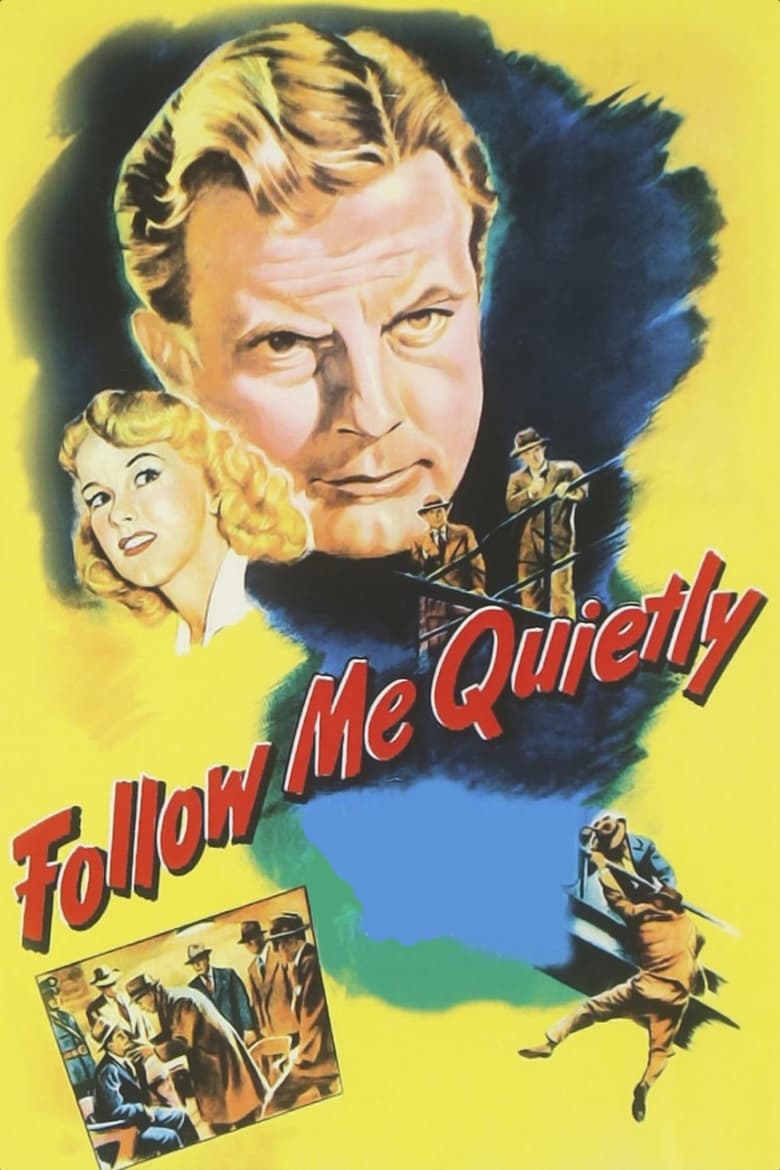
Lieutenant Harry Grant of the Los Angeles Police Department has spent months hunting a serial killer known only as The Judge – a methodical murderer who selects his victims by moral verdict and strikes exclusively during rainstorms. Grant's pursuit has become something close to pathology: he constructs a life-size mannequin of the suspect based on composite evidence, a faceless stand-in for the void at the center of the investigation. When crime reporter Ann Gorman begins covering the case, she and Grant form an uneasy alliance that drifts toward something more complicated than professional collaboration.
The investigation tightens when Grant's team develops a partial profile and surveillance operations begin to yield suspects. Ann, motivated by both journalistic ambition and a growing personal stake in Grant's fate, pushes deeper into the case than either her editors or the department would sanction. The killer – ultimately identified as Charlie Roy – proves as elusive in person as he has been in theory, and the film allows the procedural machinery to slow just long enough to let dread accumulate. The mannequin, returned to periodically, functions less as an investigative tool than as a monument to the limits of rational method against irrational violence.
Follow Me Quietly operates within the police procedural strand of late-1940s noir, sharing its DNA with the semi-documentary crime films that RKO and other studios were producing in the wake of The Naked City. At sixty minutes it has no room for detours, and Fleischer uses that compression deliberately – the film's brevity is itself an argument about the mechanical, relentless logic of both the killer and the men assigned to stop him.
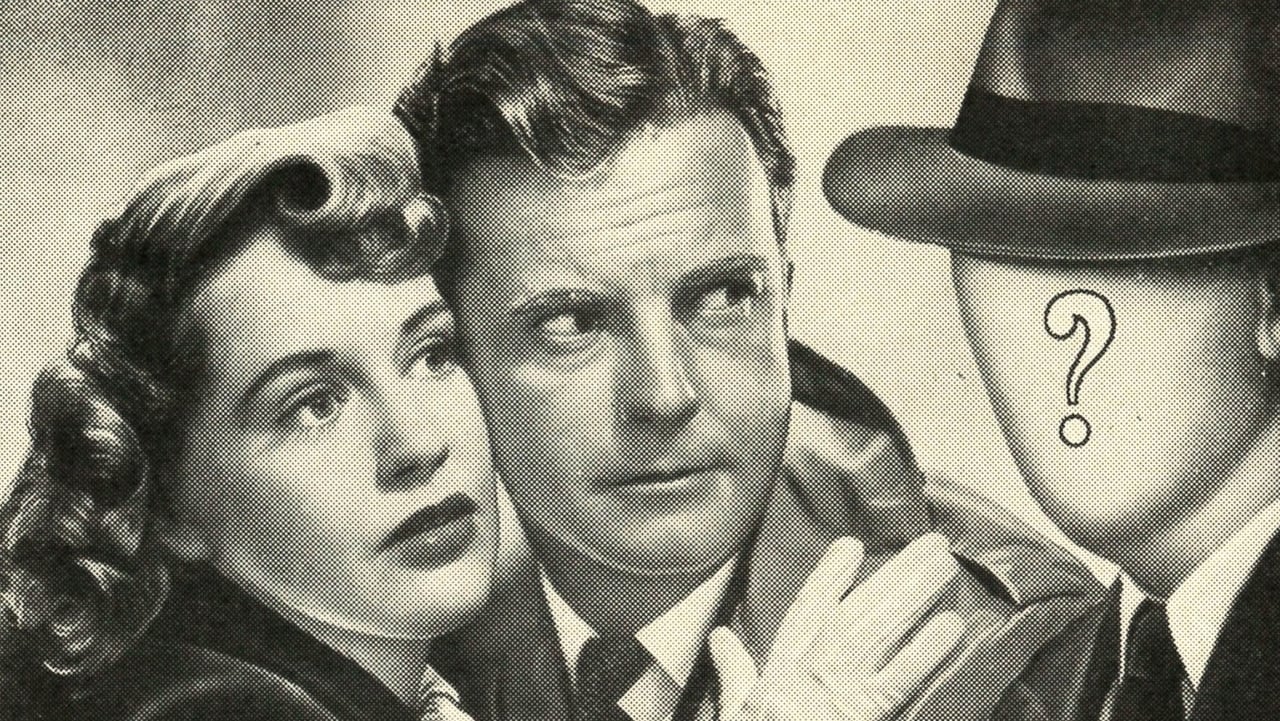
Richard Fleischer made Follow Me Quietly one year after his equally lean RKO effort Bodyguard, and the film confirms his facility with constraint. At sixty minutes, it functions less as a feature than as a controlled experiment in procedural dread – stripping the serial-killer narrative to its load-bearing elements and testing how much atmosphere can be generated from a budget that barely covers its own ambitions. The mannequin conceit is the film's real subject: Grant's need to materialize the abstract threat reflects a postwar anxiety about violence that refuses to resolve into motive or psychology. Edwin Max's performance as Charlie Roy resists the theatrical menace that lesser noirs would have demanded, rendering the killer almost bureaucratic in his certainty. The film does not romanticize the detective's obsession, nor does it fully condemn it – Grant's compulsion is presented as occupational deformation, the cost of institutional proximity to the worst of human behavior. That ambivalence is what keeps Follow Me Quietly from being merely efficient.
– Classic Noir
Grant moves through a dimly lit industrial interior, his flashlight cutting narrow channels through absolute dark. Robert De Grasse frames him in deep shadow with only the beam as mobile light source, the surrounding space rendered as architectural suggestion rather than solid geometry. When Grant rounds a stack of crates and finds himself facing the mannequin – positioned by the killer as deliberate provocation – De Grasse holds the shot just long enough for the viewer to share Grant's momentary cognitive failure, the effigy and the man collapsing into each other in the half-light.
The scene externalizes what the rest of the film keeps interior: Grant has spent so long projecting form onto absence that the absence has learned to project back. The mannequin was constructed to help Grant think; here it is used against him, transformed by the killer into a weapon of psychological disorientation. Fleischer does not underline the irony. He simply holds the frame and lets the darkness do its work.
Robert De Grasse had photographed RKO productions for over a decade by 1949, and Follow Me Quietly shows the efficiency of a cinematographer who understood how to make institutional budgets look like artistic decisions. Working predominantly on studio-constructed sets that stand in for Los Angeles streets and interiors, De Grasse uses high-contrast lighting with deep shadow fill to eliminate visual information the budget could not provide – the negative space becomes atmosphere by necessity and design. His handling of the rain sequences is particularly controlled: wet pavement reflects lamplight in smeared horizontals, giving the frame a surface instability that mirrors the investigation's psychological texture. The flashlight sequence in the warehouse represents his most formally interesting work in the film, reducing the visual field to whatever the diegetic beam illuminates and using that constraint to generate genuine spatial unease. De Grasse never aestheticizes the violence; his lighting serves the film's moral logic, which insists that darkness is not romantic but simply the condition in which certain men operate.
Follow Me Quietly is in the public domain and streams free at Archive.org in multiple transfers; print quality varies, but the better uploads are serviceable for critical viewing.
TubiFreeTubi has carried the film periodically in its classic noir rotation; availability fluctuates, so confirm before seeking.
Amazon Prime VideoSubscriptionThe film has appeared through Prime Video channels specializing in classic cinema; verify current availability as catalog rights shift.