Films People Pull a Fast One Night Beat Reading Room On TV Shop
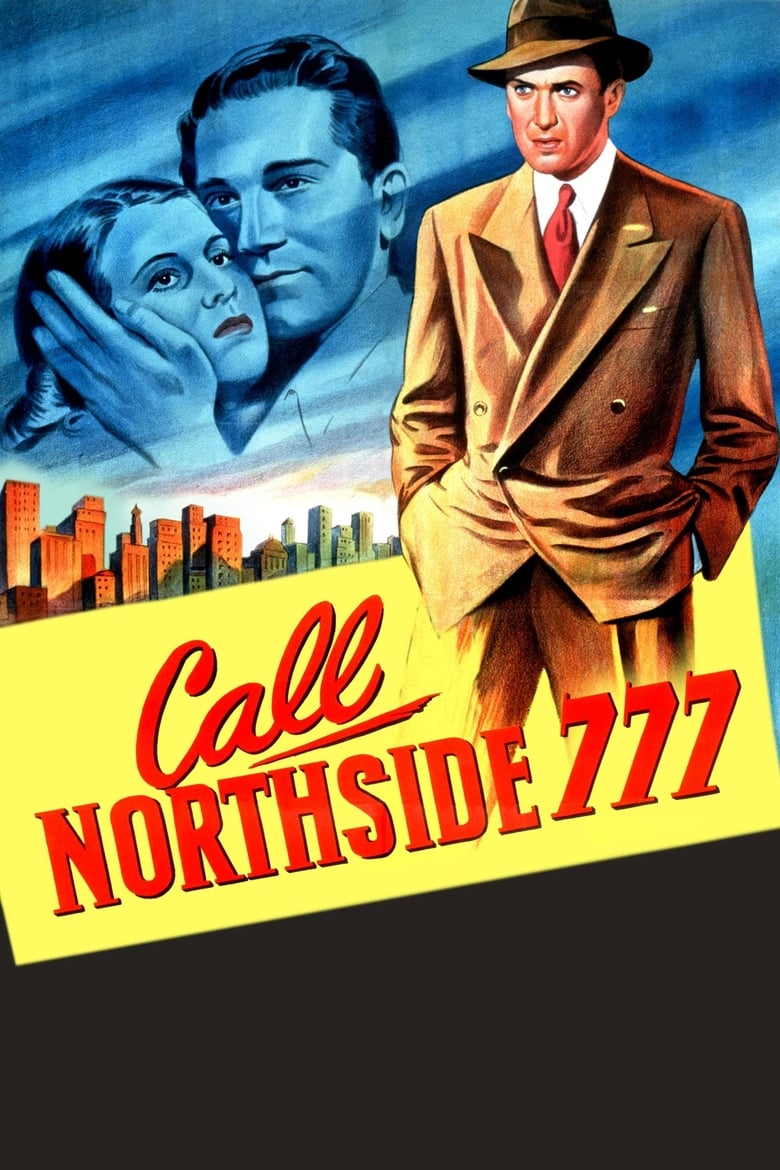
Call Northside 777 1948
1948 20th Century Fox
★★★☆☆ Notable
Film Noir · 111 minutes · Black & White

Call Northside 777

Directed by Henry Hathaway
Year 1948
Runtime 111 min
Studio 20th Century Fox
TMDB 6.7 / 10
"A reporter pulls on an eleven-year-old thread and finds a city's conscience unraveling with it."

In 1944 Chicago, a small classified advertisement placed by a Polish scrubwoman named Tillie Wiecek offers $5,000 for information that will clear her son Frank, convicted of murdering a policeman eleven years earlier. P.J. 'Jim' McNeal, a cynical staff reporter for the Chicago Times, is assigned the story by his editor Brian Kelly – not to pursue justice, but to sell newspapers. What McNeal expects to be a routine human-interest column gradually draws him into the machinery of a wrongful conviction, the institutional indifference that sustained it, and the quiet devastation it has visited on Frank Wiecek's family.

As McNeal digs deeper, the case resists easy resolution. Witnesses have moved, memories have hardened into self-protection, and the legal record offers only the official version of events. Frank Wiecek, serving a life sentence at Stateville Penitentiary, is a contained and wary man – cooperative but not pleading, too long in the system to expect rescue. His former wife Helen has remarried and rebuilt her life. His mother, Tillie, has spent eleven years on her knees scrubbing floors to fund a reward no one claimed. The opposition McNeal faces is not dramatic villainy but something more corrosive: bureaucratic inertia, political caution, and the reluctance of institutions to admit error.

Call Northside 777 belongs to the cycle of semi-documentary crime films that 20th Century Fox developed in the late 1940s – films that borrow the authority of journalism and the weight of location shooting to press noir's characteristic anxieties against documented fact. The film's moral terrain is closer to procedural persistence than to fate or transgression, yet the shadow of a system that can imprison an innocent man for more than a decade carries its own darkness, quieter and more systemic than the genre's usual nocturnal violence.
Classic Noir

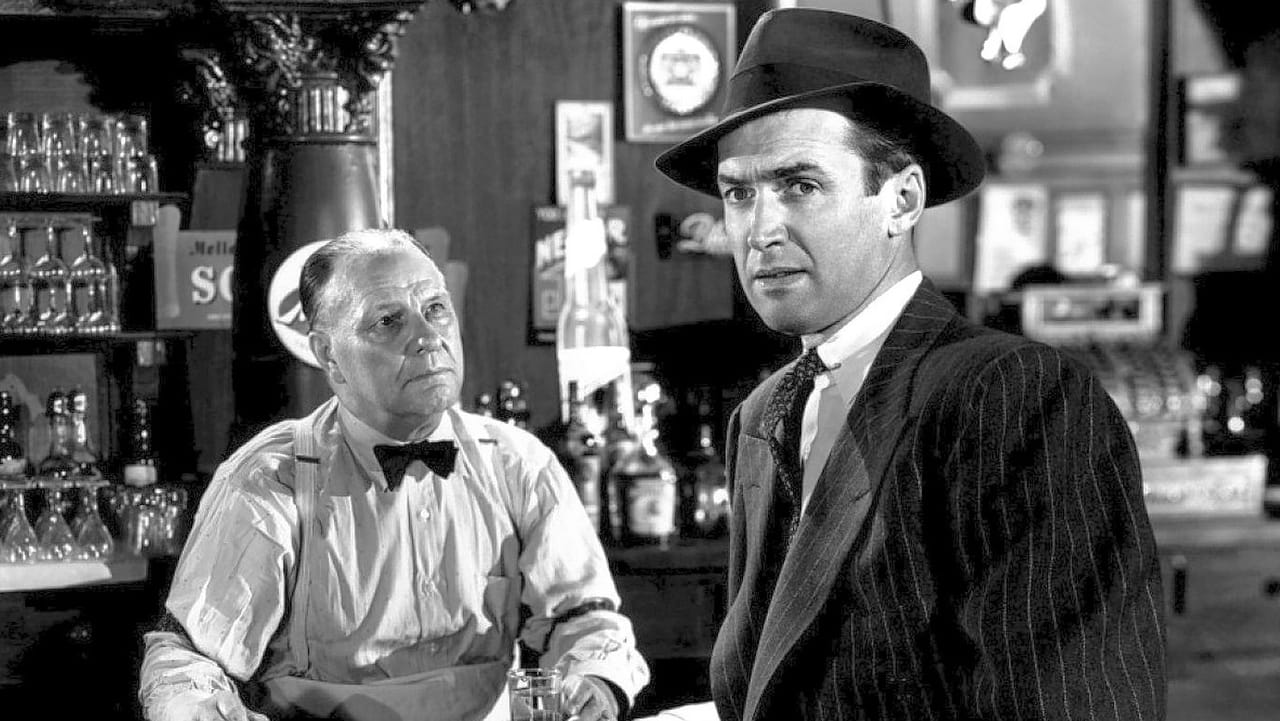
Henry Hathaway's film occupies an instructive position in the noir canon precisely because it redirects the genre's pessimism away from individual corruption and toward institutional failure. Based on a documented Chicago case investigated by reporter James McGuire in the 1940s, it uses the semi-documentary form – location footage, title cards, voice-of-God narration – not as stylistic affectation but as argumentative pressure: this happened, the framing insists, and no one in authority wished to correct it. James Stewart, still negotiating between his pre-war persona and the darker registers he would explore in Hitchcock's films, is well deployed as a man whose skepticism becomes moral commitment by accumulation rather than epiphany. Richard Conte's Frank Wiecek is the film's moral center, but Hathaway keeps him deliberately at a remove – observed rather than confided in, a figure of institutional damage more than dramatic expression. The result is a film in which the genre's usual nocturnal atmosphere is replaced by the fluorescent chill of courtrooms, newsrooms, and prison visiting rooms – spaces where power is exercised at a remove from personal accountability.

– Classic Noir
3 ★★★☆☆ Notable
Credits

The Crew

DirectorHenry Hathaway
ScreenplayJerome Cady
CinematographyJoseph MacDonald
MusicAlfred Newman
EditingJ. Watson Webb Jr.
Art DirectionMark-Lee Kirk
CostumesKay Nelson
ProducerOtto Lang
Performances

The Cast

Close Reading

The Signature Scene

Call Northside 777 – scene
The Wirephoto Machine Evidence Emerges from Static

Late in the film, McNeal and the Times staff gather around a wirephoto machine as a photograph of disputed evidence is transmitted from Poland. Hathaway and cinematographer Joseph MacDonald frame the sequence with the patience of genuine procedural tension: the machine occupies the center of the frame, operators and reporters clustered around it, the camera holding rather than cutting, watching the image resolve line by line from noise into legibility. The light is institutional – flat, overhead, without shadow – and that flatness is itself expressive, the absence of noir's usual chiaroscuro signaling that what is at stake here is not atmosphere but fact.

The sequence makes its argument through duration. The image does not arrive dramatically; it accumulates. What the scene reveals is the film's core proposition: that truth in a bureaucratic society is not witnessed but processed, that it must pass through machines, official channels, and reluctant institutions before it can be said to exist. The wirephoto is not a revelation in the noir sense – no dark secret brought to light – but a correction, painstaking and impersonal, which is precisely the point.

Visual Language

The Cinematography

🎞️
Joseph MacDonald – Director of Photography

Joseph MacDonald's work on Call Northside 777 is among the more disciplined examples of location-integrated cinematography in the cycle of late-1940s Fox semi-documentaries. Shooting extensively in Chicago – Stateville Penitentiary, the Chicago Times building, the Maxwell Street neighborhood – MacDonald calibrates his work to reinforce the film's documentary claims without abandoning compositional control. Interior spaces, particularly the prison and the newsroom, are lit with a diffuse institutional hardness that denies the expressionist shadow-play of studio noir; there is nowhere to hide in these frames, which is the point. When the camera moves outdoors into Chicago's streets and yards, MacDonald allows the ambient light of the city to flatten and democratize the image, giving crowd scenes and neighborhood locations a texture that studio sets could not replicate. His lens choices favor mid-range focal lengths that preserve spatial relationships without distortion, grounding the viewer in physical reality. The effect is not austerity for its own sake but a visual argument: this is a world governed by documents, procedures, and recorded images, not by fate or shadow.

In the Catalogue

Themes & Motifs

Availability

Where to Watch

Also in the Directory

See Also