In the late 1940s, a criminal outfit known as the Tri-State Gang moves through Virginia, Maryland, and North Carolina leaving a trail of armed robberies and murder. At its center is George Legenza, played by Steve Cochran with a cold, deliberate menace – a man who kills not from panic but from calculation. The film opens with real law-enforcement officials delivering direct-to-camera endorsements, framing what follows as a document of actual events rather than fiction, a device that colors every subsequent scene with procedural weight.
Around Legenza orbit figures whose fates are determined by proximity to his violence. Mary Simms, played by Virginia Grey, is drawn into the gang's orbit through attachment rather than ambition, and her position becomes increasingly untenable as the body count rises. Bobby Mais and Bill Phillips, younger members of the crew, supply nervous energy against Legenza's stillness. Detective Sergeant Truscott, whose narration anchors the film's documentary frame, tracks the gang across state lines as their operational discipline begins to fray under pressure and internal distrust.
Highway 301 belongs to the semi-documentary crime cycle that Warner Bros. developed in the late 1940s alongside films like The Phenix City Story and The Lineup – productions that borrowed the authority of journalism to intensify genre material. Stone keeps the tone flat and functional, which paradoxically amplifies the brutality. The gang's violence carries no romanticism, and the institutional machinery arrayed against them is presented without heroics, leaving the viewer with something closer to a case file than a thriller.
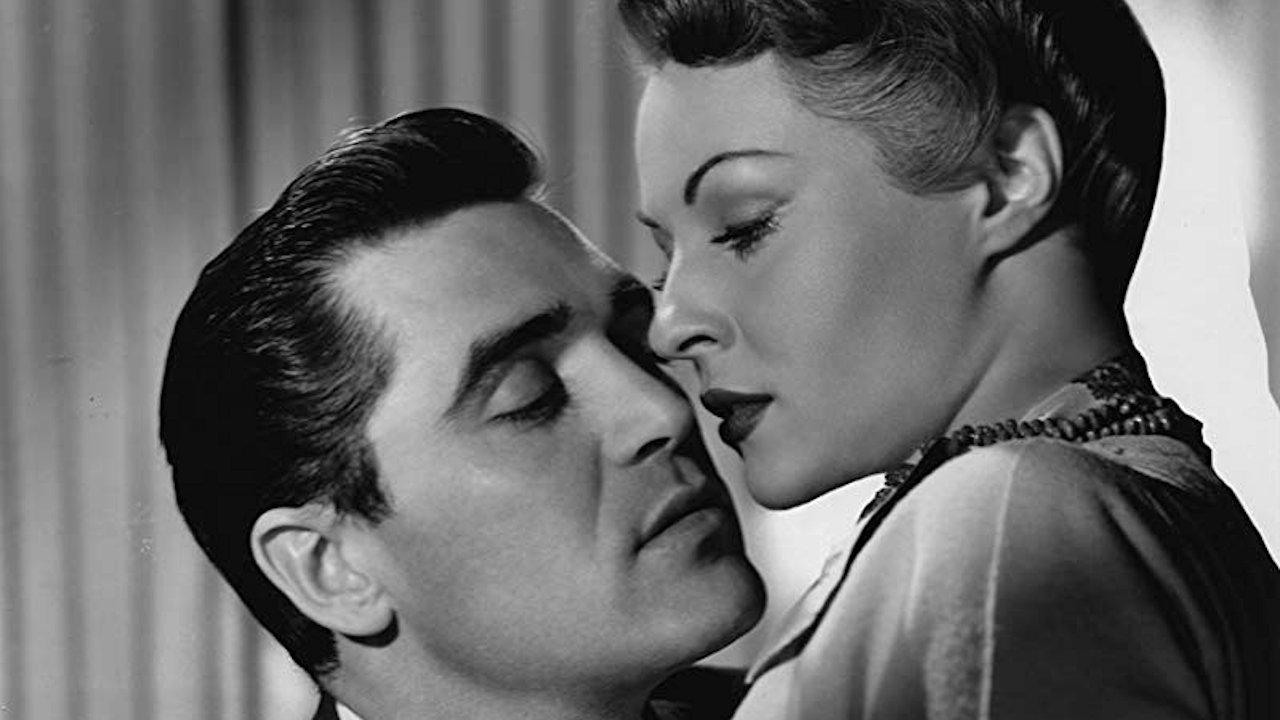
Highway 301 is a second-tier entry in the postwar semi-documentary crime cycle, but that placement does not diminish what it accomplishes on its own terms. Andrew L. Stone, working from his own screenplay, strips the gangster film of the moral ambiguity that had softened the genre's edges since the Production Code tightened its grip. Legenza is not tortured or charismatic in any redemptive sense – he is simply dangerous, and the film has the discipline to leave it there. Steve Cochran, frequently underestimated in the period, uses his physical ease to suggest a man for whom violence requires no justification. The documentary apparatus – real governors on screen, a narrator who speaks over the action like a coroner reading findings – places the film in a lineage that runs from The House on 92nd Street through to television procedurals. What the film reveals about its era is the postwar appetite for crime that looked like fact: reassurance through method, the state vindicated, the outlaw body counted and filed. It is not a comfortable reassurance.
– Classic Noir
The camera holds a medium shot of the hotel room interior, the light source a single practical lamp that throws the far wall into darkness and leaves half of Cochran's face in shadow. Guthrie's framing is tight enough that the room feels contractile – walls present at the edge of the frame, the window a rectangle of grey that offers no exit. When Legenza moves toward the woman, the camera does not track with urgency; it holds, letting the geometry of confinement do the work.
The scene clarifies the film's central argument about power within the gang. Legenza's authority is not organizational – it is physical and psychological, and it operates in private spaces as completely as in armed confrontations. The woman's stillness is not passivity but the learned behavior of someone who has correctly assessed her options. Stone and Guthrie refuse to editorialise with cutting or music cues; the menace is structural, built into the composition itself.
Carl E. Guthrie's work on Highway 301 is calibrated to the film's semi-documentary ambitions without sacrificing the visual grammar of noir. Shooting largely on location across Virginia and Maryland, Guthrie uses available architecture to generate confinement – low ceilings, narrow corridors, roadside interiors that compress the frame naturally rather than through studio artifice. His lighting favors hard sources with limited fill, so that shadow falls decisively and figures move in and out of legibility. There is a consistency to his treatment of Cochran: the actor is rarely lit symmetrically, one side of his face typically darker, a visual habit that reinforces the character's opacity without resorting to expressionist excess. The road sequences, which might have opened the film into something more expansive, are handled with a flat documentary light that denies romance to movement itself. Guthrie does not impose a style so much as withhold one, and the restraint serves Stone's argument that this is a record, not a legend.
Tubi has carried Highway 301 in a serviceable transfer; free access makes it the most practical starting point for most viewers.
Archive.orgFreeA public domain print is available at Archive.org, though transfer quality varies – adequate for study, less so for formal viewing.
TCMSubscription / BroadcastTCM periodically programs Highway 301 within Warner Bros. crime retrospectives; check the schedule for broadcast or streaming via Max.