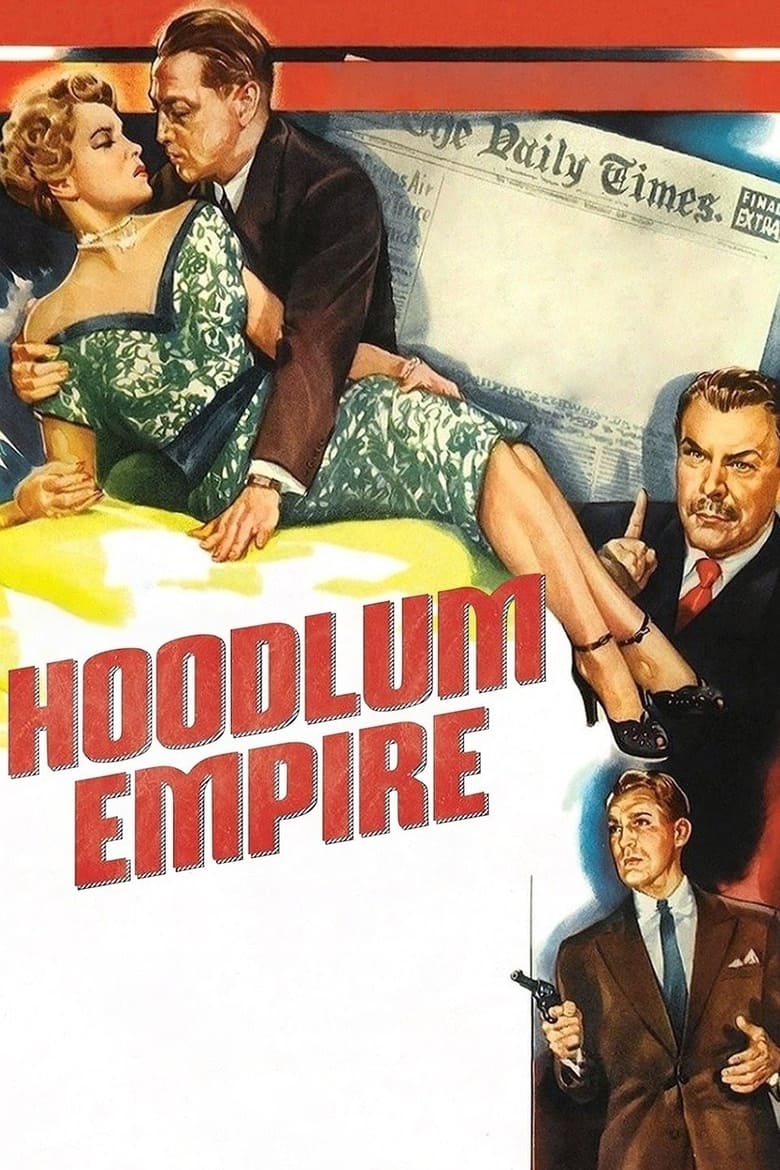
In an unnamed American city, Senator William J. Stephens – a man of ostensible reform credentials – finds himself entangled with Charles 'Charley' Pignatalli, a mid-level mob operator with political ambitions of his own. The connection is not accidental: Stephens has been quietly accommodating syndicate interests while maintaining his public image as a crusader. Into this uneasy arrangement comes Connie Williams, a woman who knows enough about both men to be dangerous to either.
The arrival of Marte Dufour Gray, wife of the volatile Joe Gray, shifts the film's moral geometry. Joe Gray operates on the margins of the syndicate's structure, and his loyalties are neither fixed nor trustworthy. Nicholas Mancani, the organization's senior figure, moves through the background with quiet menace, while Senator Tower and the Reverend Simon Andrews represent two varieties of civic respectability, each compromised in its own way. Allegiances fold and refold as the political and criminal worlds press against each other.
Hoodlum works within the postwar cycle of crime films that examined corruption not as aberration but as institutional fact. The film's real subject is the infrastructure of dishonesty – the handshakes, the favors, the look the other way – that sustains men like Pignatalli and insulates men like Stephens. Republic Pictures' B-production context gives the film a functional economy that suits its subject matter, and the ensemble cast, led by Brian Donlevy and Claire Trevor, keeps the moral ambiguity operational.
Hoodlum arrives near the end of Republic Pictures' sustained engagement with crime programmers, and it carries both the virtues and constraints of that context. Joseph Kane, better known for Westerns, approaches the material with a workman's directness that, at its best, strips away melodrama and lets the corruption speak for itself. Brian Donlevy brings his characteristic tight-lipped authority to Senator Stephens, making the character's moral compromise feel structural rather than personal – less a fall than a settled arrangement. Claire Trevor, reliably the most intelligent performer in any room, lends Connie Williams a wariness that registers as survival intelligence. Luther Adler's Mancani is the film's most unsettling presence precisely because he is understated. What the film reveals about its era is less the existence of syndicate crime than the degree to which respectable institutions – the Senate, the church, civic leadership – are depicted as co-dependent with it. In 1952, with organized crime hearings still resonating from the Kefauver Committee, that argument carried documentary weight.
– Classic Noir
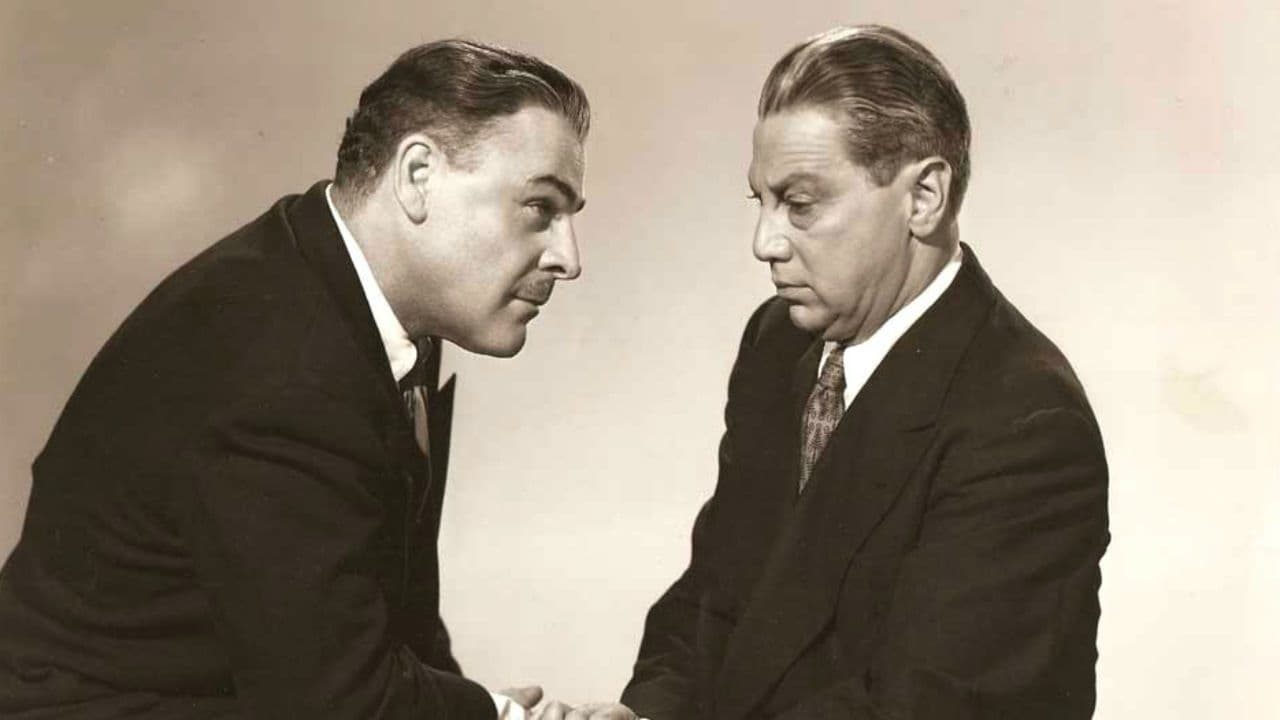
Kane and cinematographer Reggie Lanning position the exchange across a wide institutional table, the camera holding a measured two-shot that refuses to favor either man. Light comes from above and slightly behind Donlevy, casting a partial shadow across his jawline that softens the Senator's authority without eliminating it. Pignatalli, by contrast, is lit more flatly – exposed rather than illuminated. The frame is deliberate and symmetrical in a way that underscores the film's argument: these two men occupy the same moral coordinates, whatever their respective titles suggest.
The scene refuses the easy grammar of the confrontation – no raised voices, no dramatic reverse shots cutting between extremes. What it reveals is that the Senator and the hoodlum are not adversaries discovering each other but partners renegotiating terms. The film's central thesis is contained here: power in this world does not oppose corruption, it administrates it. The stillness of the composition is precisely the point.
Reggie Lanning, Republic's reliable in-house cinematographer through much of the 1940s and into the 1950s, brings a controlled pragmatism to Hoodlum that suits the film's institutional subject. Working largely on studio sets with occasional location inserts, Lanning relies on mid-range lenses that keep geometry legible – corridors that recede with purpose, offices that feel both functional and airless. Shadow work is selective rather than expressionistic; where a pure noir visual grammar might use chiaroscuro to signal psychological disturbance, Lanning uses it to mark political exposure. A character moves out of the light when they become vulnerable, not when they become sinister. The result is a visual language in which the moral danger is ambient rather than dramatized. Backgrounds are populated with bureaucratic texture – filing cabinets, coat racks, institutional furniture – that grounds the film's criminal transactions in the ordinary machinery of governance. The cinematography does not aestheticize the corruption; it locates it.
Republic Pictures titles from this period appear intermittently on Tubi; availability should be confirmed before seeking, as the catalogue rotates.
Archive.orgFreeIf the film has entered the public domain, Archive.org offers no-cost streaming without registration, though print quality varies by available source.
Amazon Prime VideoRentalOlder Republic crime titles occasionally surface as low-cost rentals on Amazon; check current listings as availability shifts with licensing cycles.