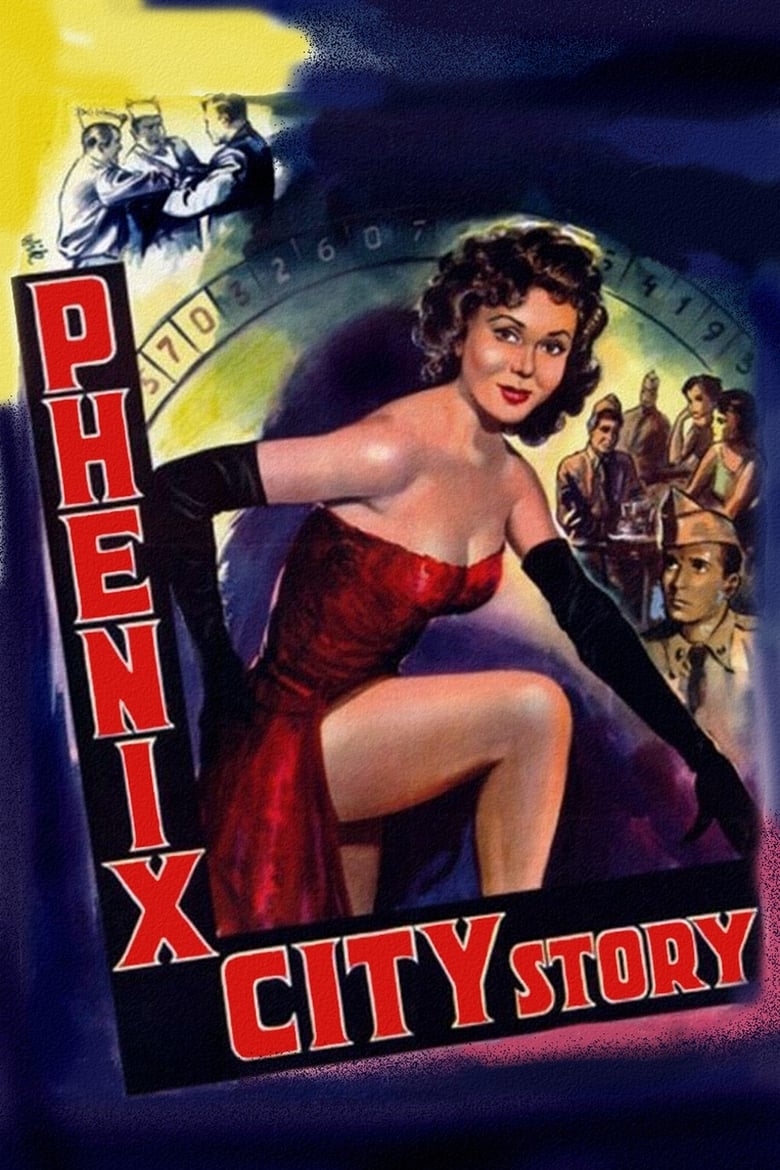
In the early 1950s, Phenix City, Alabama operates as an open sinkhole of vice – gambling dens, prostitution, and organized violence administered by a criminal syndicate under the direction of Rhett Tanner. The film opens with a documentary prologue, interviewing real citizens still shaken by what the town endured, before shifting into dramatized narrative. John Patterson returns home from military service to find his father, the attorney Albert 'Pat' Patterson, cautiously positioned against the syndicate but unwilling yet to escalate the fight. The younger Patterson, played with controlled urgency by Richard Kiley, finds himself drawn into a conflict he had hoped to avoid.
When Pat Patterson agrees to run for the Democratic nomination for state attorney general – the one office with the reach to dismantle Tanner's operation – the syndicate responds with escalating brutality. Intimidation gives way to murder, and the campaign becomes a test of which institution is more durable: democratic process or organized criminal power. Ellie Rhodes, a woman caught between the world the syndicate controls and the resistance forming around the Pattersons, complicates the moral geometry of the film without softening it. The violence is direct and largely unsentimentalized, and the machinery of corruption is rendered with procedural specificity that makes it credible.
The film operates in the tradition of the civic noir – a strain that treats the American city or town not as backdrop but as organism, one capable of disease and, with sufficient effort, of partial recovery. Like its closest counterparts, it is interested less in the psychology of individual criminals than in the structures that sustain criminality: the bought official, the intimidated witness, the culture of silence. Whether institutional pressure is sufficient to overcome organized violence is the question the film pursues to its conclusion.
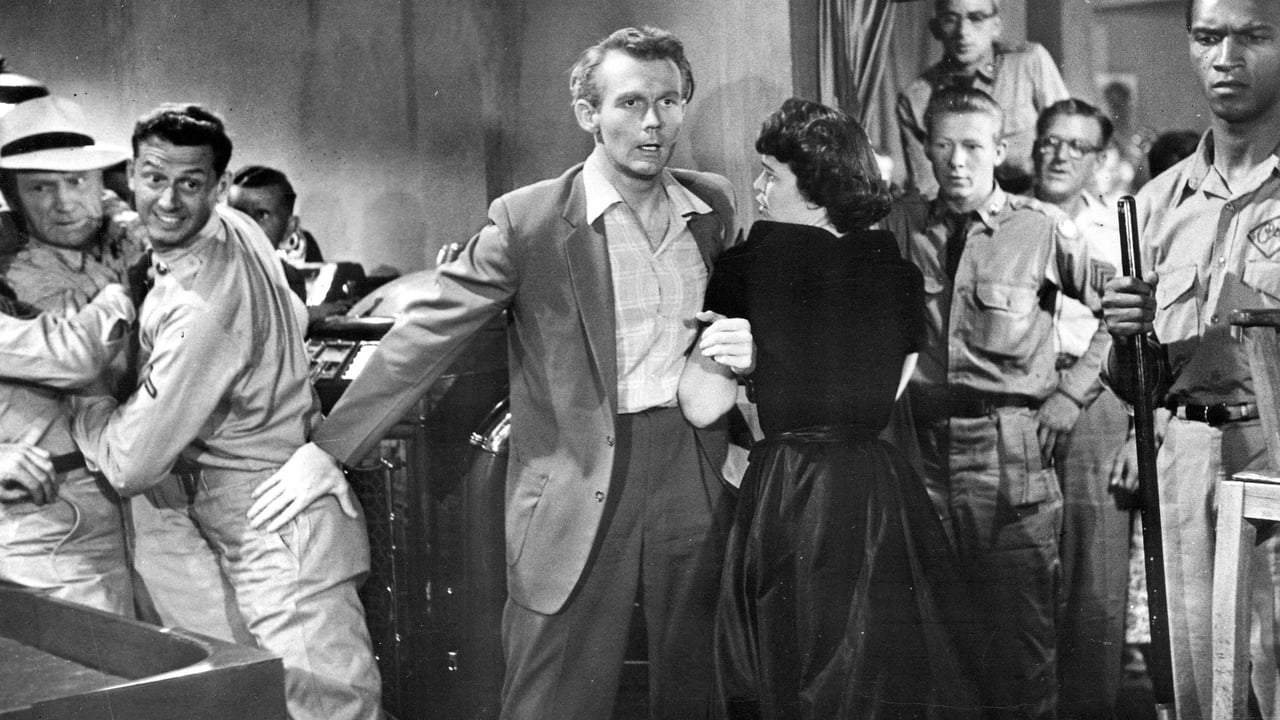
Phil Karlson made a career out of films that treated American civic rot as documentary fact rather than dramatic convention, and The Phenix City Story is the fullest expression of that tendency. The documentary prologue – interviewing actual Phenix City residents shortly after the events depicted – is not merely a framing device; it establishes an evidentiary tone that the dramatized narrative sustains with unusual discipline. Karlson and screenwriters Crane Wilbur and Dan Mainwaring refuse to individualize villainy in ways that might make it comfortable. Edward Andrews's Rhett Tanner is not a colorful monster; he is a functionary of a system, and that is precisely the point. The film belongs to a postwar cycle preoccupied with what American institutions actually do when tested – a preoccupation that produces something closer to political argument than genre exercise. At a studio level, Allied Artists gave Karlson the latitude to shoot extensively on location, and the physical authenticity of the setting becomes its own form of argument. The film is not without structural unevenness, but its refusal of reassuring closure on the question of institutional integrity makes it one of the more honest documents the cycle produced.
– Classic Noir
The murder of Pat Patterson is staged with deliberate plainness. There is no prolonged suspense sequence, no expressionist distortion of the frame. Harry Neumann's camera holds at a middle distance as the act occurs in a residential street at night, the lighting municipal rather than theatrical – a flat, yellowish cast from overhead sources that refuses to glamorize what it illuminates. The body falls in a space that looks exactly like what it is: an ordinary American neighborhood, which is the compositional argument the film has been building toward.
The scene's power is inseparable from its refusal of noir's usual visual rhetoric of doom. The absence of deep shadow and oblique angles reads not as a failure of craft but as a deliberate choice: this violence requires no stylization because its sources are not mysterious. It comes from men operating in daylight institutions. The murder confirms what the film has steadily argued – that criminal power does not require darkness to function, only indifference.
Harry Neumann's cinematography on The Phenix City Story is governed by a principle of deliberate restraint that distinguishes it from the more expressionist strain of American noir. Shooting extensively on location in the actual city rather than on studio sets, Neumann works in available and semi-available light conditions that give the film a texture closer to newsreel than to the carefully controlled chiaroscuro of a studio production. Lens choices tend toward the moderate wide angle, keeping figures embedded in their environments rather than isolated by shallow focus. Shadow work is present but functional – used to establish geography and time of day rather than to externalize psychological states. The effect is to keep moral weight in the world the film depicts rather than in the visual style imposed on it. This approach serves Karlson's argument precisely: a city this corrupt does not require expressionist distortion to appear threatening. The location footage of Phenix City's streets, storefronts, and gambling operations carries documentary weight that no studio reconstruction could replicate, and Neumann's unfussy approach to that material keeps the film honest.
Tubi has carried the film in its classic crime section; verify availability in your region before viewing.
Archive.orgFreeA public domain print is available for streaming and download, though transfer quality varies between uploads.
Amazon Prime VideoRentalA cleaned digital rental is typically available for on-demand viewing at standard definition or better.