John R. Ingram, played by Edward G. Robinson, is a oil-field worker who serves time for a crime he did not commit, railroaded by the corrupt machinations of a company man named Rawlins. When Ingram is released, he returns to his wife Helen and young son Hank carrying the quiet fury of a man who has lost years he cannot recover. The world outside the prison gates has moved on without him, and the social contract that once held his life in place has been voided.
Ingram's attempts to reclaim his standing are blocked at every turn, and the film's central antagonist, the oily Bill Ramey, resurfaces to extend the original blackmail into new territory. Allegiances within Ingram's domestic circle are tested as Helen tries to hold the family together while her husband's rage calcifies into something more dangerous than grief. The film uses the domestic sphere not as refuge but as another arena of pressure, where loyalty and exhaustion wear the same face.
Blackmail operates at the intersection of the wronged-man picture and the social-problem film, a pairing common in late-Depression Hollywood that would feed directly into the harder postwar noir cycle. Robinson, working against his established gangster image, gives Ingram a controlled bitterness that keeps the film honest. The story's interest lies less in whether justice will arrive than in what shape a man takes when the institutions meant to protect him have already failed.
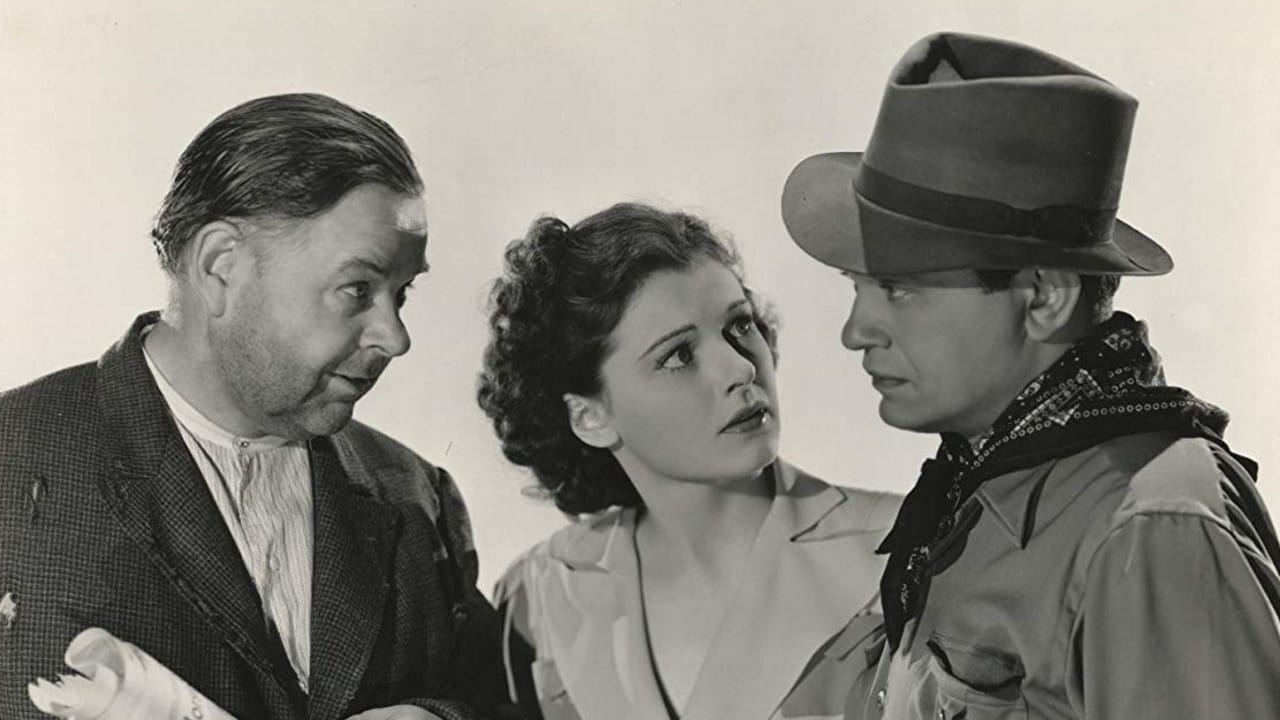
Blackmail sits at an instructive transitional moment: the wronged-man melodrama is beginning to acquire the moral pessimism that will define classical noir within a few years. H. C. Potter is not a director associated with the genre, and that outsider quality is both a limitation and a clarifying lens. The film does not indulge the expressionist atmosphere that would characterize later noir; its shadows are social rather than stylistic. Robinson's performance is the primary argument. Having spent the decade defining the screen gangster, he here inverts that persona to examine what the law's violence looks like when applied to an ordinary man. Gene Lockhart's Ramey is an effective counterweight – corrupt not through grand malice but through petty opportunism, which makes the film's critique of institutional complicity more pointed than a simple villain would allow. The 1939 release date places it squarely in a year crowded with more celebrated titles, which partly explains its relative obscurity. That obscurity is unwarranted.
– Classic Noir
Clyde De Vinna lights the scene with a hard overhead source that pools on the desk between the two men, leaving the edges of the frame in comparative darkness. Robinson is positioned lower in the frame than the seated Lockhart, a compositional choice that understates rather than dramatizes the power relation – the camera refuses to grant Ingram the visual dominance the moment seems to demand. When Ingram rises, the camera holds rather than tracks, and the stillness gives the threat its weight.
The scene argues that the film's real subject is not violence but the moment before violence, the accumulation of legitimate grievance that a society fails to address. Ramey's composure throughout the exchange is not courage but the confidence of a man who believes institutions will continue to absorb the damage on his behalf. Ingram's restraint, in turn, reads not as weakness but as the last negotiation between a man's sense of himself and the criminal act the plot is pushing him toward.
Clyde De Vinna, whose career was rooted in MGM's outdoor productions and location work, brings an unexpected plainness to Blackmail that serves the film's social realism better than a more atmospheric cinematographer might have. The photography avoids the deep-focus chiaroscuro that would become a noir signature; instead, De Vinna works in a flatter register that gives the film the look of documented fact rather than heightened nightmare. Interior scenes use practical-feeling light sources – windows, desk lamps – that anchor the story in recognizable working-class and institutional spaces. The oil-field sequences carry genuine location texture, and De Vinna uses the industrial environment to externalize Ingram's condition: the landscape is one of extraction and risk, with no margin for error. Shadow work, where it appears, arrives at moments of moral compromise rather than as ambient atmosphere, making it a narrative signal rather than a decorative one.
TCM is the most reliable home for MGM-catalogue titles of this period and periodically schedules Blackmail in Robinson retrospectives.
Archive.orgFreeA public-domain print circulates on the Internet Archive; quality is variable but the film is fully accessible at no cost.
TubiFree (Ad-Supported)Tubi has carried this title intermittently as part of its classic crime library; availability should be confirmed before viewing.