Films People Pull a Fast One Night Beat Reading Room On TV Shop
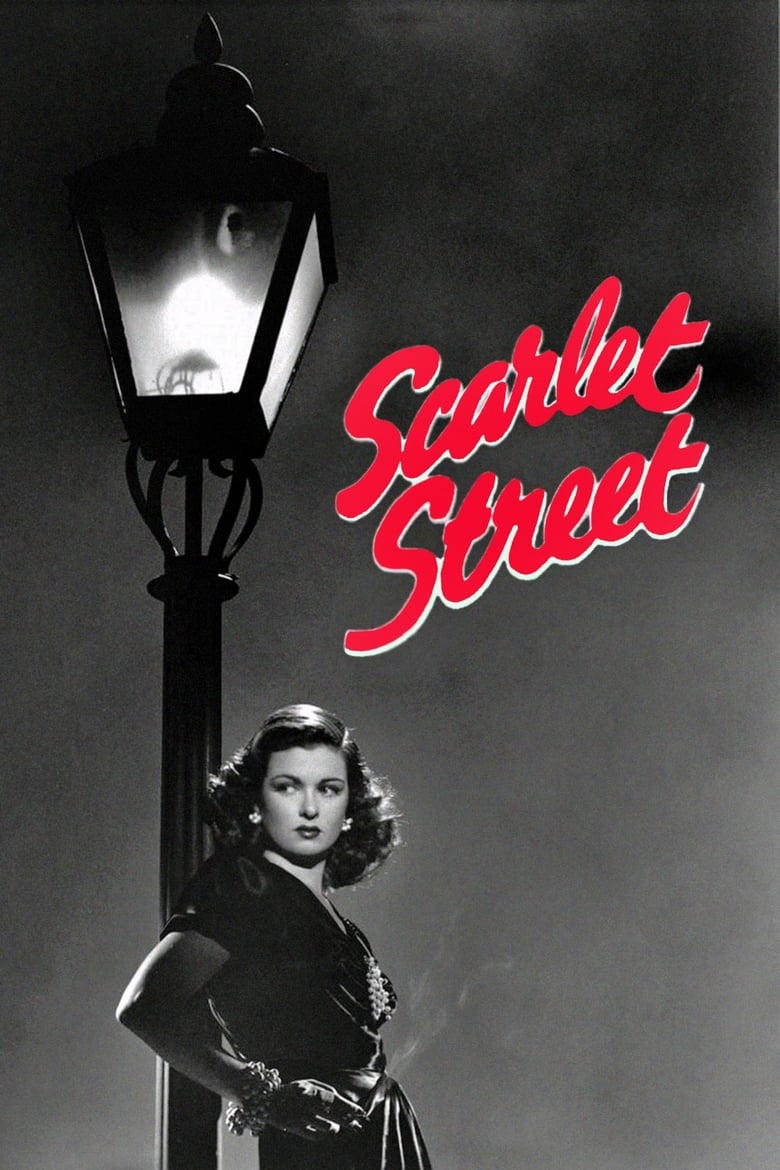
Scarlet Street 1945
1945 Diana Productions
★★★★☆ Recommended
Film Noir · 103 minutes · Black & White

Scarlet Street

Directed by Fritz Lang
Year 1945
Runtime 103 min
Studio Diana Productions
TMDB 7.6 / 10
"A timid man's obsession becomes the instrument of his own destruction."

Christopher Cross is a mild-mannered cashier and Sunday painter who has spent decades in a loveless marriage to the shrewish Adele. One rainy night in Manhattan he rescues Kitty March from what appears to be an assault, unaware that her attacker is Johnny Prince, the small-time grifter she is involved with. Cross falls for Kitty with the quiet desperation of a man who has never been wanted, and begins stealing money from his employer to set her up in a Greenwich Village apartment.

Johnny quickly grasps that Cross's amateur paintings have genuine commercial value and engineers a scheme in which Kitty poses as the artist, attracting the attention of a gallery owner and eventually a wealthy collector. Cross, besotted and willfully blind, continues to paint and to pilfer, while Kitty strings him along at Johnny's direction. The triangle tightens when Cross's domestic circumstances shift unexpectedly, raising the possibility – briefly, devastatingly – that he and Kitty might actually build a life together.

Scarlet Street belongs to the cycle of American noir that imports the fatalism of French poetic realism and turns it against the myth of the self-made man. Adapted from Georges de la Fouchardière's novel La Chienne and Jean Renoir's 1931 film of the same name, Lang's version transplants the story to New York and invests it with a specifically American anxiety about class, desire, and the wages of delusion. The film's resolution is among the most morally unsettling in the classical Hollywood canon.
Classic Noir

Scarlet Street marks a precise intersection of Lang's European determinism and the American studio system's tolerance, in 1945, for narratives in which virtue goes unrewarded and the guilty walk free. Produced independently through Diana Productions – a company co-owned by Lang, Walter Wanger, and Joan Bennett – the film escaped some of the Breen Office's usual corrective pressure, though not without a fight. What emerges is a portrait of masculine self-deception that is more corrosive than almost anything in contemporaneous Hollywood noir. Edward G. Robinson's Christopher Cross is not a man brought down by evil impulses but by an ordinary hunger for beauty and recognition, which makes him both sympathetic and culpable. The film also participates in a postwar reconfiguration of the femme fatale: Kitty is not glamorously predatory so much as casually mercenary, which is, finally, more disturbing. Lang refuses redemption, irony, or consolation, and the film's final image – Cross adrift in an indifferent city – remains one of the genre's most quietly devastating conclusions.

– Classic Noir
4 ★★★★☆ Recommended
Credits

The Crew

DirectorFritz Lang
ScreenplayDudley Nichols
CinematographyMilton Krasner
MusicHans J. Salter
EditingArthur Hilton
Art DirectionAlexander Golitzen
ProducerFritz Lang
Performances

The Cast

Close Reading

The Signature Scene

Scarlet Street – scene
The Studio Apartment, Night Paint, Lies, and Lamplight

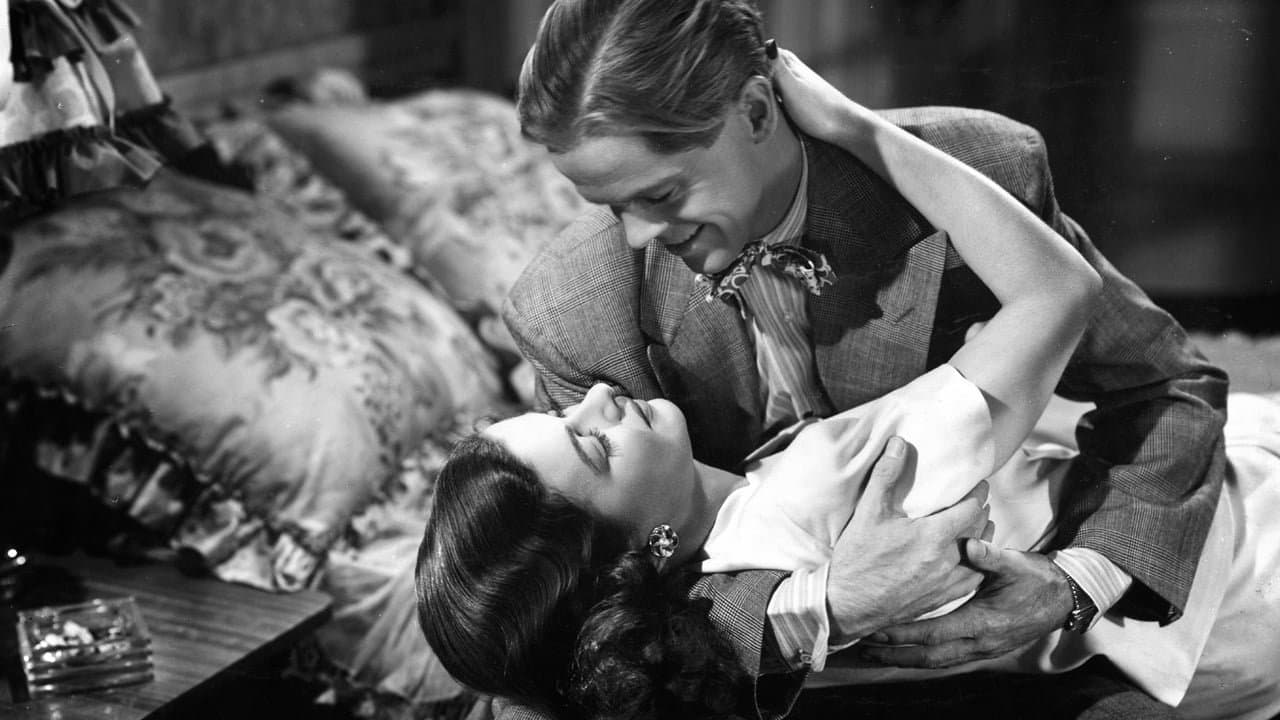
Lang and cinematographer Milton Krasner frame the scene in shallow, cluttered space: canvases lean against every wall, and a single practical lamp throws warm light across Kitty's face while leaving the edges of the room in a darkness that feels permanent rather than incidental. The camera holds Cross in mid-shot as he watches her, the composition placing him slightly off-center so that the paintings – technically his creations, soon to be credited to her – surround him like evidence at a trial. Krasner's lighting draws a hard line between the illuminated lie at the center of the frame and the shadows that constitute its context.

The scene crystallizes the film's central argument: Cross cannot see Kitty clearly because he cannot see himself clearly. His paintings, which the film treats as genuine if untrained expressions of feeling, are the one authentic thing in his life, and he surrenders them with the same passivity with which he surrenders everything else. The frame does not judge him – it simply records the geometry of a man arranging his own ruin.

Visual Language

The Cinematography

🎞️
Milton Krasner – Director of Photography

Milton Krasner's work on Scarlet Street is studio noir photography operating at a high level of moral intentionality. Shooting entirely on Universal soundstages, Krasner constructs a New York of permanent wet pavements, narrow interiors, and light sources that always seem to originate from a single, inadequate lamp. His approach favors deep shadows that are not decorative but architectural – they define the limits of what Cross is permitted to see or understand. Krasner uses close focal lengths in the apartment scenes to compress the space around the characters, making entrapment feel spatial as well as psychological. The exterior sequences – the initial street rescue, Cross's walks through Greenwich Village – are shot with slightly harder key light against dark backgrounds, isolating figures from their environment rather than embedding them in it. This visual grammar reinforces Lang's thesis: these people do not inhabit a shared world so much as adjacent solitudes briefly, fatally overlapping. The photography never aestheticizes its own darkness; it uses shadow as information.

In the Catalogue

Themes & Motifs

Availability

Where to Watch

Also in the Directory

See Also