Films People Pull a Fast One Night Beat Reading Room On TV Shop
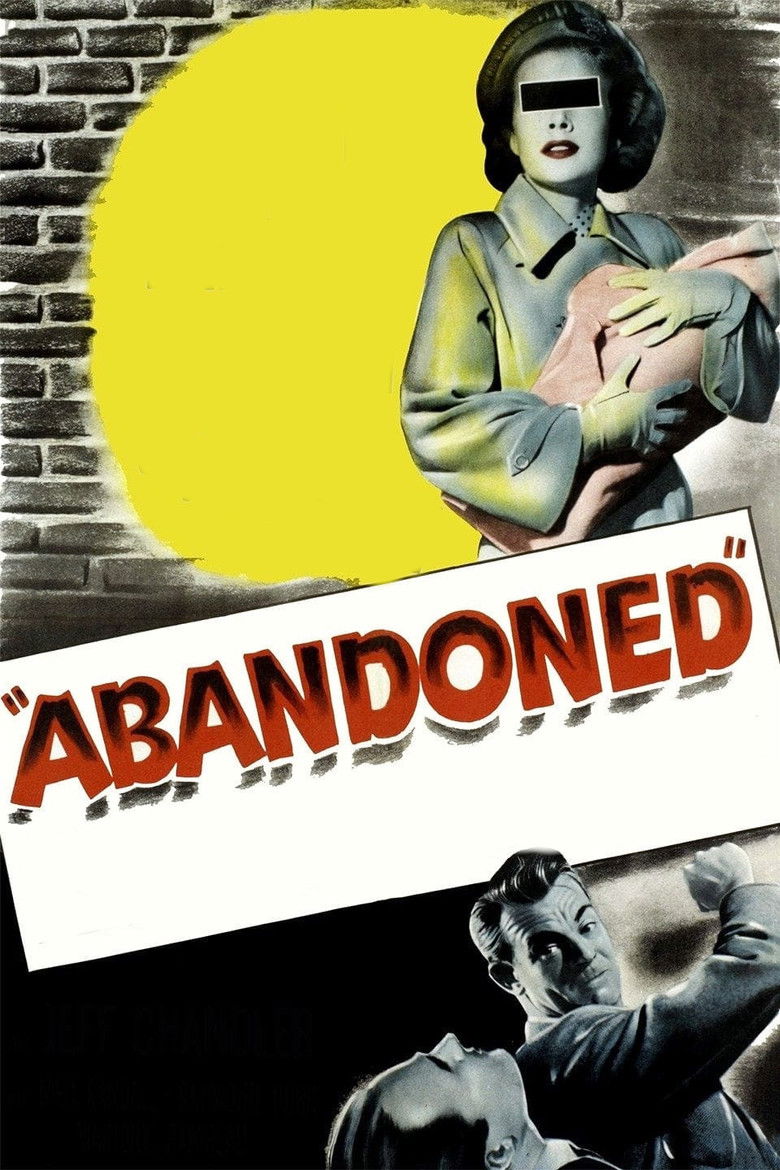
Abandoned 1949
1949 Universal Pictures
★★★☆☆ Notable
Film Noir · 78 minutes · Black & White

Abandoned

Directed by Joseph M. Newman
Year 1949
Runtime 78 min
Studio Universal Pictures
TMDB 6.2 / 10
"A city sells its unwanted children, and the people paid to look away are running out of places to hide."

When Paula Considine arrives in Los Angeles searching for her younger sister Dottie, she finds the girl dead under circumstances the police are prepared to call accidental. Paula refuses the official account and falls in with Mark Sitko, a newspaper reporter who recognizes the outline of something larger than one woman's grief. Dottie, it emerges, was an unwed mother whose infant was processed through a black-market adoption ring operating beneath the surface of the city's respectable institutions.

The investigation pulls Paula and Mark deeper into a network controlled by the cold, methodical Kerric, a syndicate figure who treats human life as inventory. Chief MacRae, the police contact who might be an ally or an obstacle, complicates every move they make. Mrs. Donner, the matronly face of the operation, and the severe Major Ross provide the ring with its cover of legitimacy, blurring the line between civic corruption and outright criminality. Loyalties shift, surveillance closes in, and Paula's personal stake in the case makes her as much a liability as an asset.

Abandoned works within the procedural wing of late-1940s noir, pairing the mechanics of investigative journalism with the genre's characteristically dark view of institutional life. The film treats the black-market baby trade not as sensational backdrop but as a specific indictment of postwar social failure, asking who profits when society refuses to protect its most vulnerable. The resolution is satisfying by genre convention, but the damage documented along the way lingers.
Classic Noir

Abandoned occupies an instructive position in the Universal noir cycle: a studio picture with B-film economy and A-film ambitions, directed by Joseph M. Newman with enough control to let the material's genuine ugliness register. The black-market adoption trade was a documented postwar phenomenon, and the film's decision to root its thriller mechanics in actual social reportage gives it a weight that distinguishes it from more purely stylized contemporaries. Raymond Burr, at this point refining his screen persona as a man of quiet, administrative menace, anchors the criminal apparatus with real unease. Dennis O'Keefe brings his customary watchful competence to Sitko, and the pairing with Gale Storm–cast here in a register considerably darker than her comedic work–generates friction that the script earns. The film does not fully escape the tidiness that Universal periodically imposed on morally complex material, but within those constraints it makes a sustained argument about the institutional indifference that allows exploitation to flourish. That argument still carries.

– Classic Noir
3 ★★★☆☆ Notable
Credits

The Crew

DirectorJoseph M. Newman
ScreenplayIrwin Gielgud
CinematographyWilliam H. Daniels
MusicMiklós Rózsa
EditingEdward Curtiss
Art DirectionRobert F. Boyle
CostumesYvonne Wood
ProducerJerry Bresler
Performances

The Cast

Close Reading

The Signature Scene

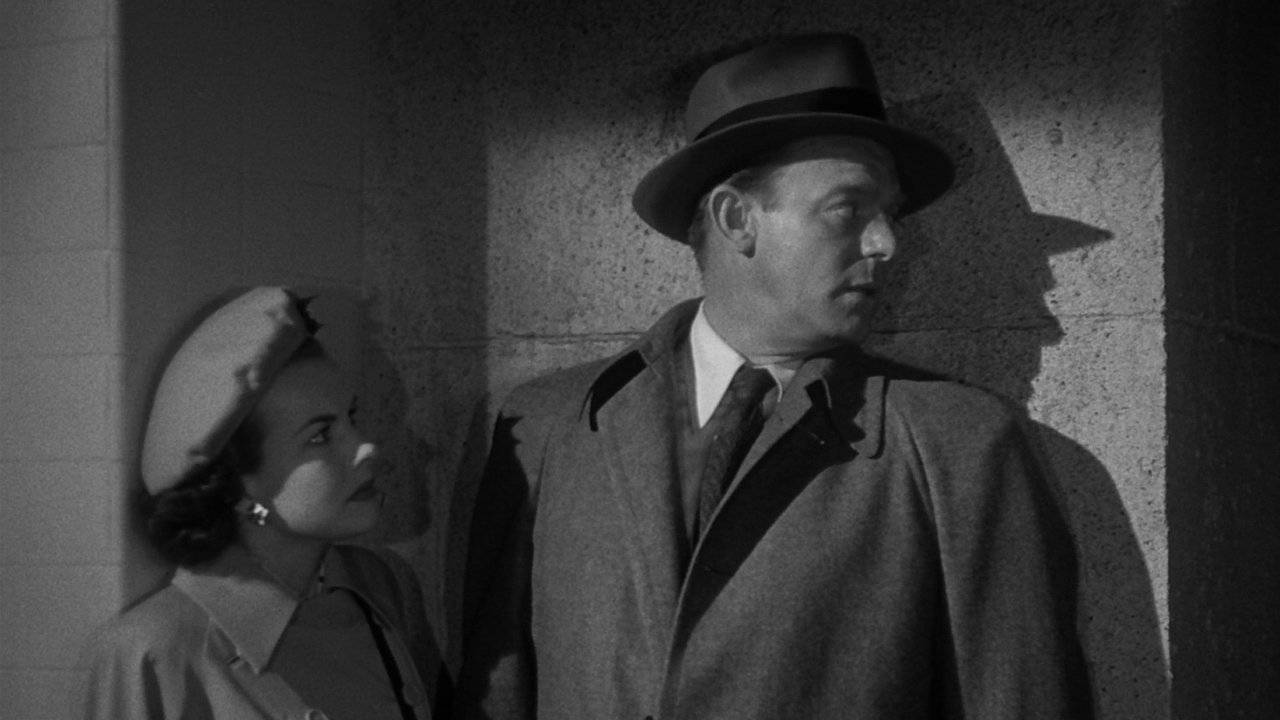
Abandoned – scene
The Syndicate Office, Night Kerric Closes the Door

William H. Daniels frames Kerric behind a desk that functions less as furniture than as a territorial boundary, the light falling in a narrow band across the desktop while the rear of the frame recedes into a near-total darkness. The camera holds at a slight low angle, giving Burr's already imposing physical presence an additional bureaucratic authority. When the door closes, Daniels allows the frame to compress further, the walls pressing inward through deliberate lens choice, so that the space feels sealed rather than simply private.

The scene articulates the film's core argument with visual economy: institutional power does not need to raise its voice. Kerric's menace is administrative rather than theatrical, and the composed, almost static framing refuses to externalize it through movement or cutting. The effect is to suggest that what threatens Paula and Mark is not individual violence but a system with no exits–a reading consistent with the film's larger indictment of the structures, legal and criminal alike, that allow the trade in children to persist.

Visual Language

The Cinematography

🎞️
William H. Daniels – Director of Photography

William H. Daniels brings to Abandoned the same interest in location texture that distinguished his work across multiple decades and studios. While the film relies on studio interiors for its most controlled compositions, Daniels uses Los Angeles locations to establish a city that looks prosperous on its main thoroughfares and hollow just behind them. His lighting setups in the syndicate interiors favor single-source illumination with hard falloff, placing characters in pools of light that read as islands of exposure within ambient threat. Shadow is used less for expressionist atmosphere than for moral cartography: the more deeply implicated a character, the more Daniels tends to pull them toward the frame's darker registers. His lens choices in closer dialogue scenes are conservative by design, keeping faces readable and therefore accountable–a visual ethics that suits a film concerned with the cost of looking away. The cinematography serves the story's central proposition that corruption is not dramatic but procedural, embedded in ordinary rooms and ordinary light.

In the Catalogue

Themes & Motifs

Availability

Where to Watch

Also in the Directory

See Also