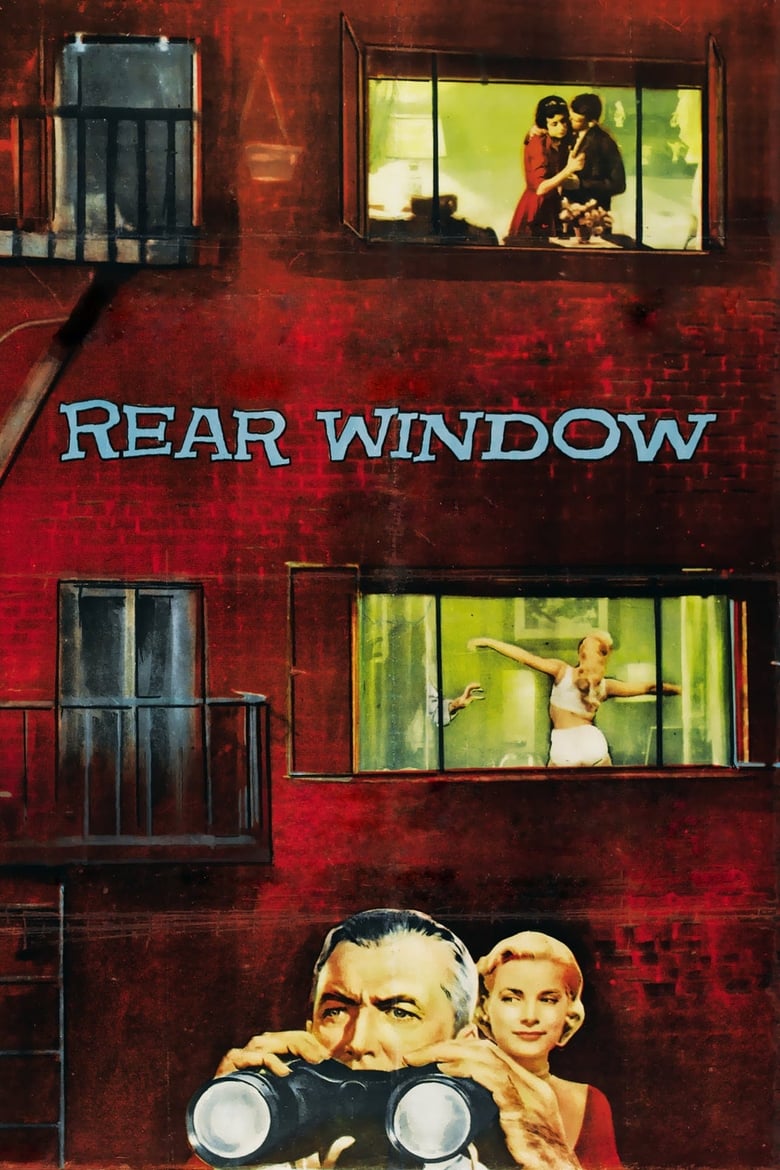
L.B. Jefferies, a photojournalist convalescing in his Greenwich Village apartment with a broken leg, fills his enforced idleness by observing the neighbors whose lives play out across the courtyard. His world contracts to a single rectangle of glass. His girlfriend, the fashionable and persistent Lisa Fremont, visits each evening, pressing for a commitment he refuses to make; his insurance-company nurse, Stella, dispenses both medication and plain-spoken moral judgments. Through this domestic routine runs a current of restlessness that has less to do with the leg than with Jefferies himself.
When Jefferies becomes convinced that Lars Thorwald, the traveling-salesman neighbor across the way, has murdered his bedridden wife, the film's social geometry tightens. His friend Thomas Doyle, a police detective, dismisses the suspicion. Lisa, however, becomes progressively drawn into the investigation, her willingness to take physical risks forcing Jefferies to reassess the assumptions he has made about her. The courtyard, initially a panorama of urban loneliness – Miss Lonelyhearts eating alone, the Songwriter straining toward something he cannot name – becomes a stage on which complicity and desire are rearranged.
Rear Window operates within the noir tradition not through the conventional machinery of crime procedurals but through a sustained examination of the voyeuristic impulse and its cost. The question of guilt – Thorwald's, certainly, but also Jefferies' – remains the film's animating pressure, and Hitchcock refuses to let the mechanics of suspense fully displace the moral unease that underwrites them.
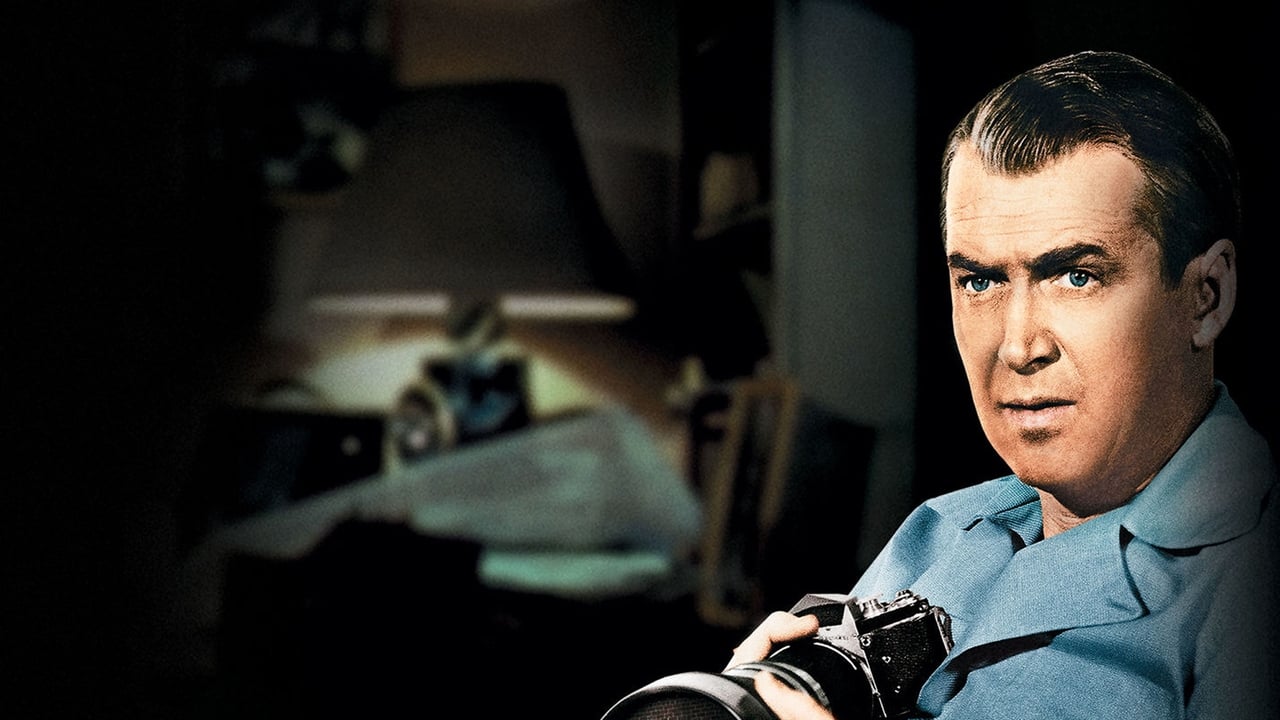
Rear Window arrives in 1954 as a film that turns the procedural logic of noir inside out. Where the genre typically displaces its anxieties onto movement – the midnight drive, the rain-slicked street, the fugitive in flight – Hitchcock fixes his protagonist in a chair and makes immobility the condition of menace. The courtyard set, constructed entirely on a Paramount soundstage, functions as a controlled argument: every window Jefferies observes is a variation on domesticity under pressure, and the aggregate portrait is one of postwar American life surveilled from outside its own consolations. James Stewart brings to Jefferies a quality of watchful detachment that complicates sympathy without dissolving it. Raymond Burr's Thorwald, seen at distance and in fragments, carries an opacity that the film wisely never fully resolves into explanation. What Rear Window ultimately reveals about its era is a pervasive ambivalence toward the domestic order that the postwar settlement promised – and the lurking suspicion that observation, however passive, carries its own form of culpability.
– Classic Noir
The sequence is staged almost entirely in shadow. Jefferies sits helpless in his wheelchair as Thorwald enters from the hallway, the corridor light behind him reduced to a thin band that silhouettes rather than illuminates. Robert Burks lights the apartment interior with near-total darkness, isolating Jefferies' face only when the flashbulb fires – each burst a white, overexposed frame that functions simultaneously as self-defense and desperate signal to the courtyard below. The rhythm of those flashes, stuttering and irregular, turns the camera's own tool into a weapon, and each interval of blackness between them suspends the viewer in the same blindness as the protagonist.
The scene crystallizes the film's central argument: that Jefferies' long exercise in watching has positioned him as both detective and quarry, and that the knowledge he has accumulated offers no physical protection. The flashbulb gambit, inventive as it is, reads also as an admission – he has no other resources. Lisa's earlier willingness to cross the courtyard physically, to enter the space Jefferies could only frame, is confirmed here as the more courageous act, and the distance between observer and participant, which the film has measured from its first frame, collapses with a particular brutality.
Cinematographer Robert Burks, working on the first of his extended collaborations with Hitchcock, faces an unusual constraint: the entire film unfolds from a fixed point of view, which demands that visual variety be achieved through selection rather than geography. Burks uses long telephoto lenses to compress the courtyard's depth and flatten the distinction between Jefferies' apartment and those opposite, making the space feel simultaneously intimate and remote. Lighting within each neighbor's window is calibrated to character – the Songwriter's room warm and cluttered, Thorwald's apartment cooler and more clinical. The courtyard itself is lit to suggest the lateness of the hour without surrendering the detail the plot requires. Shadow work is restrained rather than expressionistic; this is not the noir of deep chiaroscuro but of ambient, sourceable light that pretends to naturalism while directing the eye with precision. The moral logic the cinematography serves is one of accountability: no one in this courtyard is truly in darkness, and that visibility is its own form of indictment.
Rear Window is available on Peacock as part of NBCUniversal's library of classic Paramount titles, offering the best-known route to the film for general subscribers.
Criterion ChannelSubscriptionCriterion's presentation includes supplementary material and context that situates the film within Hitchcock's body of work; availability rotates, so confirm before seeking.
Amazon Prime VideoRentalAvailable for digital rental or purchase in HD, making it the most reliable on-demand option if subscription access is temporarily unavailable.