Films People Pull a Fast One Night Beat Reading Room On TV Shop
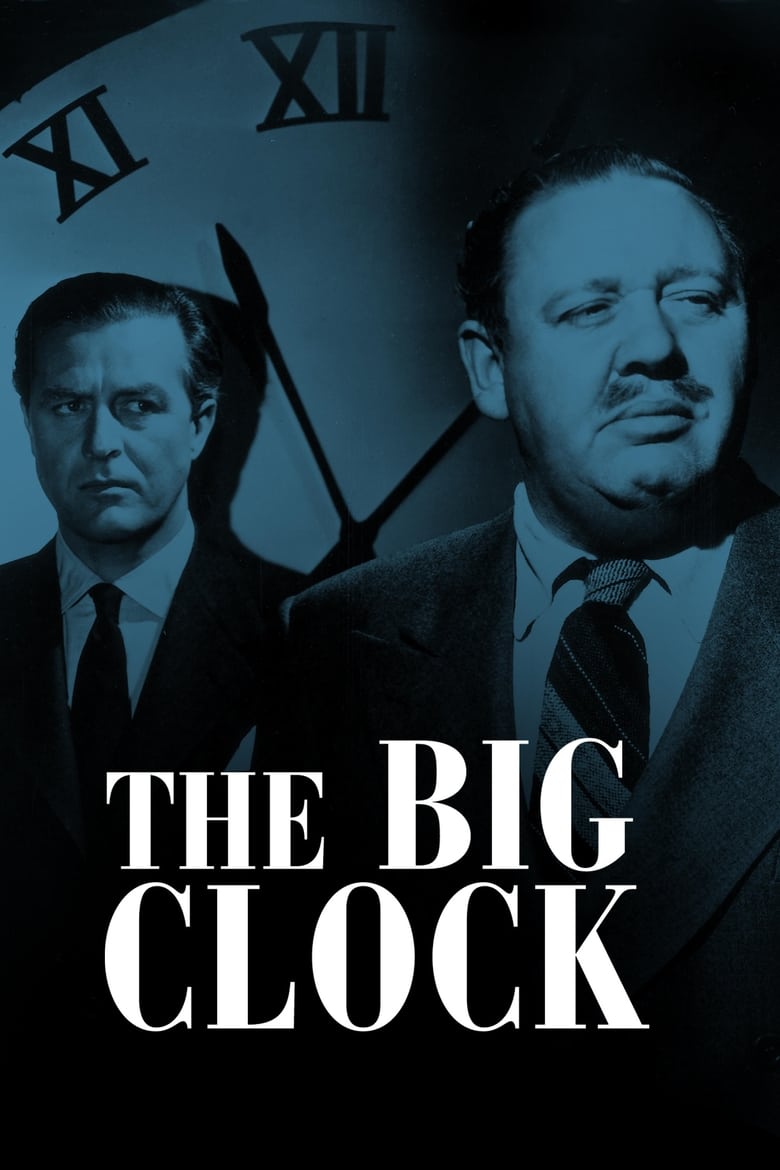
Big Clock 1948
1948 Paramount Pictures
★★★☆☆ Notable
Film Noir · 95 minutes · Black & White

Big Clock

Directed by John Farrow
Year 1948
Runtime 95 min
Studio Paramount Pictures
TMDB 7.3 / 10
"A man hunts himself through the corridors of a building that was never meant to let anyone escape."

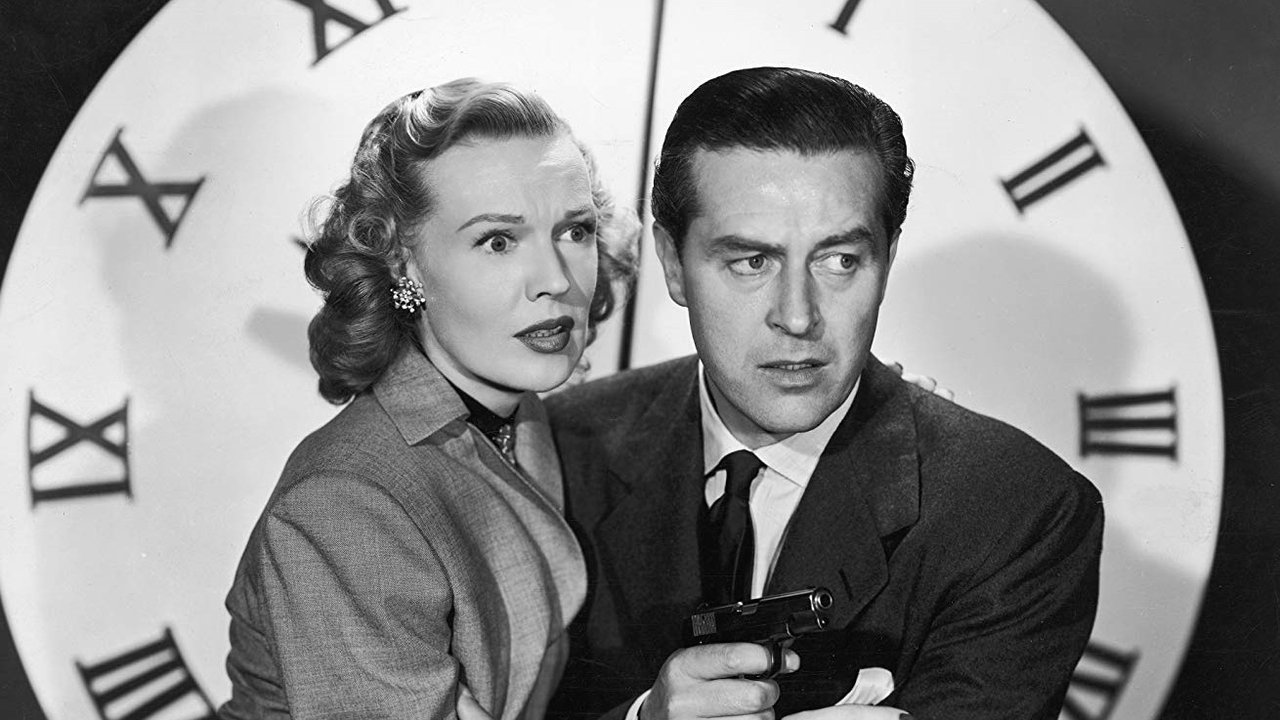
George Stroud (Ray Milland) is a senior editor at Janoth Publications, a media empire run by the imperious Earl Janoth (Charles Laughton). On the eve of a long-delayed vacation with his wife Georgette (Maureen O'Sullivan), Stroud spends an evening with Pauline York (Rita Johnson), a woman recently discarded by Janoth himself. When Janoth arrives unexpectedly and discovers Stroud leaving Pauline's apartment, he draws the wrong conclusion – and later that night, Pauline is murdered.

Janoth, with the cold efficiency of a man accustomed to controlling information, assigns Stroud's own crime magazine to identify the mystery witness seen near Pauline's apartment the night of the killing. The witness, of course, is Stroud. He must now lead the investigation into himself, feeding false leads to his own staff while Janoth's enforcer Steve Hagen (George Macready) tightens the net around him. His colleagues, his sources, and even an eccentric painter named Louise Patterson (Elsa Lanchester) become unwitting instruments in a machinery that could destroy him.

The Big Clock belongs to a subset of noir built not on femmes fatales or rain-slicked streets but on institutional power – the corporation as a mechanism of entrapment. Its closed-world architecture, both literal and bureaucratic, places it alongside films concerned with how modern organizations can be turned against the individual without ever quite breaking the law, a preoccupation that resonates well beyond its 1948 release date.
Classic Noir

The Big Clock is a procedural noir that derives its tension not from violence but from the logic of administration turned predatory. John Farrow directs with an engineer's sense of spatial containment: the Janoth building is less a setting than a machine, its corridors and clocks and interoffice hierarchies forming a net that tightens with bureaucratic precision. Ray Milland brings a controlled, exhausted intelligence to Stroud – a man too embedded in the system he serves to escape it cleanly. Charles Laughton's Janoth is one of the period's more unsettling screen villains, powerful not through physical menace but through the casual exercise of institutional authority. The film's real subject is complicity: how a man can become so entangled in his employer's world that self-preservation and self-destruction begin to look identical. Adapted from Kenneth Fearing's 1946 novel, the screenplay preserves Fearing's satirical edge toward media consolidation and corporate loyalty, making The Big Clock a film that speaks to its postwar moment with more specificity than its genre packaging might suggest.

– Classic Noir
3 ★★★☆☆ Notable
Credits

The Crew

DirectorJohn Farrow
ScreenplayJonathan Latimer
CinematographyJohn F. Seitz
MusicVictor Young
EditingLeRoy Stone
Art DirectionRoland Anderson
CostumesEdith Head
ProducerRichard Maibaum
Performances

The Cast

Close Reading

The Signature Scene

Big Clock – scene
The Janoth Building – Executive Corridor The Hunter Meets His Portrait

Louise Patterson's abstract portrait of Stroud – the only visual evidence linking him to Pauline's apartment – is displayed in the Janoth building's lobby under institutional lighting that flattens color and renders it impersonal. When Stroud is ordered to help identify the subject, Farrow frames him in medium shot against the canvas, the camera stationary, refusing expressionistic distortion. The portrait is garish and wrong in the way outsider art is wrong, yet it is recognizably him. John F. Seitz lights the lobby in hard, even tones that strip away shadow, denying Stroud the cover darkness usually affords the noir protagonist.

The scene crystallizes the film's central irony: every institutional resource Stroud commands is being used to expose him, and the one piece of evidence that damns him is a work of art he himself commissioned. His identity has been rendered public by accident and hung on a wall he walks past daily. The scene argues that in Janoth's world, no one is invisible – they are simply not yet identified.

Visual Language

The Cinematography

🎞️
John F. Seitz – Director of Photography

John F. Seitz, who shot Double Indemnity and Sunset Blvd. for Billy Wilder, brings to The Big Clock a visual strategy suited to its corporate setting. Where noir shadows in street-level films tend to fragment and atomize space, Seitz here uses a more contained, architectural approach: ceilings press down, corridors extend into depth, and the clock mechanisms that dominate the building's interior are lit to emphasize their mechanical indifference. The studio-bound production at Paramount works in the film's favor, allowing precise control of sightlines and spatial relationships that reinforce the sense of a closed system. Seitz employs moderate focal lengths that keep background and foreground in legible tension, a choice that matters when the threat to Stroud comes not from physical darkness but from the illuminated faces of colleagues who might, at any moment, recognize what they are looking at. The cinematography rarely draws attention to itself, which is precisely the point: the building's surveillance is normalized, and the camera adopts its logic.

In the Catalogue

Themes & Motifs

Availability

Where to Watch

Also in the Directory

See Also