Films People Pull a Fast One Night Beat Reading Room On TV Shop
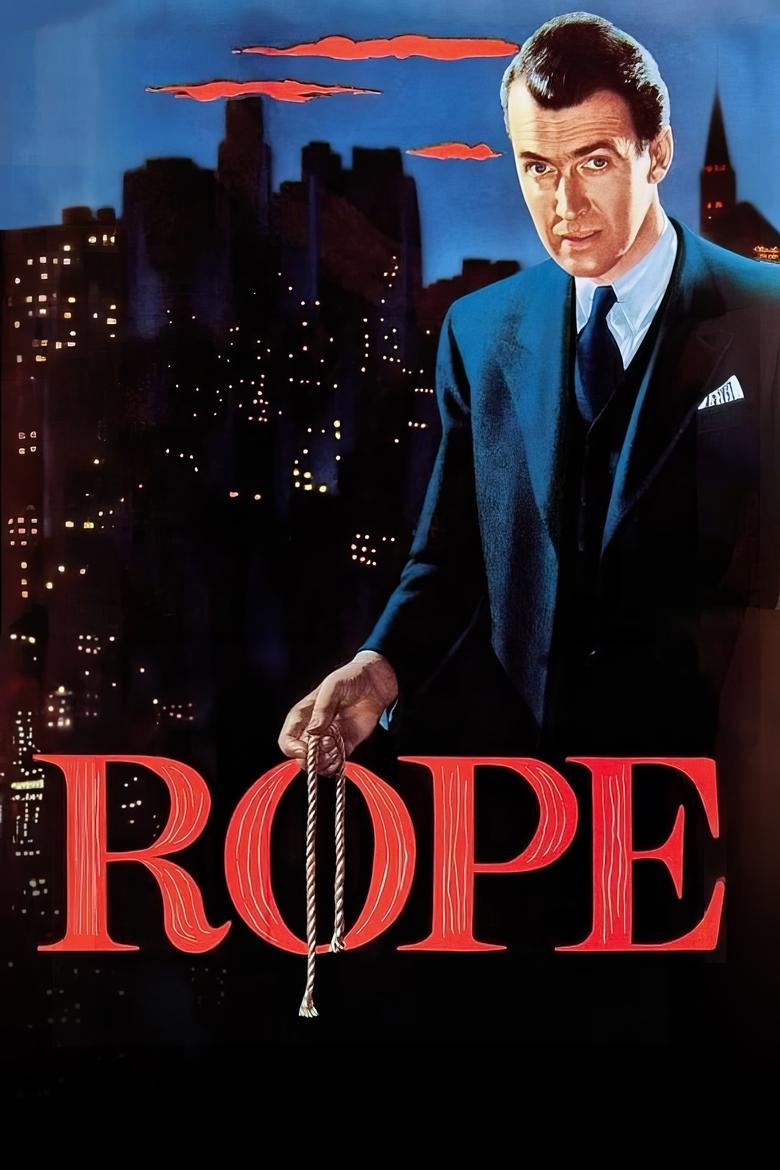
Rope 1948
1948 Transatlantic Pictures
★★★☆☆ Notable
Film Noir · 81 minutes · Black & White

Rope

Directed by Alfred Hitchcock
Year 1948
Runtime 81 min
Studio Transatlantic Pictures
TMDB 7.9 / 10
"Two men share a secret the furniture is built around."

In a Manhattan penthouse apartment, Brandon Shaw and Phillip Morgan strangle their former classmate David Kentley with a length of rope, then conceal his body in an antique chest at the center of the room. The killing is premeditated, unhurried, and presented by Brandon as a philosophical exercise – the practical application of Nietzschean ideas about superior men and their freedom from ordinary moral constraint. Within minutes of the murder, the two men begin arranging a dinner party around the chest that serves as David's coffin, inviting David's father, his fiancée, and several mutual acquaintances.

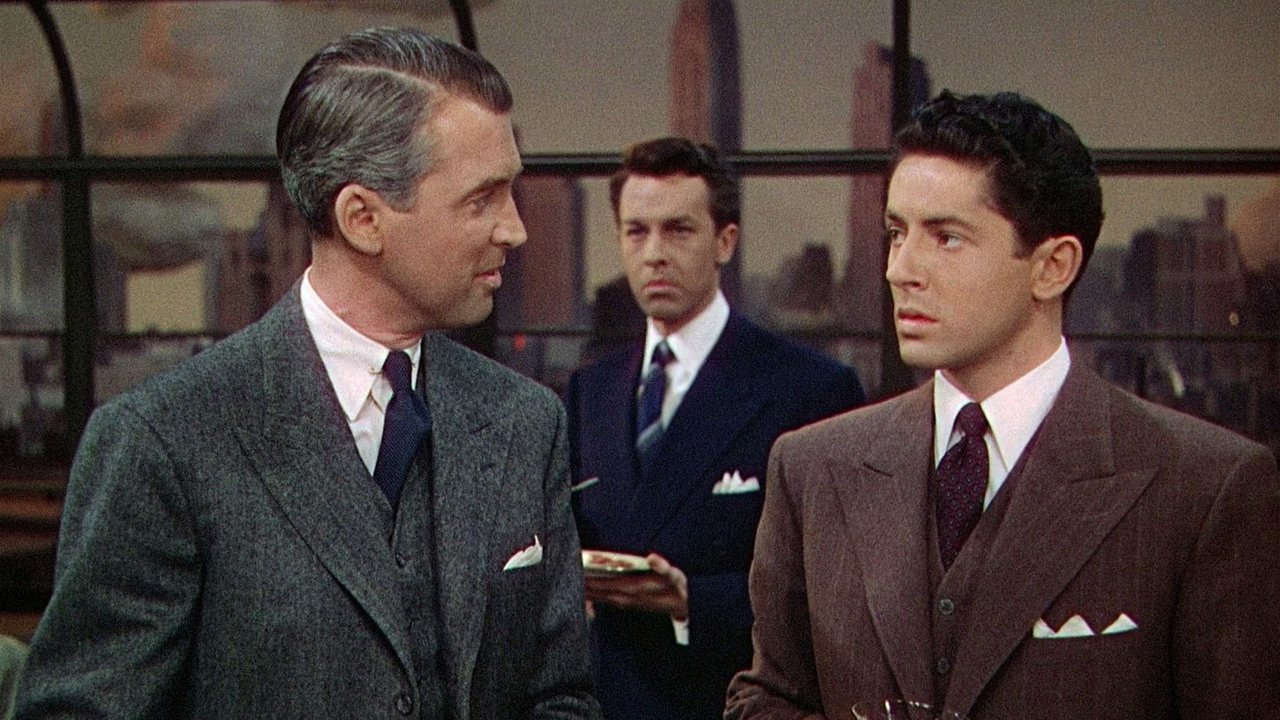
Among the guests is Rupert Cadell, Brandon's former housemaster at prep school and the man whose intellectual provocations first seeded the theory Brandon now claims to have put into practice. Cadell is sharp, sardonic, and initially amused by the evening's philosophical banter. Phillip, by contrast, grows increasingly unstable under the pressure of what he and Brandon have done, his anxiety sharpening against Brandon's practiced composure. As the evening proceeds, small discrepancies accumulate – a missing guest, a nervous servant, Brandon's unsettling confidence – and Cadell's attention gradually narrows toward the chest.

Rope occupies an unusual position within the noir tradition: its crime is committed in full daylight, its setting is a single room of conspicuous elegance, and its menace derives not from shadow or pursuit but from the sustained proximity of killer and victim's mourners. The film uses the formal concealment of its editing – shot to appear as one continuous take – to mirror the concealment at the story's moral center, asking what responsibility attaches to ideas when someone else acts on them.
Classic Noir

Rope is a film that makes its formal experiment inseparable from its argument. Hitchcock's near-seamless long-take construction – achieved through careful choreography and hidden cuts at trouser legs and jacket backs – traps the viewer in real time alongside the crime, refusing the conventional editing rhythms that allow an audience to orient morally. The result is discomfort of a specific kind: not the anxiety of pursuit but the claustrophobia of complicity. The film is also a document of a particular postwar anxiety about ideas made lethal, the Nietzschean rationale for murder carrying an unmistakable post-Holocaust resonance that Hitchcock does not press but does not suppress. What the film reveals about James Stewart is equally significant: his casting against type as a man whose elegant ideas carry a weight he did not intend to bear is the film's sharpest structural move. As noir, Rope is anomalous – no rain-slicked streets, no femme fatale – but its inquiry into guilt, intellectual arrogance, and moral evasion places it firmly within the tradition.

– Classic Noir
3 ★★★☆☆ Notable
Credits

The Crew

DirectorAlfred Hitchcock
ScreenplayArthur Laurents
CinematographyWilliam V. Skall
EditingWilliam H. Ziegler
Art DirectionPerry Ferguson
CostumesAdrian
ProducerSidney Bernstein
Performances

The Cast

Close Reading

The Signature Scene

Rope – scene
The Penthouse, Final Confrontation Rupert Opens the Chest

Cadell moves toward the chest with the measured deliberation of someone who already knows what he will find. The camera holds close, the apartment's warm practical lighting – chandelier glow softening the room's surfaces – now reading as something close to exposure rather than hospitality. When the lid is lifted and the frame holds on Cadell's face rather than the body, Hitchcock makes a formal choice that concentrates everything: the horror is registered through a witness, not displayed for the audience. The penthouse windows behind him show the Manhattan skyline in near-darkness, the city indifferent and distant.

The scene crystallizes the film's central argument. Cadell has spent the evening performing the same detachment he once taught, and the open chest forces him to account for the distance between theory and consequence. His subsequent confrontation with Brandon and Phillip is not triumphant – it is the sound of a man dismantling the ideas he once offered as intellectual sport, recognizing that language carries liability. The gun he fires from the window to summon help is the film's most unambiguous moral act, and it arrives too late to be clean.

Visual Language

The Cinematography

🎞️
William V. Skall – Director of Photography

Cinematographer William V. Skall – working alongside Joseph Valentine, who shared the credit – faced an engineering problem as much as an aesthetic one. The long-take conceit demanded that the camera move continuously through a confined set built on rollers so walls could be repositioned as the Technicolor rig tracked. The film's color palette leans warm throughout, the apartment's amber and ochre tones suggesting comfort that curdles gradually as evening deepens outside the panoramic windows. The cyclorama backdrop behind those windows – a painted New York skyline with practical lighting timed to shift from late afternoon through dusk to full night – functions as a slow clock, marking elapsed time with atmospheric precision. Shadow work is restrained by noir standards, but that restraint is the point: in Rope, moral darkness has nowhere to hide in the gloom because the room is fully, relentlessly lit. The cinematography serves the story's argument that evil performed in cultivated surroundings is no less visible for its setting.

In the Catalogue

Themes & Motifs

Availability

Where to Watch

Also in the Directory

See Also