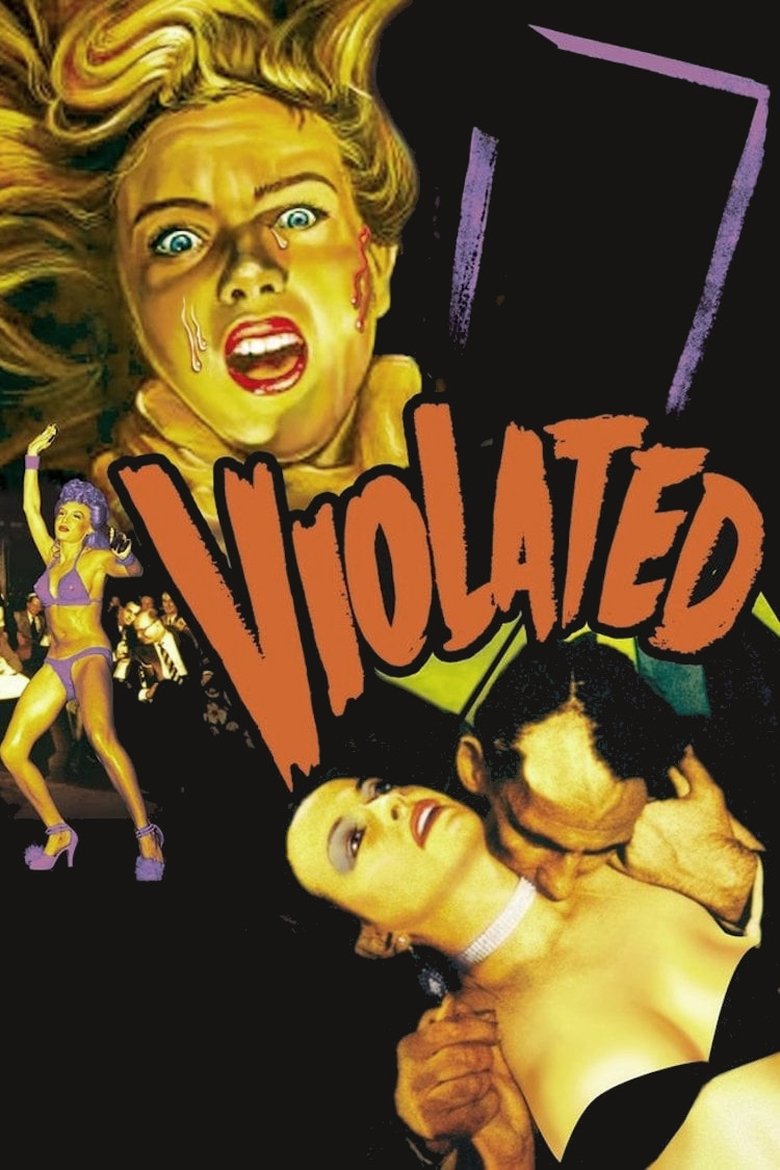
New York, 1953. When a young woman is found murdered, the case lands on the desk of Lieutenant Mack McCarthy, a methodical detective working the kind of precinct where pressure comes from above and evidence is rarely clean. The investigation pulls in Jan C. Verbig, a European émigré with a complicated past, and Lili Damar, a woman whose relationship to the victim raises more questions than it answers. Susan Grant, the victim's friend, becomes an uneasy witness – cooperative enough to be useful, guarded enough to suggest she knows more than she offers.
As McCarthy and his partner Detective Dana work the case outward, the trail leads toward George Mastro, a known child molester whose presence in the victim's orbit darkens the film's already grim moral atmosphere. Dr. Jason, a physician drawn reluctantly into the inquiry, complicates the picture further, and Gardner, a figure operating at the edge of respectability, forces the question of who in this network of acquaintances bears real culpability. Allegiances shift under interrogation, and the line between witness and suspect grows difficult to hold.
Violated works within the procedural strand of postwar American noir, subordinating romanticism to institutional fatigue. The film's interest lies less in the mechanics of detection than in what the investigation exposes about a social order unwilling to acknowledge its own predatory currents – a concern that places it squarely among the period's more uncomfortable crime pictures.
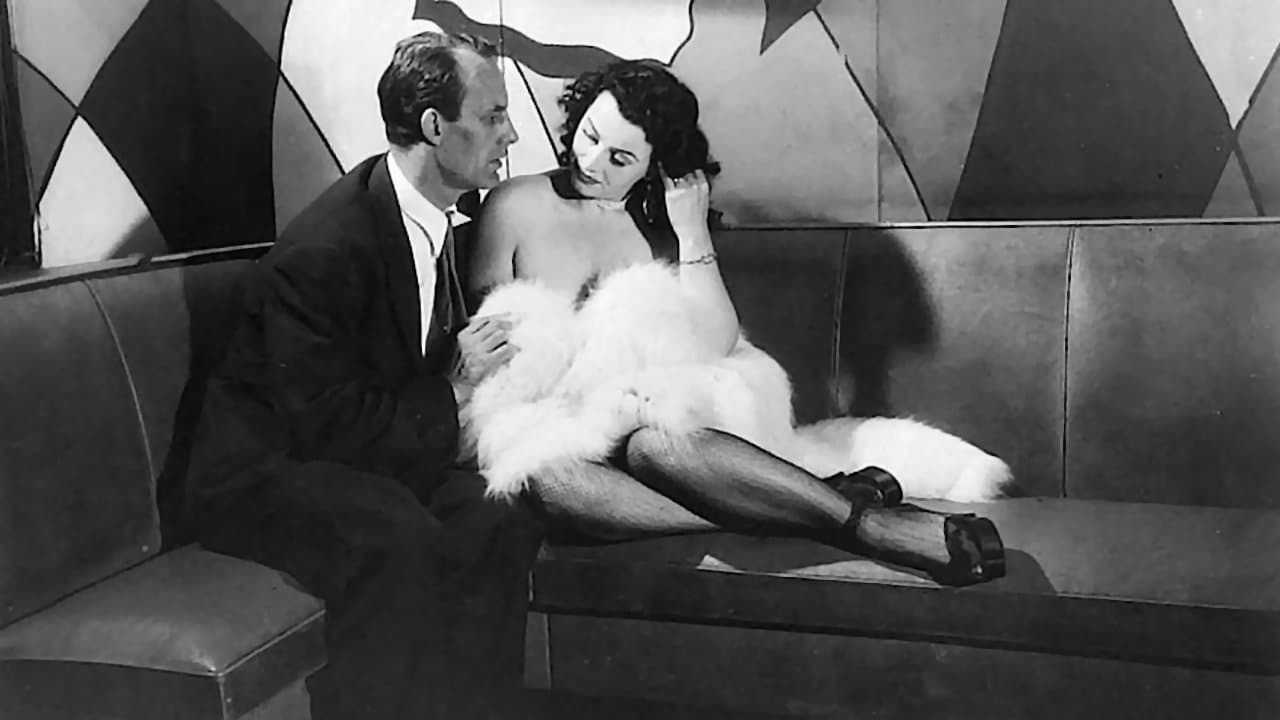
Violated arrives at a moment when the B-noir procedural had absorbed enough documentary influence to feel genuinely uncomfortable rather than merely sensational. Walter Strate, working with modest resources at Panther Productions, keeps the camera close to institutional process – the precinct, the interview room, the reluctant witness – and allows the subject matter, centered on the figure of George Mastro, to generate its unease without exploitation. The film belongs to a minor but significant cycle of early-1950s crime pictures that addressed sexual violence against women and children with a bluntness the Production Code had only recently and incompletely accommodated. What Violated achieves, within its constraints, is a portrait of detection as moral reckoning rather than puzzle-solving: McCarthy and Dana are less interested in triumph than in accountability, and the film respects that distinction. Its limitations are real – pacing is uneven, some performances are functional rather than revealing – but its seriousness of purpose gives it a place in the record of how postwar American cinema negotiated the boundaries of the permissible.
– Classic Noir
The camera holds at medium distance on a corridor outside an interview room, the door left partially open so that a wedge of institutional light cuts across the floor at a hard angle. Pat Rich's setup places the interrogating figures in soft silhouette at the frame's left margin while the witness – caught in that wedge of light – occupies the right third of the composition, nowhere to move without stepping fully into darkness or fully into exposure. The shallow depth behind the witness dissolves into an undifferentiated grey, eliminating any sense of exit.
The scene distills the film's central argument: that the machinery of justice illuminates its subjects not to protect them but to assess them, and that the distinction between victim and suspect is, in this world, partly a function of who controls the light. The witness's stillness under scrutiny reads not as guilt but as the particular paralysis of someone who understands that cooperation and vulnerability are, in this room, the same thing.
Cinematographer Pat Rich shoots Violated with the economy of someone who understands that constraint, handled honestly, can produce its own atmosphere. Working on a Panther Productions budget that ruled out elaborate studio builds, Rich leans on available institutional locations – corridors, offices, streets at the edge of the lamp's reach – and uses a moderately wide lens that keeps figures in plausible spatial relation while flattening the middle distance into something vaguely threatening. His lighting setups favour single hard sources modified by practicals: a desk lamp, a corridor fixture, a streetlight entering through venetian blinds at an oblique angle. Shadows are not decorative here; they mark jurisdiction. The areas of the frame that fall into darkness are the areas beyond the law's effective reach, and Rich consistently positions his morally compromised figures at those thresholds. The result is a visual grammar that serves the film's argument about institutional inadequacy: the city is only partly visible, and what remains in darkness tends to be what the city has chosen not to see.
Public domain prints of Violated circulate on Archive.org and represent the most reliably accessible option, though transfer quality varies between uploads.
TubiFreeTubi has carried low-budget 1950s crime pictures from independent studios; availability is subject to change and the print quality is typically adequate for casual viewing.
Amazon Prime VideoSubscriptionAmazon's rotating catalogue of public domain noir occasionally includes Panther Productions titles; verify current availability before seeking.