Films People Pull a Fast One Night Beat Reading Room On TV Shop
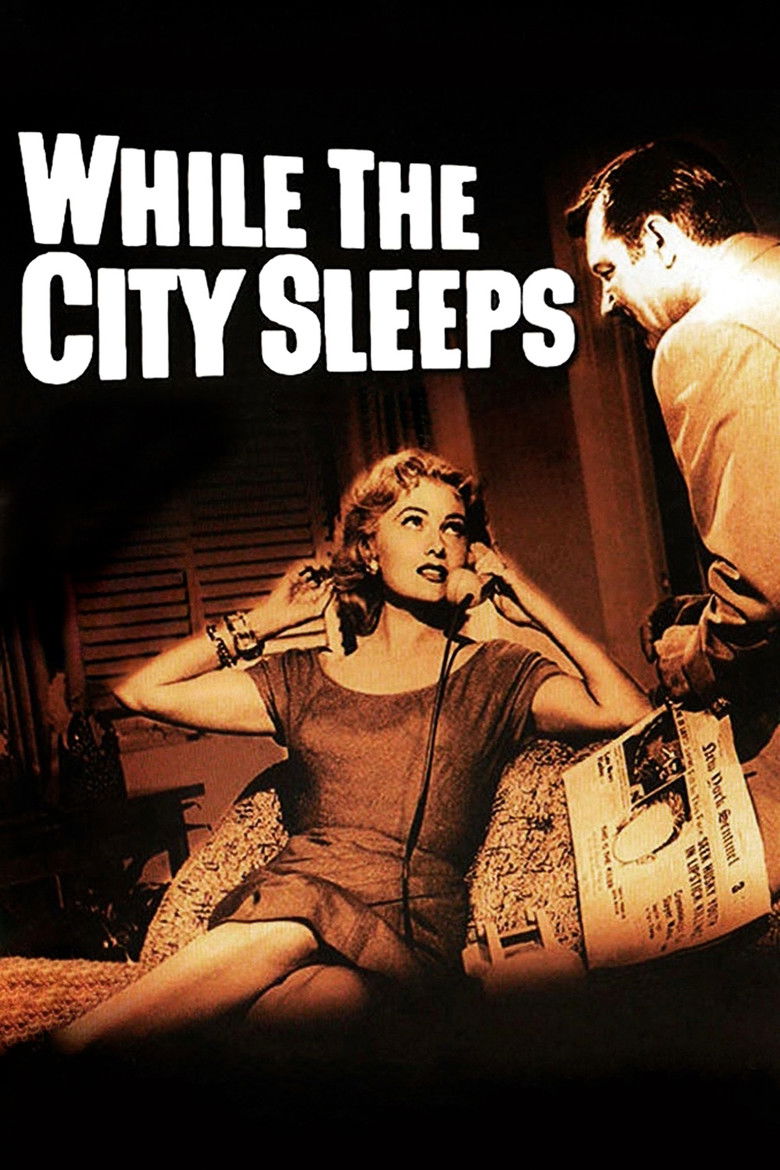
While the City Sleeps 1956
1956 Bert E. Friedlob Productions
★★★☆☆ Notable
Film Noir · 100 minutes · Black & White

While the City Sleeps

Directed by Fritz Lang
Year 1956
Runtime 100 min
Studio Bert E. Friedlob Productions
TMDB 6.9 / 10
"A city waits for a killer while the men who should stop him compete for a desk."

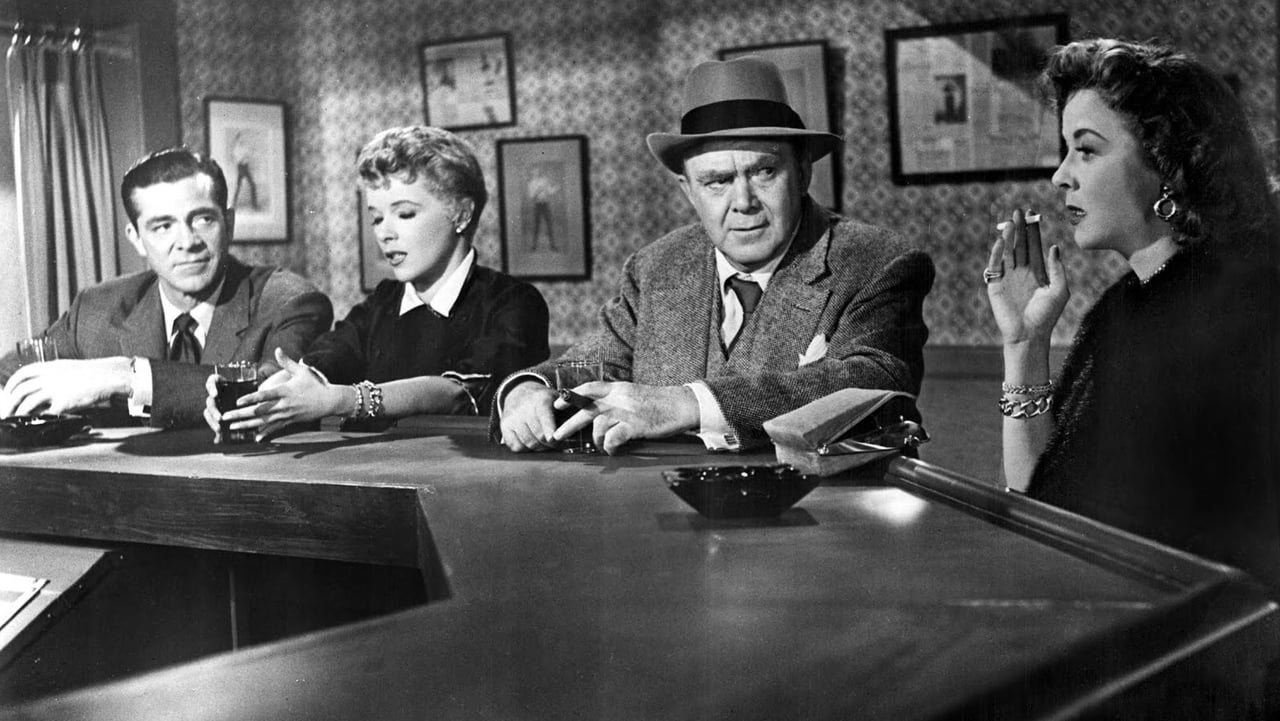
When media mogul Amos Kyne dies suddenly, control of his New York communications empire passes to his weak, vain son Walter (Vincent Price), who announces that whoever among his top executives can identify and deliver the 'Lipstick Killer' – a young man terrorizing the city – will be named to run the entire operation. The competitors are three: wire service chief John Day Griffith (Thomas Mitchell), photo editor Mark Loving (George Sanders), and television columnist Edward Mobley (Dana Andrews), a man of real ability and equally real moral fatigue.

Mobley is the most capable of the three and knows it, but his ambitions are undercut by his own detachment and by the human cost required to stay ahead. Loving pursues the prize through Mobley's fiancée Nancy (Sally Forrest), manipulating her into a dangerous proximity to the killer. Griffith works the angle of Walter's wife Dorothy (Rhonda Fleming), a woman used to being used. Meanwhile Lieutenant Kaufman (Howard Duff) works the actual case, increasingly aware that the press's competitive circus is obstructing justice and putting lives at risk.

Fritz Lang builds the film not as a straightforward manhunt but as a dissection of institutional corruption – the newsroom, the broadcast studio, the corporate boardroom – where the killer Robert Manners (John Drew Barrymore) is less a monster than a symptom. The film belongs to a strand of late noir that turns the camera on the mechanisms of American public life and finds them nearly as predatory as the criminal they claim to pursue.
Classic Noir

While the City Sleeps arrives late in Fritz Lang's American career and carries the marks of a director who has long since lost his faith in institutions. The film's real subject is not the Lipstick Killer but the media apparatus assembled to exploit him: a television network, a wire service, a photo desk, all owned by a man of inherited power and no discernible principle. Lang deploys his ensemble with the precision of a satirist, using Vincent Price's Walter Kyne as a study in hollow authority and Dana Andrews's Mobley as the kind of compromised professional whose intelligence does not translate into virtue. The screenplay by Casey Robinson, working from Charles Einstein's novel, sometimes subordinates character to architecture, but that architecture – the interlocking vanities, the traded sexual favors, the careers built on a woman's proximity to danger – reads now as a credible portrait of mid-century media culture. The film is not Lang at his most controlled, but it is Lang at his most clear-eyed about what he thinks America is doing to itself.

– Classic Noir
3 ★★★☆☆ Notable
Credits

The Crew

DirectorFritz Lang
ScreenplayCasey Robinson
CinematographyErnest Laszlo
MusicHerschel Burke Gilbert
EditingGene Fowler Jr.
Art DirectionCarroll Clark
CostumesNorma Koch
ProducerBert E. Friedlob
Performances

The Cast

Close Reading

The Signature Scene

While the City Sleeps – scene
The Subway Platform Waiting in the Dark Tunnel

Lang and cinematographer Ernest Laszlo stage the climactic underground sequence with deliberate flatness: the platform is overlit in the institutional white of New York's transit system, which makes the darkness of the tunnel mouth behind Nancy all the more absolute. Laszlo holds the camera at a middle distance, refusing to cut away from the geometry of the space – the tracks receding, the tiled columns casting thin shadows, the figure of Manners emerging not from dramatic shadow but from the ordinary fluorescent nowhere of the city's infrastructure.

The scene crystallizes the film's argument about vulnerability manufactured for professional ends. Nancy is here because men in offices decided she should be bait. The killer is here because a society that produced him failed to notice him until he became useful copy. Lang refuses catharsis: the capture, when it comes, feels procedural rather than triumphant, and the moral weight of who put Nancy on that platform remains exactly where Lang placed it.

Visual Language

The Cinematography

🎞️
Ernest Laszlo – Director of Photography

Ernest Laszlo shoots While the City Sleeps in a widescreen RKO black-and-white that resists the expressionist chiaroscuro one might expect from a Lang picture of this period. The choice is purposeful. Laszlo lights the newsrooms, broadcast studios, and bars with a flat, high-key harshness that denies these spaces any romance: this is the world of work, of overhead fluorescents and reflective glass partitions, and the camera stays at eye level within it. When shadow does fall, it is in domestic spaces – Mobley's apartment, a hallway – where it functions as psychological pressure rather than visual spectacle. Laszlo's lenses keep a slight distance from faces, making the actors' expressions legible but not intimate, consistent with Lang's interest in behavior as institutional performance. The few location shots in New York streets and the subway system carry the texture of documentary and are notably cooler than the studio interiors, reinforcing the film's sense that the city itself is indifferent to the events being narrated across its airwaves.

In the Catalogue

Themes & Motifs

Availability

Where to Watch

Also in the Directory

See Also