Films People Pull a Fast One Night Beat Reading Room On TV Shop
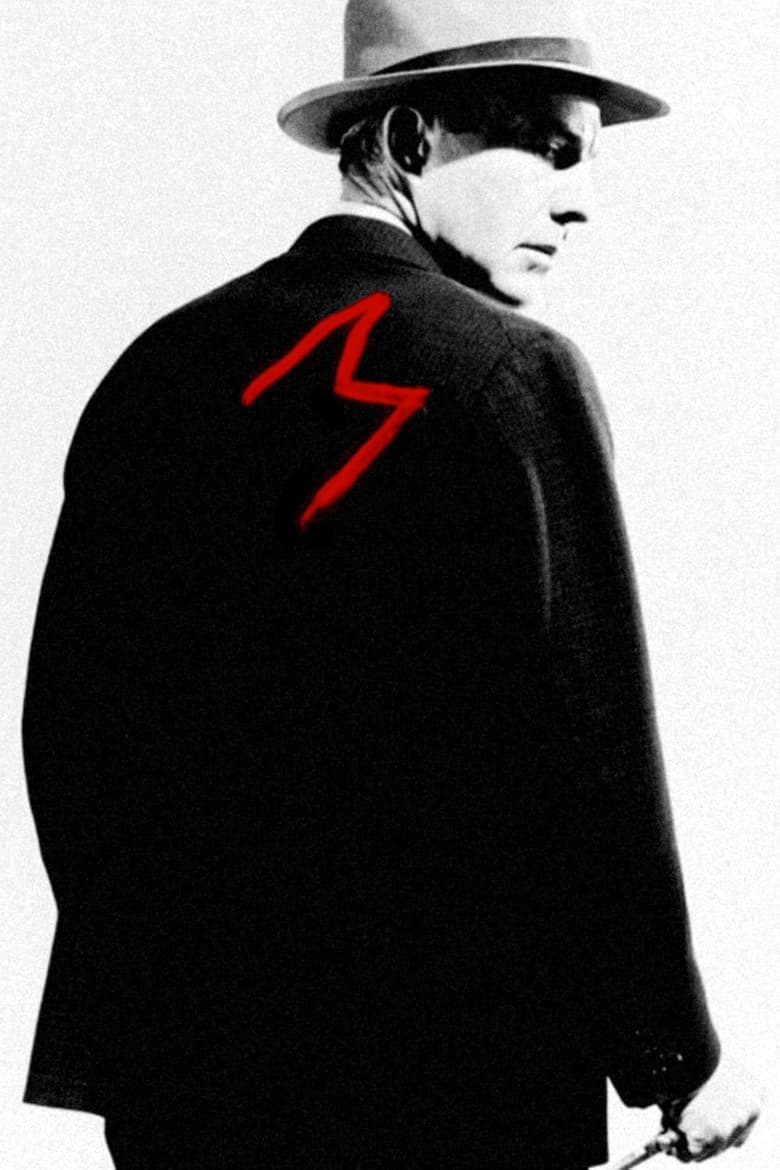
M 1951 1951
1951 Superior Pictures
★★★☆☆ Notable
Film Noir · 88 minutes · Black & White

M 1951

Directed by Joseph Losey
Year 1951
Runtime 88 min
Studio Superior Pictures
TMDB 6.4 / 10
"A city hunts one man, and the men who hunt him are no less dangerous."

Los Angeles, early 1950s. A series of child murders has paralyzed the city, and the police, under the command of Inspector Carney, are pressing hard on the criminal underworld as a side effect of their investigation. The killer is Martin W. Harrow, a slight, compulsive man played by David Wayne with a quiet, inward terror that makes him more pitiable than monstrous – a figure defined less by evil than by an inability to control what lives inside him.

As the police dragnet tightens, the syndicate bosses – led by the calculating Charlie Marshall and the lawyer Dan Langley – find their operations strangled by the heat. They organize their own parallel manhunt, deploying the city's network of street people and small-time criminals to locate Harrow before the law does. The film's moral axis tilts uncomfortably: the syndicate's pursuit is entirely self-interested, yet it operates with a competence and organization that makes the official investigation look clumsy by comparison.

Joseph Losey's American remake of Fritz Lang's 1931 German classic transposes the story to a postwar urban landscape saturated with institutional suspicion and crowd psychology. The film is less concerned with the mystery of who the killer is than with the social machinery that assembles to destroy him – and what that machinery says about the society running it.
Classic Noir

Losey's M arrives at a precise historical moment: made in 1951, it is the work of a director about to be blacklisted, and that biographical pressure is inseparable from the film's meaning. The kangaroo court that tries Harrow in the film's climax – a mob of criminals sitting in solemn judgment over a man they have already decided to kill – reads now as something more than a genre set piece. It is a recognizable portrait of procedural persecution dressed as due process. David Wayne resists the temptation to make Harrow a monster, and that restraint is the film's most consequential decision: the system arrayed against him is not responding to what he is, but to what he represents – disorder, exposure, inconvenience. Howard Da Silva's Inspector Carney and Martin Gabel's syndicate boss are mirror figures, both willing to suspend ordinary rules when the situation demands. What Losey's version adds to Lang's original is a specifically American cynicism about institutional authority, rooted in a time and place where such cynicism was being systematically punished.

– Classic Noir
3 ★★★☆☆ Notable
Credits

The Crew

DirectorJoseph Losey
ScreenplayLeo Katcher
CinematographyErnest Laszlo
MusicMichel Michelet
EditingEdward Mann
Art DirectionMartin Obzina
ProducerSeymour Nebenzal
Performances

The Cast

Close Reading

The Signature Scene

M 1951 – scene
The Kangaroo Court Judgment in the Dark

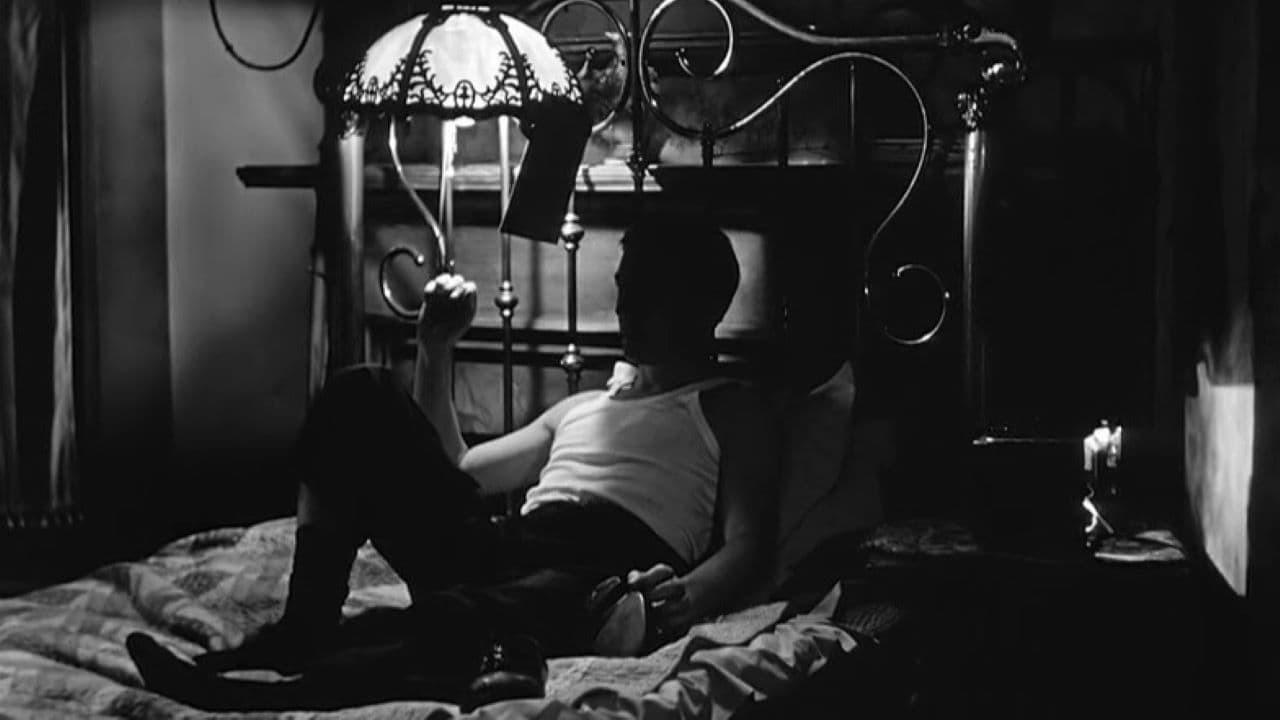
Ernest Laszlo lights the trial sequence from below and from the sides, so that the assembled criminals occupy the frame as a mass of faces half-consumed by shadow. The camera moves rarely, and when it does it is to isolate Harrow in the center of the space – a single figure in a pale wash of light surrounded by tiers of men whose expressions register not hatred but something colder and more bureaucratic. The geometry of the shot recalls a courtroom without resembling one precisely, and that ambiguity is the point.

What the scene argues is that the form of judgment can survive the complete absence of its substance. The criminals are not holding a trial; they are performing one, and the performance is convincing enough that Harrow's anguished self-defense – Wayne delivering it with a shaking, involuntary honesty – sounds like a disruption of proper procedure rather than an appeal to it. The film's central claim surfaces here: that legitimacy is a costume, and almost any body can wear it.

Visual Language

The Cinematography

🎞️
Ernest Laszlo – Director of Photography

Ernest Laszlo brings to M 1951 a visual grammar suited to the film's argument about surfaces and concealment. Working largely on location in Los Angeles, he uses the city's architecture as a moral landscape – alleyways that compress and isolate figures, public spaces that offer no shelter, interiors lit as though the ceiling itself were a threat. Laszlo favors hard side-lighting that carves faces into planes of light and dark, removing the middle tones that soften character and motive. His lens choices tend toward the slightly wide, which distorts space at the edges of the frame and makes rooms feel less stable than they appear. In the manhunt sequences, he keeps the camera at street level, embedding it among the pursuers rather than above them, so the viewer has no privileged vantage point from which to feel secure. The cinematography does not decorate the story's moral logic – it enacts it, making the act of watching feel like participation in the pursuit.

In the Catalogue

Themes & Motifs

Availability

Where to Watch

Also in the Directory

See Also