Films People Pull a Fast One Night Beat Reading Room On TV Shop
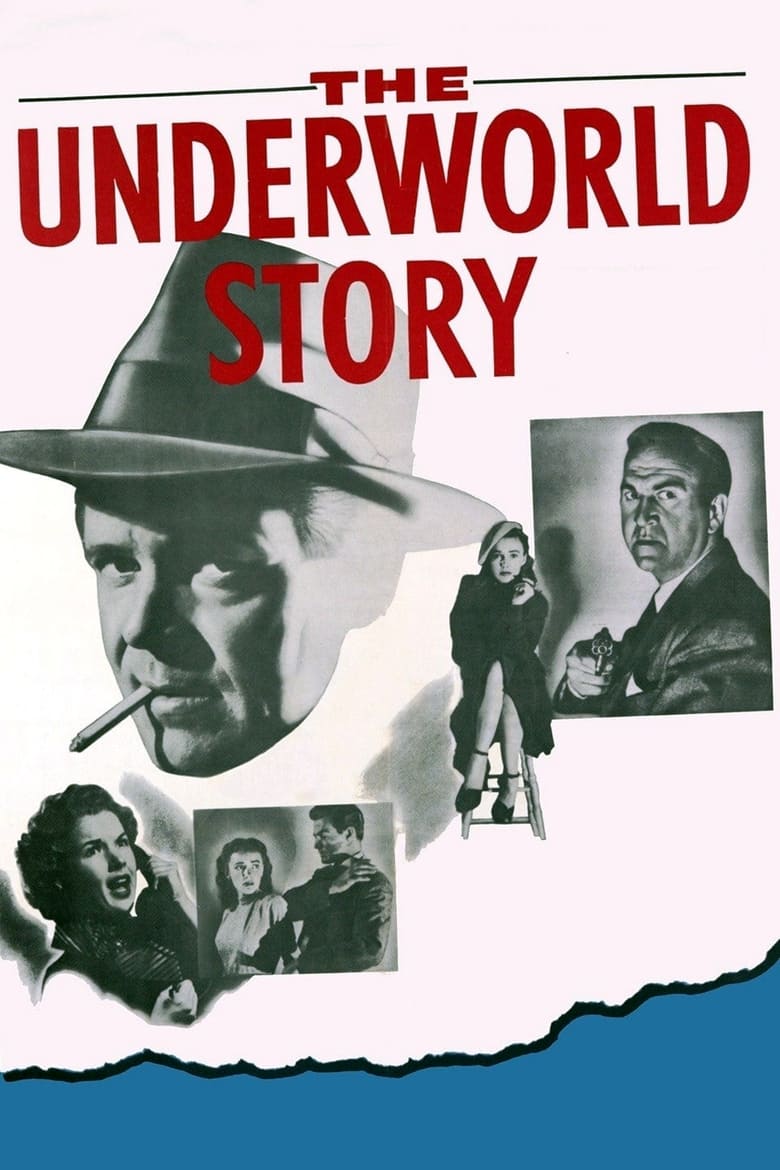
Underworld Story 1950
1950 FilmCraft Productions
★★★☆☆ Notable
Film Noir · 91 minutes · Black & White

Underworld Story

Directed by Cy Endfield
Year 1950
Runtime 91 min
Studio FilmCraft Productions
TMDB 6.3 / 10
"A corrupt man trades one gutter for another, and calls it ambition."

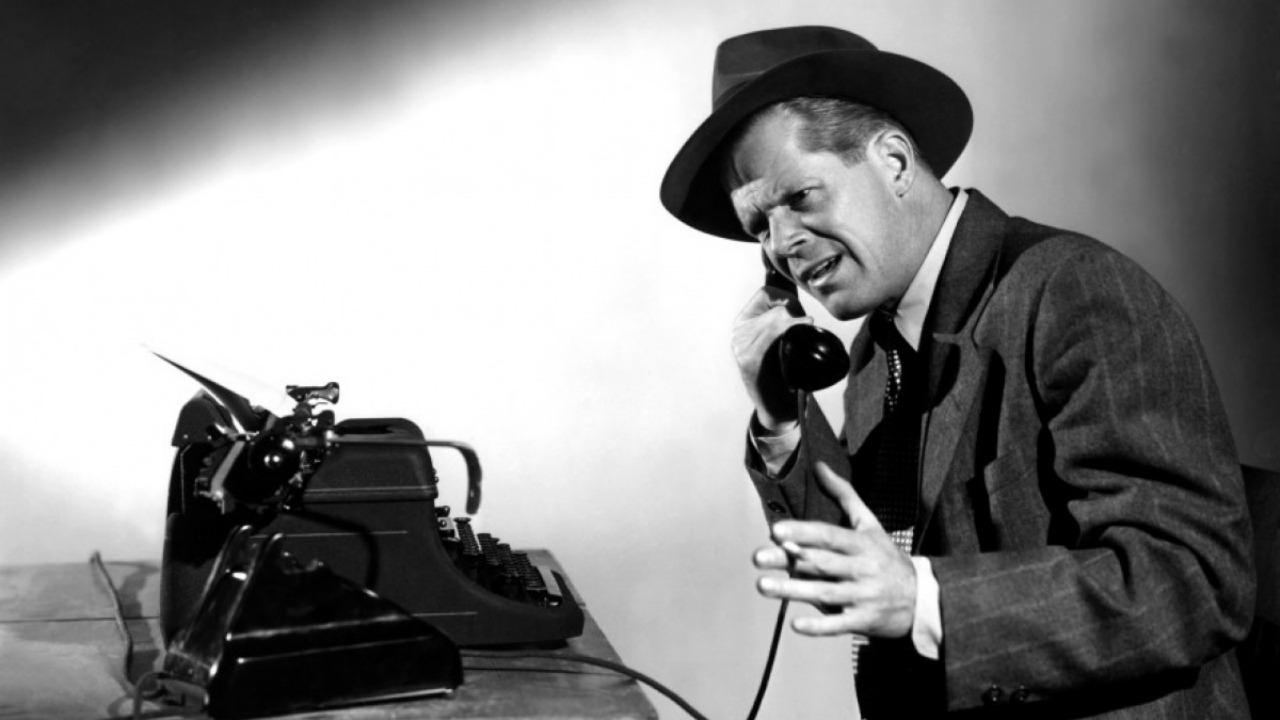
Mike Reese is a big-city tabloid reporter with a talent for extortion and an instinct for self-preservation. After shaking down the wrong syndicate figure, he is blacklisted from every paper in New York and lands, humiliated, in the small town of Lakeville, where he talks his way into a minority stake in the struggling local Gazette. His new employer is E.J. Stanton, a patrician press baron whose civic respectability conceals a willingness to suppress inconvenient truths. When Stanton's son Clark is implicated in the murder of his own wife, Reese sees not a story but a transaction.

The murdered woman's maid, Molly Rankin – Black, poor, and immediately presumed guilty by the town's law enforcement – becomes the convenient suspect. Catherine Harris, a principled reporter at the Gazette, pushes to cover the story honestly while Reese maneuvers to sell his silence to the elder Stanton and simultaneously leverage the case against Carl Durham, the syndicate boss whose reach extends into Lakeville's police department. Allegiances shift along lines of money rather than conscience, and the investigation becomes a series of competing cover-ups rather than a search for truth.

Underworld Story is a procedural wrapped around a moral anatomy of small-town corruption, using the machinery of the murder mystery to examine who gets protected and who gets sacrificed. The film's refusal to sentimentalize its protagonist or deliver a clean reckoning places it in that strain of postwar noir most interested in institutional rot rather than individual psychology.
Classic Noir

Cy Endfield's film arrived the same year he would come under scrutiny from HUAC, and its preoccupations are legible in that context without being reducible to allegory. Underworld Story is interested in how power protects itself through respectable intermediaries – a press baron, a district attorney, a syndicate operative – and how race determines whose life is expendable when institutional interests require a scapegoat. Dan Duryea's Mike Reese is neither redeemed nor simply condemned; he is a man who understands the system's corruption because he has operated inside it, and the film is clearest when it refuses to let his eventual useful act function as absolution. Stanley Cortez's photography gives the small-town setting an airless, over-lit quality that refuses picturesque comfort. The film does not reach the formal severity of Endfield's later work, and some of its courtroom mechanics creak, but as a document of how noir's vocabulary could be turned toward social critique in 1950 – before the blacklist fully closed that possibility – it holds genuine weight.

– Classic Noir
3 ★★★☆☆ Notable
Credits

The Crew

DirectorCy Endfield
ScreenplayCraig Rice
CinematographyStanley Cortez
MusicDavid Rose
EditingRichard V. Heermance
Art DirectionDave Milton
ProducerHal E. Chester
Performances

The Cast

Close Reading

The Signature Scene

Underworld Story – scene
The Gazette Pressroom, Night Reese Destroys the Plates

Cortez frames the pressroom in deep focus, the idle machinery receding into shadow while a single overhead work light carves Reese out from the background. The camera stays wide long enough to establish his isolation in the physical space before cutting to a closer angle as he stands over the printing plates, the light catching the metal's surface and throwing a faint reflected glow upward onto Duryea's face – an inversion of the usual noir key light that makes him look not menacing but cornered.

The scene crystallizes the film's argument about complicity: Reese is not destroying evidence out of loyalty to Stanton or fear of Durham, but out of a calculation that has not yet fully resolved. Endfield holds on his face a beat longer than comfort requires, leaving the character's motive genuinely suspended. What the scene reveals is that Reese's corruption and his nascent conscience are not opposites but the same impulse operating at different moments, and the film is honest enough not to resolve that contradiction cheaply.

Visual Language

The Cinematography

🎞️
Stanley Cortez – Director of Photography

Stanley Cortez – whose work on The Magnificent Ambersons and Night of the Hunter demonstrated a willingness to subordinate technical convention to moral atmosphere – brings a similar rigor to Underworld Story, though working here within tighter budget constraints. His lighting consistently refuses to flatter Lakeville's institutional spaces: the newspaper office, the police station, the courtroom are all rendered with a flat, institutional luminosity that denies them authority rather than conferring it. Cortez uses shadow not as decoration but as a marker of information withheld; the scenes in which Durham's men operate are noticeably darker in key, not for gothic effect but to suggest that syndicate power functions precisely by remaining underlit and off the record. His close-ups of Duryea favor a slightly wide lens that keeps the surroundings present in the frame, denying Reese the isolation that classic noir portraiture grants its protagonists. The visual language insists that this story is about structures, not just a man.

In the Catalogue

Themes & Motifs

Availability

Where to Watch

Also in the Directory

See Also