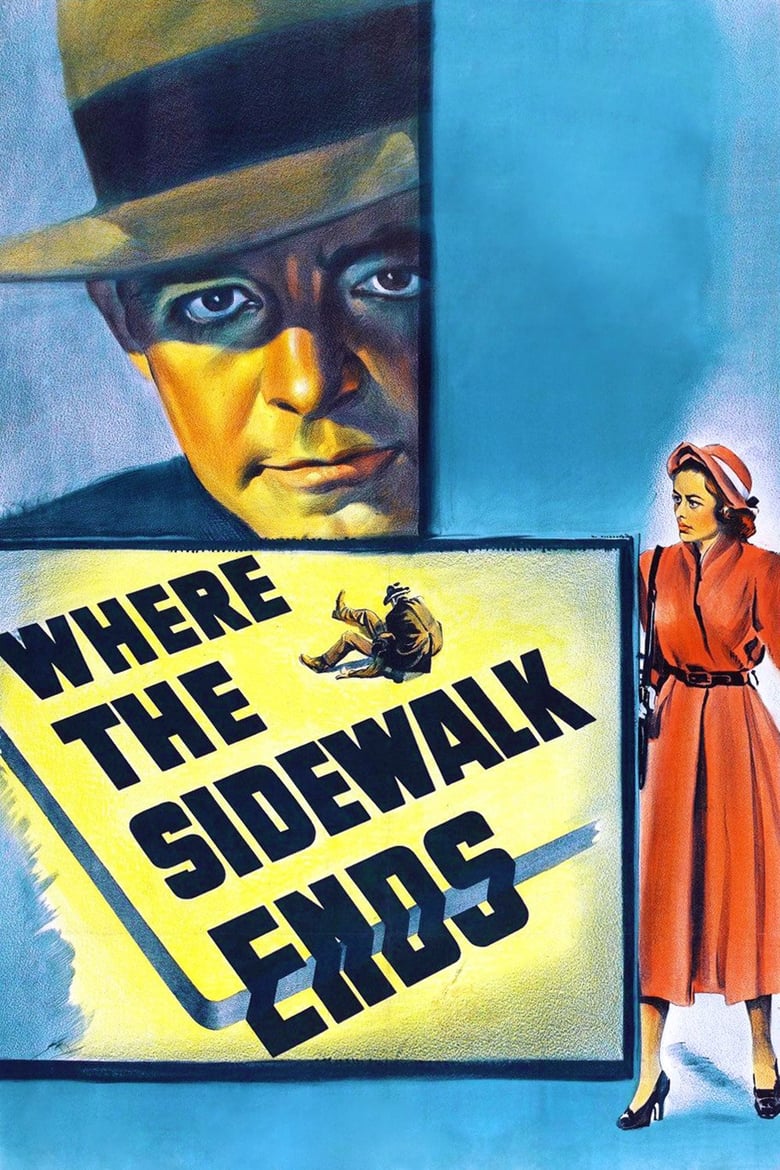
New York homicide detective Mark Dixon (Dana Andrews) carries a reputation for brutality and a private war against the criminal class his own father once belonged to. When a routine investigation into a gambling syndicate run by the ruthless Tommy Scalise (Gary Merrill) leads to a confrontation with a suspect, Dixon strikes too hard and the man dies. The dead man is Ken Paine (Craig Stevens), a war veteran with a complicated past – and the estranged husband of Morgan Taylor (Gene Tierney), a woman Dixon has already begun to notice.
Desperate to conceal his role in Paine's death, Dixon stages the body to implicate Scalise, a move that satisfies his contempt for the gangster but implicates Morgan's father, the cabdriver Jiggs Taylor (Tom Tully), who is arrested for the killing. As the investigation tightens under the supervision of Lt. Thomas (Karl Malden) and Dixon's partner Klein (Bert Freed), Dixon finds himself sustaining a deception that punishes an innocent man while protecting a career already corroded by violence. His developing feelings for Morgan sharpen the contradiction he cannot resolve.
Where the Sidewalk Ends uses the procedural architecture of the police thriller to conduct a sustained examination of institutional corruption from the inside. The film belongs to a mid-cycle strain of noir in which the protagonist is neither victim nor villain in any simple sense but rather both at once – a man whose pathologies have been given a badge and a license. Preminger holds the moral geometry steady without flinching, and the film's tension derives less from plot mechanics than from watching a man attempt, and repeatedly fail, to outrun his own character.
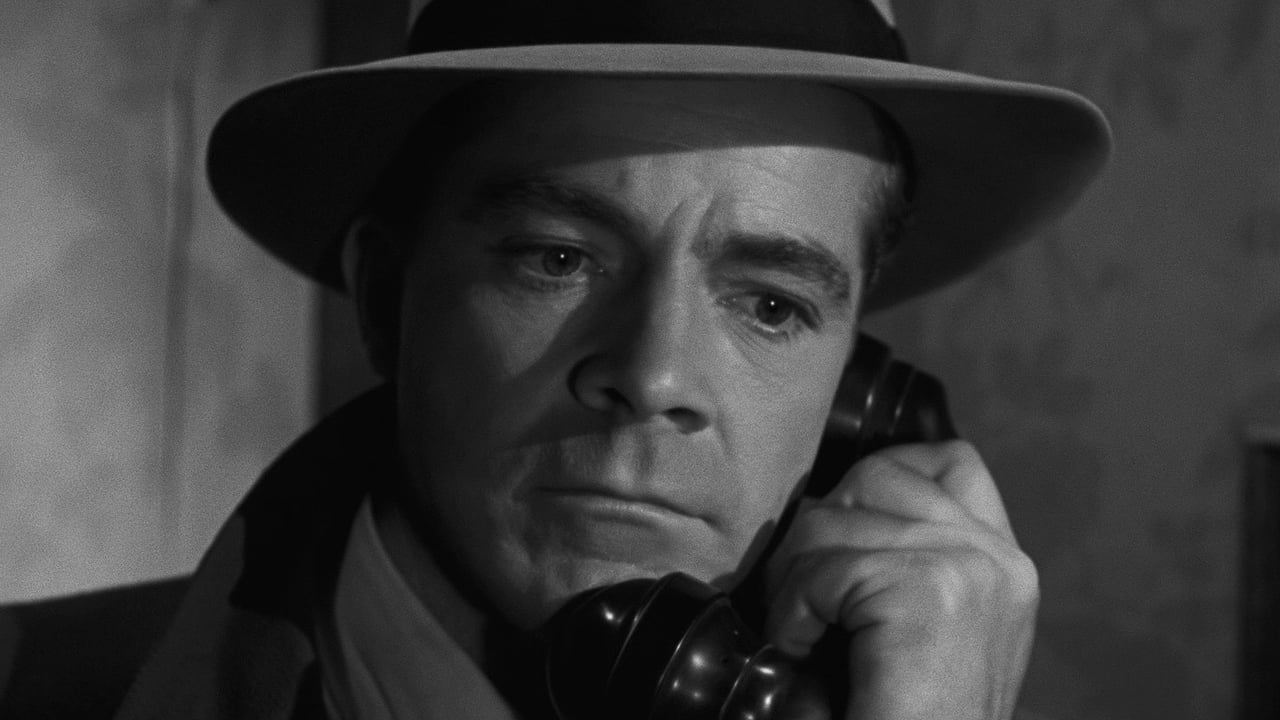
Where the Sidewalk Ends is the third and most searching collaboration between Otto Preminger, Dana Andrews, and Gene Tierney at 20th Century Fox, following Laura (1944) and Daisy Kenyon (1947). It is a less celebrated film than Laura but arguably a more honest one. Where Laura mythologizes its detective, this film dismantles him. Dixon is not a knight compromised by circumstances; he is a man constitutionally disposed toward violence who has found an institution that monetizes that disposition – until it doesn't. Andrews gives perhaps his finest noir performance, playing Dixon's self-disgust as something compressed and barely mobile rather than confessional. Karl Malden, in an early career role, registers as the procedural conscience the film needs to make Dixon's evasions feel genuinely costly. Preminger's direction is characteristically controlled: no flourish without function, no camera movement that does not carry dramatic weight. The film arrived at a historical moment when postwar confidence in civic institutions was already beginning to fray, and its portrait of the police as an ecology capable of producing Dixon sits uncomfortably close to the journalistic record of the period.
– Classic Noir
LaShelle frames the sequence in near-total darkness cut only by diffuse ambient light reflecting off the river's surface. Dixon moves through the frame in partial silhouette, the body a shapeless burden against a background of industrial black. The camera holds at a discreet distance, refusing the close-up that would invite identification or absolution. When the body enters the water there is no dramatic emphasis – no swelling score, no reaction shot held too long – and Preminger cuts away before the ripples settle, as though the city itself declines to witness what one of its officers has done.
The scene is the film's moral pivot. Dixon has already crossed a line he cannot uncross, and the staging refuses to aestheticize that fact. The darkness is not glamorous; it is simply the cover a corrupt act requires. That the river is a working waterway – a place of labor and commerce – rather than some expressionist void locates the crime squarely inside the city's functioning body. From this point forward the film is not about whether Dixon will be caught but about what the weight of concealment does to a man who understood himself, until now, as one of the ones doing the catching.
Joseph LaShelle, who had won an Academy Award for his work on Laura, brings to Where the Sidewalk Ends a harder and less romantic lighting scheme than that earlier film's dreamlike chiaroscuro. Working primarily on Fox studio sets dressed to suggest New York's midtown and waterfront districts, LaShelle uses tight, controlled key lighting with deliberate suppression of fill, producing shadows that accumulate on faces rather than merely framing them – Dixon's brow is frequently half in darkness even in dialogue scenes that take place in nominally bright interiors. The street sequences favor a slightly wider lens than classical studio work of the period, which gives the city's geometry a mild but persistent pressure. LaShelle's most consistent technique is the use of practical light sources – desk lamps, streetlights, neon through windows – as motivating fixtures that anchor the moral atmosphere in physical reality. There is nothing supernatural about this darkness; it comes from where darkness always comes from.
Criterion's streaming presentation includes a clean transfer and is the most reliable source for contextual programming around Preminger's Fox-era work.
TCMBroadcast/SubscriptionTCM airs the film periodically and offers on-demand access through its app for subscribers; check current schedule as availability rotates.
TubiFreeAs of this writing Tubi has carried the film ad-supported; transfer quality varies and availability should be confirmed before relying on this source.