Films People Pull a Fast One Night Beat Reading Room On TV Shop
Two O'Clock Courage 1945
1945 RKO Radio Pictures
★★★☆☆ Notable
Film Noir · 68 minutes · Black & White

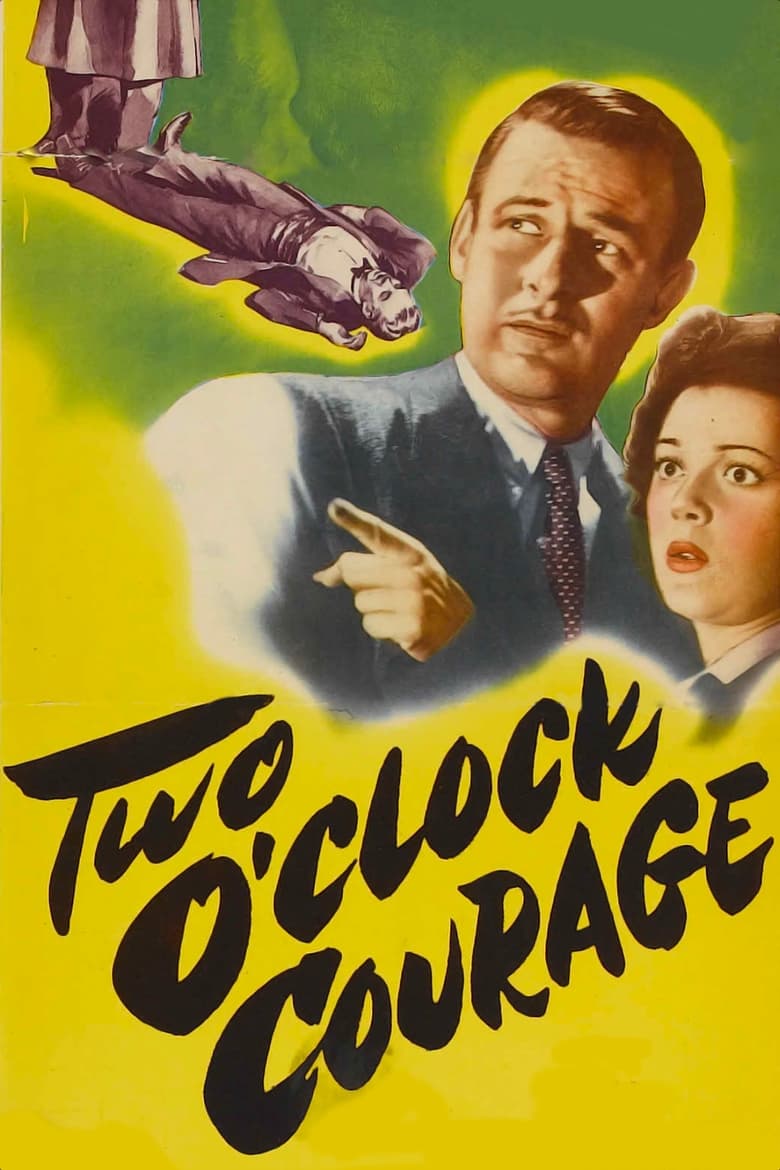
Two O'Clock Courage

Directed by Anthony Mann
Year 1945
Runtime 68 min
Studio RKO Radio Pictures
TMDB 6.3 / 10
"A man without a name walks out of the dark and into someone else's trouble."

A man staggers onto a rain-slicked street with no memory of who he is or how he got there. He carries a bloodied head wound and, shortly after, a cab driver named Patty Mitchell picks him up and takes an interest in his predicament. When a newspaper headline identifies him as a suspect in the murder of a prominent theatrical producer, the amnesiac – who will come to call himself 'Step' Allison – must piece together an identity while evading a police force that has already reached its conclusions.

Patty, quick-witted and not entirely cautious, throws her lot in with Step as the investigation draws them into the orbit of the dead man's associates: a shifty theatrical manager, a calculating woman named Helen Carter, and Barbara Borden, whose connection to the victim runs deeper than she initially lets on. Inspector Brenner pursues Step with the methodical confidence of a man who believes the case is already solved, while the alibi Step needs keeps receding behind walls of motive and performance – everyone in this world has a role to play.

Two O'Clock Courage belongs to the lighter register of 1940s noir, a comedy-mystery hybrid in which the tension never fully escapes the shadow of its own wit. The film uses amnesia not as psychological horror but as procedural engine, stripping its protagonist of history so that identity itself becomes the mystery to be solved. Against a backdrop of theatrical backstabbing and professional jealousy, it poses a quiet question about guilt and innocence that the genre would later pursue with considerably more darkness.
Classic Noir

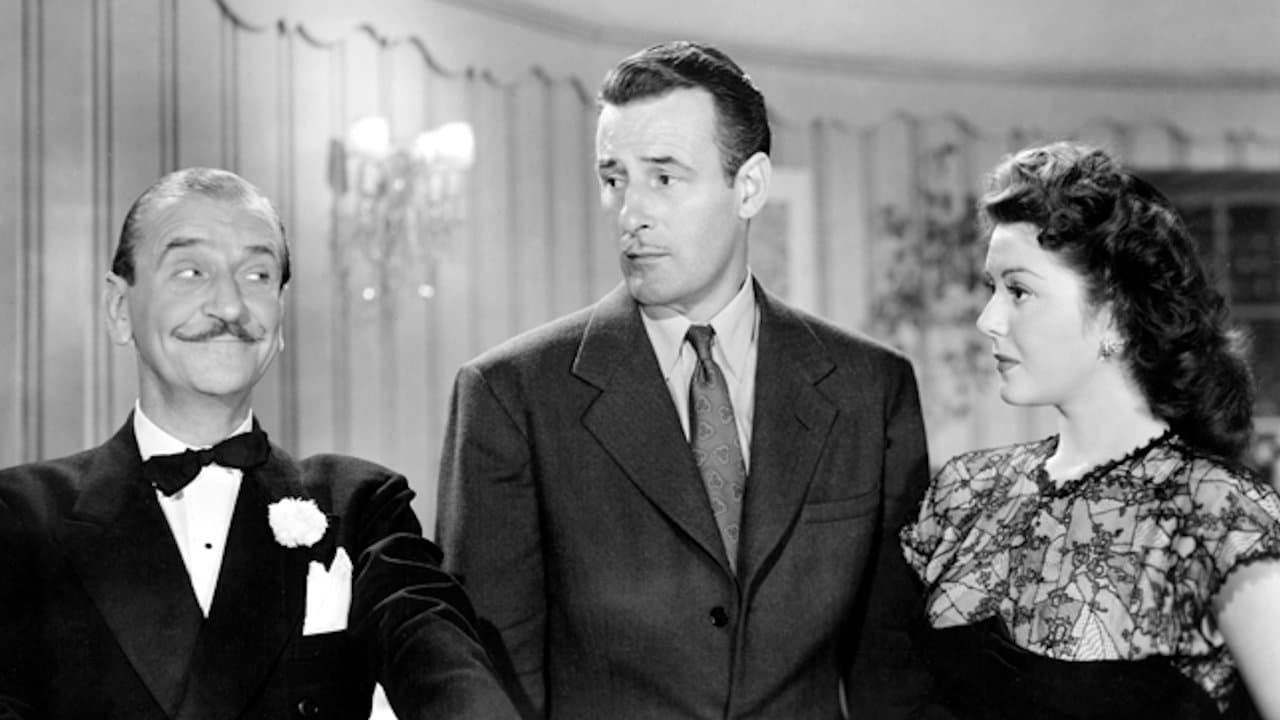
Two O'Clock Courage is a minor but instructive entry in Anthony Mann's pre-T-Men period, made when he was still working within the constraints of RKO's B-unit and finding his footing in genre material. The film is adapted from a Gelett Burgess novel and carries the lightness of its source – it is closer to the Thin Man tradition than to the hardboiled films Mann would soon define. Tom Conway brings a wry reserve to Step Allison that prevents the amnesia premise from tipping into farce, and Ann Rutherford's Patty is one of the more competent female leads in films of this budget and vintage. Jane Greer, billed here as Bettejane Greer in one of her earliest screen appearances, shows the composed opacity she would later deploy to devastating effect in Out of the Past. The film's real value lies in what it documents: a director and several actors on the threshold of more fully realized work, operating within a studio formula they would each eventually outgrow.

– Classic Noir
3 ★★★☆☆ Notable
Credits

The Crew

DirectorAnthony Mann
ScreenplayGelett Burgess
CinematographyJack MacKenzie
MusicRoy Webb
EditingPhilip Martin
Art DirectionLucius O. Croxton
CostumesRenié
ProducerBenjamin Stoloff
Performances

The Cast

Close Reading

The Signature Scene

Two O'Clock Courage – scene
The Newspaper Office Identity Fixed in Print

Step and Patty lean over a copy of the evening edition beneath a desk lamp that throws hard downward light, leaving the upper portions of the frame in institutional shadow. MacKenzie holds the shot close enough that the newsprint is legible, the photograph on the front page staring back at the man it is supposed to identify. The composition places the newspaper at the exact center of the frame – a document between two faces, one certain of what it sees and one that is not.

The scene crystallizes the film's central argument: that official narrative, once set in type, acquires a gravity that private experience cannot easily displace. Step cannot contradict the paper because he has nothing to contradict it with. The moment is quiet and lit with bureaucratic indifference, which makes it more unsettling than any confrontation with the inspector – it is not a man who accuses him but a system, and systems do not negotiate.

Visual Language

The Cinematography

🎞️
Jack MacKenzie – Director of Photography

Cinematographer Jack MacKenzie works within the compressed economics of the RKO B-unit, and Two O'Clock Courage shows how much a practiced studio craftsman could accomplish within those limits. MacKenzie favors moderate wide-angle lenses that keep interiors legible without sacrificing depth, and his lighting consistently places practical sources – desk lamps, street fixtures, the reflected glow of storefronts – at the edge of the frame to motivate the shadows that fall across faces. The nocturnal exteriors achieve a minor atmospheric density: rain-wet pavement doubles the available light and complicates the geometry of sidewalks and doorways in ways that studio-only productions of the period rarely managed. Shadow work is functional rather than expressionist – MacKenzie is not reaching for Aldrich's violence or Musuraca's dread – but it keeps the moral terrain appropriately unresolved. The cinematography serves a film that is generically hybrid: bright enough to sustain its comic register, dark enough to remind the audience that a man has been murdered and someone in every scene is lying.

In the Catalogue

Themes & Motifs

Availability

Where to Watch

Also in the Directory

See Also