Films People Pull a Fast One Night Beat Reading Room On TV Shop
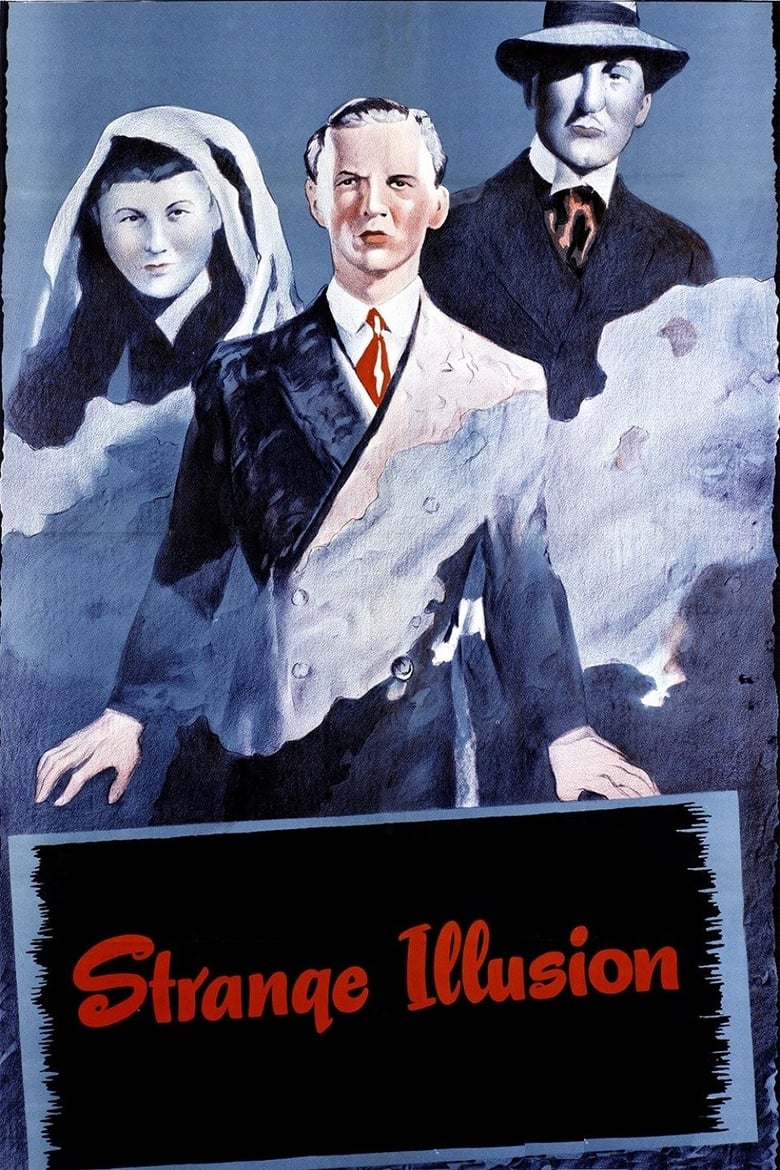
Strange Illusion 1945
1945 PRC
★★★☆☆ Notable
Film Noir · 87 minutes · Black & White

Strange Illusion

Directed by Edgar G. Ulmer
Year 1945
Runtime 87 min
Studio PRC
TMDB 5.6 / 10
"A dead man's warning reaches his son too late to prevent the wrong already taking root."

Paul Cartwright, a restless teenager still shadowed by the death of his father – a respected judge – becomes convinced that something is wrong with Brett Curtis, the urbane newcomer who has inserted himself into the family's life and is moving steadily toward marriage with Paul's widowed mother, Virginia. Paul's suspicions are not idle adolescent resentment; they are sharpened by a recurring dream in which his father appears to him with a warning, and by details in Curtis's manner that do not add up. The household, comfortable on the surface, begins to feel like a trap.

Paul confides in Dr. Vincent, the family's trusted physician, and in the avuncular Professor Muhlbach, but neither man can act on intuition alone. Curtis is polished, plausible, and careful, and Virginia is genuinely taken with him. The more Paul presses, the more isolated he becomes – eventually committed to a rest facility under circumstances that conveniently remove him from the picture. From inside, with limited means and a dwindling circle of allies, he must find a way to expose Curtis before the marriage becomes irrevocable.

Strange Illusion works within the Hamlet template without apology, transposing Shakespearean dread into the idiom of American domestic noir. The threat here is not supernatural but psychological: the danger of a charming man who has reinvented himself, and the danger of a world that rewards surface and punishes instinct. The film's tension rests on whether a young man's private knowledge can survive the institutions – family, medicine, respectability – arrayed against it.
Classic Noir

Strange Illusion is a minor but purposeful entry in Edgar G. Ulmer's filmography, made at PRC under the tight budgetary constraints that defined the studio's output. What Ulmer achieves here is less about production value than about disciplined economy: the Hamlet parallel is deployed not as literary decoration but as a structural armature that gives the thin resources something to lean against. Warren William, in one of his last significant roles, brings a surface warmth to Brett Curtis that is more unsettling than overt menace would be – the danger is precisely that he is easy to believe. Jimmy Lydon carries the film's moral weight with a credibility that the role demands and that a lesser young actor would have undermined. The film is also a document of wartime domestic anxiety, in which the family unit is shown as vulnerable to infiltration from within rather than threat from without – a concern that would only intensify in the postwar years and find more elaborate expression across the genre. At 87 minutes, it does not overstay its argument.

– Classic Noir
3 ★★★☆☆ Notable
Credits

The Crew

DirectorEdgar G. Ulmer
ScreenplayAdele Comandini
CinematographyPhilip Tannura
MusicLeo Erdody
EditingCarl Pierson
Art DirectionPaul Palmentola
ProducerLeon Fromkess
Performances

The Cast

Close Reading

The Signature Scene

Strange Illusion – scene
The Sanitarium Corridor Locked In, Looking Out

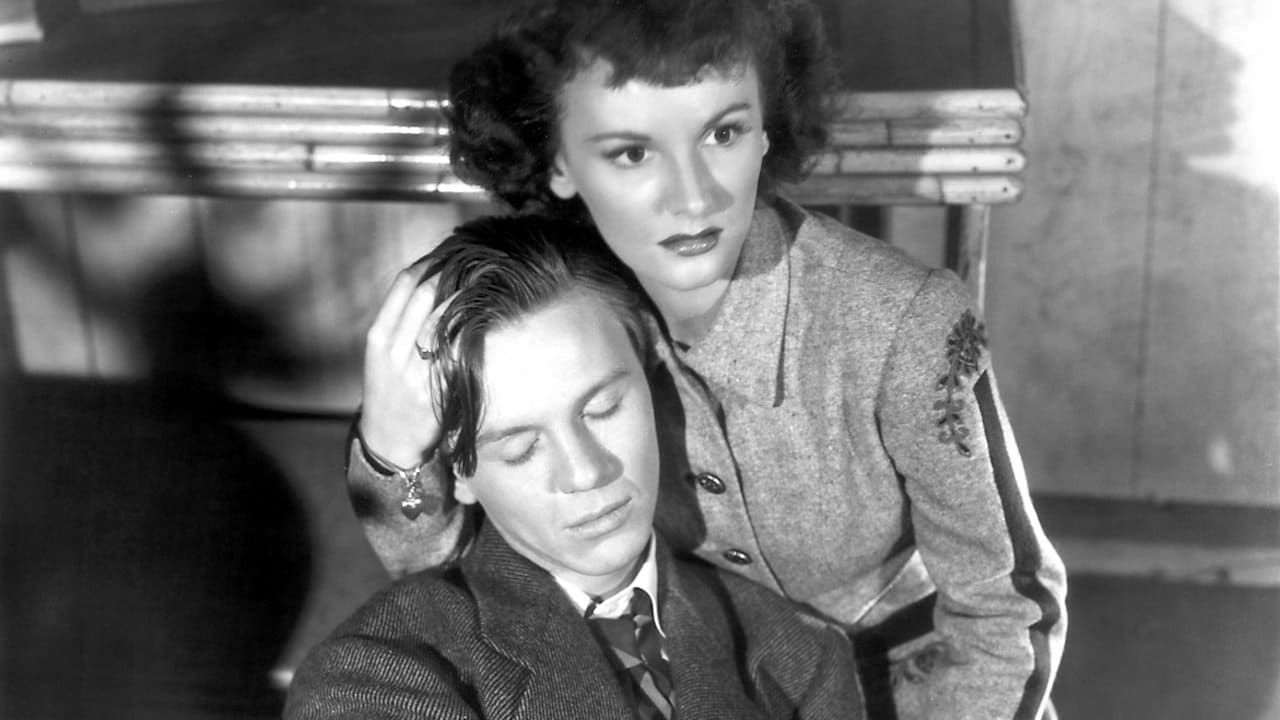
Philip Tannura frames Paul in a narrow institutional corridor, the walls pressing close on either side. Light enters from a single high window, falling in a hard, diagonal bar across the floor and catching the edge of Paul's face while the rest of him recedes into shadow. The camera holds at a slight low angle, making the corridor ceiling visible – a compositional choice that reinforces enclosure without requiring a wide space to do it. The stillness of the frame does the work that cutting might otherwise attempt.

The scene crystallizes the film's central argument: that knowing the truth and being in a position to act on it are entirely different conditions. Paul is not restrained by violence but by the apparatus of respectable authority – a doctor's signature, a family's trust misplaced. The locked corridor is not a dungeon; it is an institution, and that distinction is the film's sharpest observation. Ulmer uses confinement here not for sensation but to locate where power actually resides.

Visual Language

The Cinematography

🎞️
Philip Tannura – Director of Photography

Philip Tannura's cinematography on Strange Illusion operates under the familiar PRC constraint of limited lighting equipment and compressed shooting schedules, and it turns those limitations into a coherent visual argument. Tannura works consistently with high-contrast setups – deep shadow filling the lower third of frames, practical or implied single-source light falling from above or to one side – that give the film's domestic interiors a latent menace they would not otherwise earn. There is no access to location exteriors of any visual ambition, and Tannura does not pretend otherwise; instead, the studio-bound world becomes claustrophobic by design, a closed system from which Paul cannot easily exit. Lens choices favor moderate focal lengths that keep the background slightly present rather than dissolved into blur, which means the walls and ceilings of rooms remain visible as constraining elements. The shadow work is not expressionist in any showy sense but functional: darkness falls where authority and deception operate, and the few scenes of relative brightness belong to characters who have not yet been compromised.

In the Catalogue

Themes & Motifs

Availability

Where to Watch

Also in the Directory

See Also