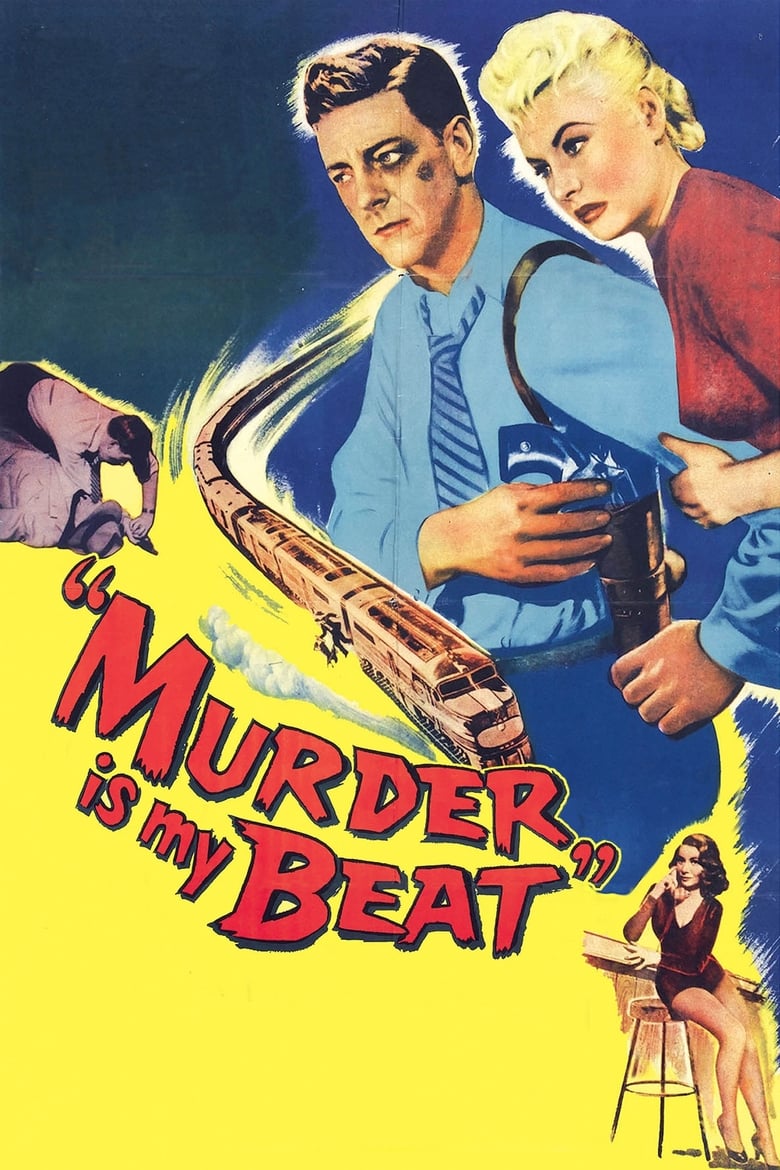
Ray Patrick, a police detective in a California mountain town, is assigned to escort Eden Lane back to the city after her conviction for the murder of a man whose charred remains were found in a rural cabin. Eden has maintained her innocence throughout, but the case against her is considered closed. On the train journey down, she catches a glimpse of a man through the window at a station stop and insists, with visible desperation, that he is the murder victim – alive, and walking free.
Patrick is skeptical but cannot entirely dismiss what he has seen in Eden's face. When he investigates further, the threads of the original case begin to loosen: identities are uncertain, witnesses are unreliable, and the official record conceals as much as it clarifies. A woman named Patsy Flint and the wealthy Abbott household enter the picture, each carrying a version of events that conflicts with the others. Patrick finds himself drawn into allegiances that compromise his professional standing and force him to choose between procedure and conscience.
Murder Is My Beat works the wrong-man – or in this case, wrong-woman – variation of noir with economy and directness. The film belongs to the cycle of low-budget procedurals that tested the boundaries of institutional authority, asking whether the machinery of law enforcement can correct its own errors or whether individual initiative is the only available recourse. The outcome hinges not on action but on disclosure, the slow peeling back of a false identity in a genre that treats identity as the most unstable element of all.
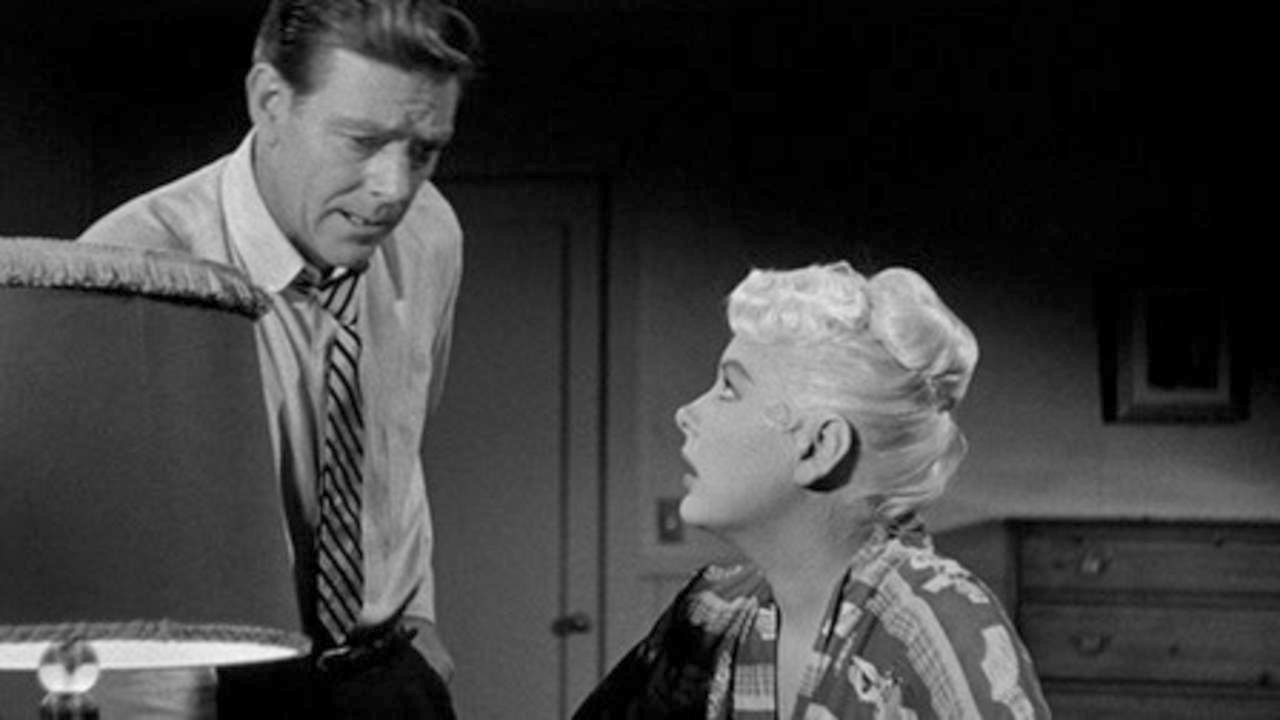
Edgar G. Ulmer made this film for Masthead Productions under the constraints that defined most of his career – minimal budget, brief schedule, a cast working at the margins of the studio system. Barbara Payton, once under contract at Warner Bros., was by 1955 a figure whose personal history shadowed every performance she gave, and Ulmer does not waste that freight. Her Eden Lane carries a credible exhaustion, a woman who has passed through the legal system and emerged hollowed out by it. Paul Langton's Patrick is the more conventional figure, but the film is less interested in his arc than in the procedural question he embodies: what obligation does a law enforcement officer have when the law has already ruled? Ulmer stages the resolution with characteristic restraint, avoiding melodramatic confrontation in favour of revelation through testimony. The film does not rise to the level of Ulmer's Detour, but it demonstrates the same understanding that noir's essential subject is not crime but the unreliability of the record that crime leaves behind.
– Classic Noir
The train sits briefly at a small-town station in the mountain dark. Ulmer and cinematographer Harold E. Wellman frame Eden at the window, her face caught between the interior light of the car and the darkness outside – a compositional split that has been the grammar of entrapment throughout the film. The man she identifies moves along the platform at the edge of the frame, partially obscured, and Wellman holds just long enough to make the sighting ambiguous: present enough to be credible, peripheral enough to be deniable. The train pulls away before any confirmation is possible.
The scene encapsulates the film's central argument about evidence and belief. Patrick has the woman in custody; the case is closed; the law has spoken. What Eden sees through the glass cannot be entered into the record. The window functions here as it so often does in noir – as a boundary between what is known and what is witnessed, between official truth and lived experience. That the train continues moving is the scene's quiet argument: institutions do not stop for inconvenient sightings.
Harold E. Wellman's work on Murder Is My Beat is the work of a craftsman who understood that low budgets demand discipline rather than invention. Wellman makes consistent use of tight interiors lit with a single dominant source – a desk lamp, a window, a bare overhead – allowing shadow to define the boundaries of each character's confinement rather than spending resources on elaborate setups. The mountain location footage in the film's early sections is shot with a documentary flatness that makes the subsequent studio interiors feel more claustrophobic by contrast, a tonal shift Ulmer uses deliberately. Close-ups of Payton are lit to emphasis the planes of her face without softening; this is not glamour photography but character notation. Wellman avoids deep-focus compositions, keeping backgrounds soft and undefined, which concentrates moral weight on the figures in the foreground and leaves the institutional world they inhabit – courts, offices, police corridors – as an indistinct pressure rather than a fully rendered environment.
Tubi has carried this title as part of its rotating catalogue of public-domain and low-budget 1950s noir; availability should be confirmed before viewing.
Archive.orgFreeThe film circulates in the public domain and Archive.org offers a reliable streaming copy, though print quality varies by source.
Amazon Prime VideoSubscriptionHas appeared via Prime's catalogue of classic titles; availability through third-party channels on the platform should be verified at time of access.