Films People Pull a Fast One Night Beat Reading Room On TV Shop
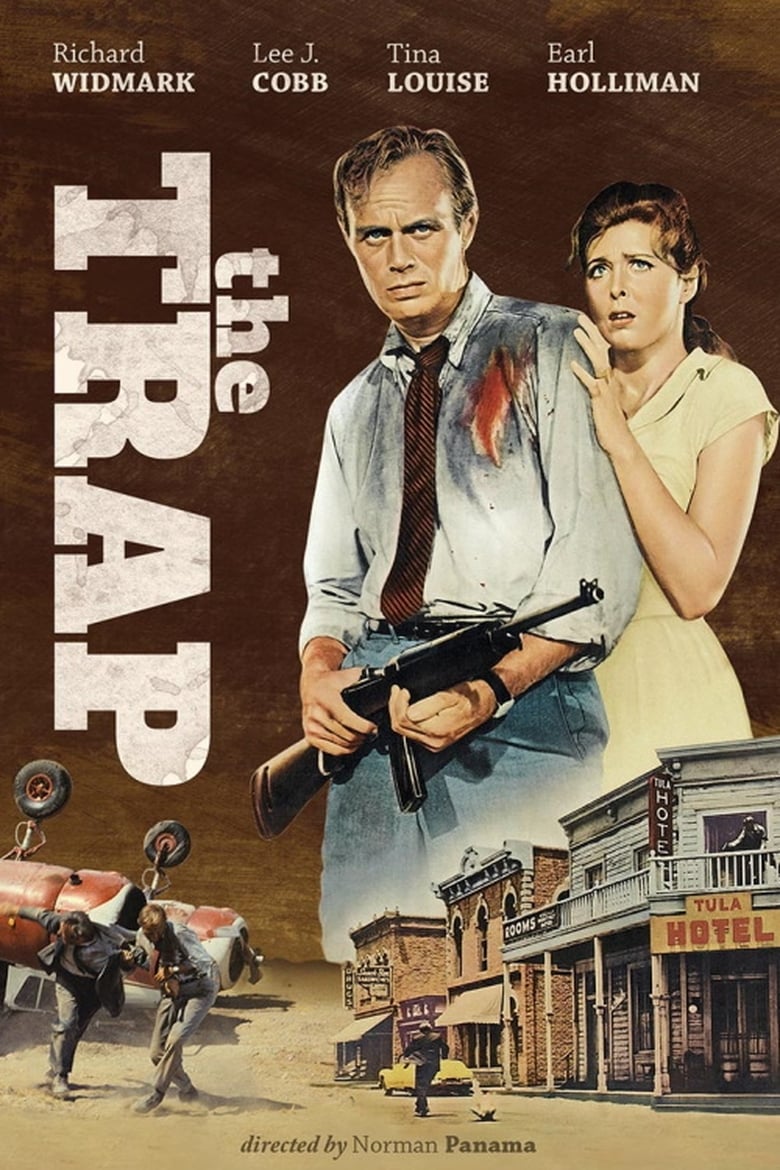
Trap 1959
1959 Heath Productions
★★★☆☆ Notable
Film Noir · 129 minutes · Black & White

Trap

Directed by Norman Panama
Year 1959
Runtime 129 min
Studio Heath Productions
TMDB 6.9 / 10
"Two daughters, one secret, and a house where the past refuses to stay buried."

When divorce attorney Mitch Evers arranges a summer vacation at a grand New England estate, he brings along his daughter Susan, an impulsive teenager who quickly discovers that the property's resident family – the genteel but fractious McKendricks – harbors more than the usual share of old-money grievances. The family matriarch Maggie McKendrick presides over the household with a composure that barely conceals accumulated resentment, while her father Charles and aunt Louise orbit the arrangements with the uneasy calm of people accustomed to keeping things quiet.

Susan, who bears an uncanny resemblance to Maggie's own estranged daughter Sharon, engineers a scheme that places both girls in each other's lives in ways neither parent anticipated. As the deception takes hold, alliances shift: Mitch finds himself drawn to Maggie in ways that complicate his professional detachment, while the household staff – particularly the watchful Verbena – registers every tremor of the growing instability. The arrival of Vicky Robinson and her mother Edna tightens the social pressure around a family already close to fracture.

The film operates in the register of the domestic thriller – less concerned with violence than with the slow revelation of what respectable surfaces conceal. Its emotional architecture is built on mistaken identity, suppressed longing, and the quiet cruelty of families who maintain appearances at the cost of honesty. Swift marshals these tensions with a steadiness that keeps the film from resolving too easily into either comedy or melodrama.
Classic Noir

The Parent Trap – released under the shortened title Trap in some markets – is an unusual entry in the Disney catalogue precisely because its emotional machinery runs on deception, estrangement, and the unresolved damage adults do to children through marital failure. David Swift, working from Erich Kästner's source novel, does not sand down those edges entirely. The divorced household at the film's center is treated as a genuine wound, and the children's scheme to reunite their parents carries a note of desperation beneath its comic surface. Lucien Ballard's cinematography lends the location work a texture that exceeds the studio's usual polish, grounding the family drama in physical spaces that feel inhabited rather than constructed. The film belongs to a strand of postwar American cinema preoccupied with the hidden costs of prosperity and domesticity – a concern it shares, obliquely, with more overtly noir-adjacent work of the same decade. At 129 minutes it carries more weight than the genre typically allowed, and that weight is where its modest distinction lies.

– Classic Noir
3 ★★★☆☆ Notable
Credits

The Crew

DirectorNorman Panama
ScreenplayRichard Alan Simmons
CinematographyDaniel L. Fapp
MusicPaul J. Smith
EditingEverett Douglas
Art DirectionHenry Bumstead
CostumesEdith Head
ProducerMelvin Frank
Performances

The Cast

Close Reading

The Signature Scene

Trap – scene
The Lakeside Confrontation Two Faces, One Frame

Ballard frames the two girls in a single shot that refuses the easy comfort of the mirror image. Natural light from the lake surface throws soft, directional illumination across both faces, flattening the expected symmetry and insisting on difference even within resemblance. The camera holds longer than sentiment requires, and the stillness of the composition – no cutting away, no underscore swelling to cue the reaction – gives the scene a quality closer to confrontation than recognition.

What the scene argues is that identity is not simply a matter of appearance. The two girls, identical in face, are strangers to one another's interior lives, and Ballard's refusal to prettify the encounter through rapid editing or flattering close-ups keeps that strangeness intact. The film's central conceit – that a family can be reassembled by manipulating resemblance – is quietly interrogated here before it is ever fully endorsed.

Visual Language

The Cinematography

🎞️
Daniel L. Fapp – Director of Photography

Lucien Ballard, whose career spanned everything from Kubrick's Fear and Desire to Peckinpah's The Wild Bunch, brings a disciplined economy to The Parent Trap that distinguishes it from the studio's more decorative output of the period. Working on location in Northern California as well as on controlled studio interiors, Ballard calibrates natural light with precision rather than abundance, allowing shadow to define the edges of rooms and faces rather than filling the frame with the even illumination typical of family entertainment. His lens choices favor moderate focal lengths that preserve spatial relationships between characters – a choice that keeps the ensemble scenes legible without flattening them into tableau. The estate interiors are lit with a slight warmth that registers comfort without endorsing it, a subtle signal that the domestic arrangements on display carry their own form of cost. The cinematography does not announce itself, which is precisely its discipline: it serves the story's moral argument by making the visible world look trustworthy while the script insists it is not.

In the Catalogue

Themes & Motifs

Availability

Where to Watch

Also in the Directory

See Also