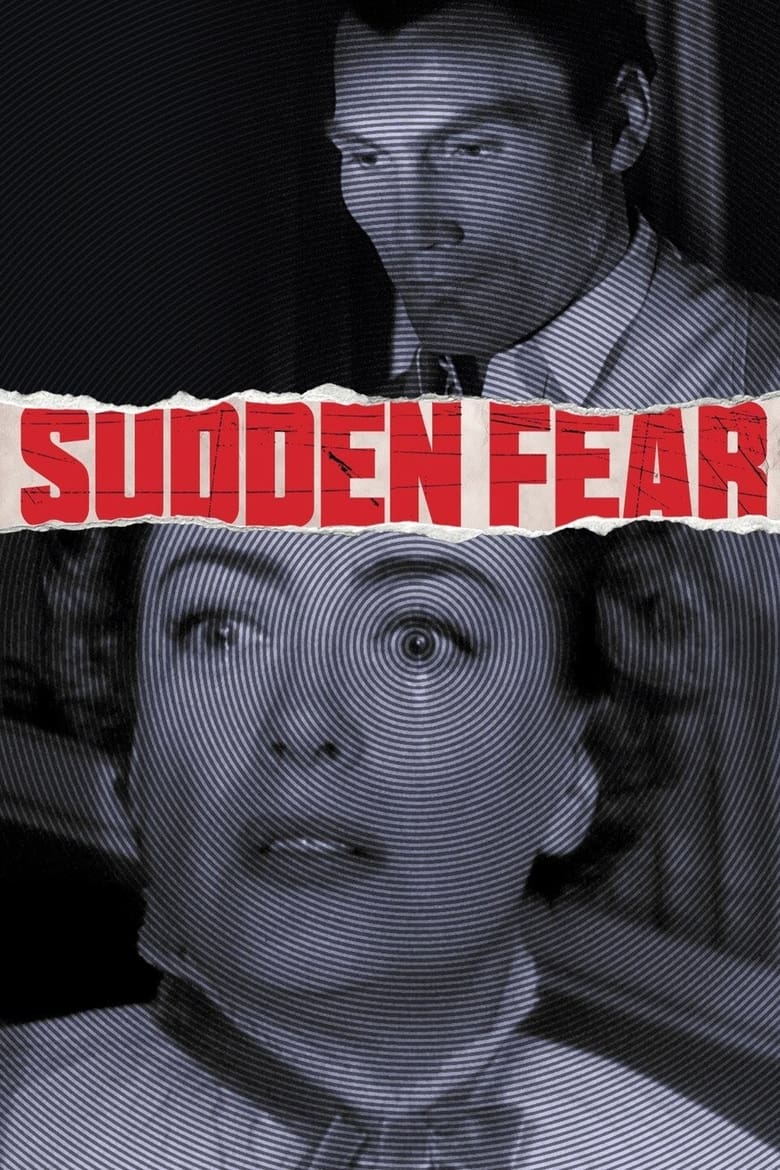
Myra Hudson (Joan Crawford) is a wealthy San Francisco playwright with the authority to cast or dismiss talent at will. When she rejects actor Lester Blaine (Jack Palance) from a Broadway production, concluding he lacks conviction in romantic roles, she expects the matter to end there. Instead, fate places them on the same transcontinental train, and a courtship begins that Myra, despite her intelligence and self-possession, allows herself to believe in. They marry quickly, Lester moving into her large house and her life with an ease that should, in retrospect, carry its own warning.
Myra soon discovers, by accident, a dictated tape recording left running in her study: Lester and his former lover Irene Neves (Gloria Grahame) are plotting her murder, timed to coincide with a change to her will. The plan is methodical, the motive straightforward, and Myra's own home has become the staging ground. Unable to trust the law to act in time, and paralyzed by the knowledge that the man she loved is a construct, Myra begins to formulate a counter-scheme – one that requires her to perform normalcy while privately dismantling the plot against her.
Sudden Fear belongs to that strand of 1950s noir in which the protagonist is neither detective nor criminal but an ordinarily capable person forced into lethal improvisation. The film's interest lies less in the mechanics of the conspiracy than in the psychological pressure it places on Myra: the performance of love she must sustain, the decisions she must make alone, and the question of whether a woman who creates fictional murders can coldly engineer a real one.
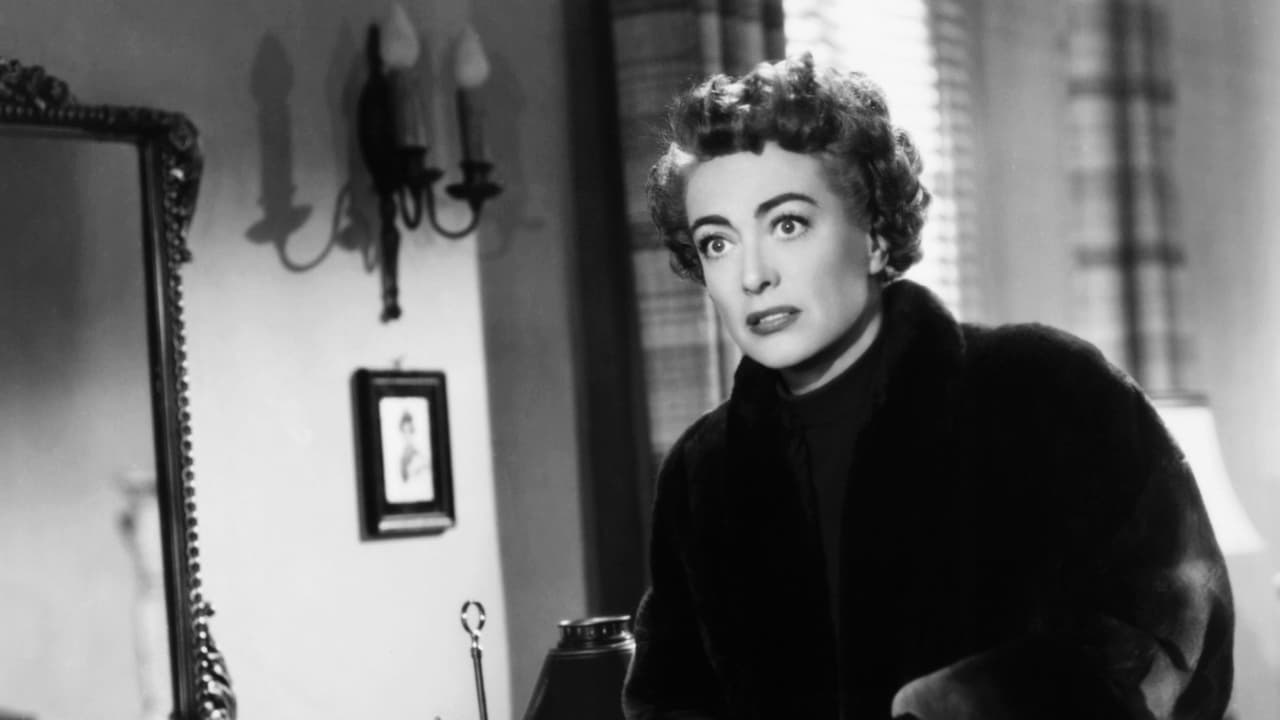
Sudden Fear arrives at a precise moment in Crawford's career when her off-screen mythology had begun to merge with her on-screen personas, and director David Miller is canny enough to let that weight accumulate without exploiting it. The film is, at its structural core, a reversal of the femme fatale formula: here, the woman is the imperiled party who acquires, under duress, the scheming intelligence the genre usually assigns to male killers or seductive women. Jack Palance, all angular menace and surface charm, makes Lester credible as both lover and predator, while Gloria Grahame's Irene represents a cooler, more pragmatic corruption. What the film ultimately argues, and this is where it earns its place in the canon, is that bourgeois security is a fiction easily dissolved by a single overheard tape. Myra's wealth, her creative authority, her comfortable house – none of it constitutes protection. Charles Lang's cinematography translates that argument into shadow and geometry with disciplined precision. The film does not transcend its era so much as crystallize it.
– Classic Noir
In the film's most sustained set piece, Myra moves through fog-thickened San Francisco streets in the small hours, and Charles Lang shoots the sequence largely in extreme close-up and deep shadow. The camera stays close to Crawford's face, registering calculation and fear in rapid alternation, then pulls back to reveal the geometry of pursuit: wet pavement reflecting headlights, doorways offering incomplete shelter, the city grid as a maze without a guaranteed exit. Lang uses the available ambient light of streetlamps to carve the frame into alternating bands of visibility and darkness, so that Myra's movements are never entirely legible to the viewer any more than they are to her pursuers.
The sequence crystallizes the film's central argument about knowledge and helplessness. Myra knows everything about the plot against her and controls nothing about its execution. Her intelligence, the quality the film has established as her defining trait, becomes the source of her terror rather than her salvation. She sees the mechanism clearly and cannot stop it through clarity alone. The night city, indifferent and labyrinthine, externalizes that condition with the precision of a diagram.
Charles Lang, who had built a career on studio-controlled compositions at Paramount, brings to Sudden Fear a restless, location-inflected quality that sits uneasily against the film's more conventional interior scenes – and that unease is productive. Lang shoots San Francisco at night as a city of oblique angles and incomplete illuminations, preferring to let shadows do structural work rather than flooding scenes with fill light. In the interiors, he uses a high-contrast setup that keeps Lester and Irene partially obscured even in domestic spaces, suggesting that domesticity itself has become a zone of concealment. Crawford's close-ups are lit with deliberate severity rather than the softening glamour she had received at MGM, a choice that emphasizes Myra's psychological exposure rather than her star wattage. Lang's lens choices favor a slightly compressed middle focal length that flattens space and makes rooms feel contingent, as though the walls could rearrange themselves. The cinematography does not comment on the story so much as it enacts its moral: safety is always a lighting condition, subject to change.
The most reliable source for a clean, uncompressed transfer with appropriate aspect ratio; check current availability as titles rotate.
TubiFree (Ad-Supported)Has carried Sudden Fear in an accessible print; free of charge but transfer quality varies.
Archive.orgFreeA public domain version is available, though image quality is inconsistent and the source print may show wear.