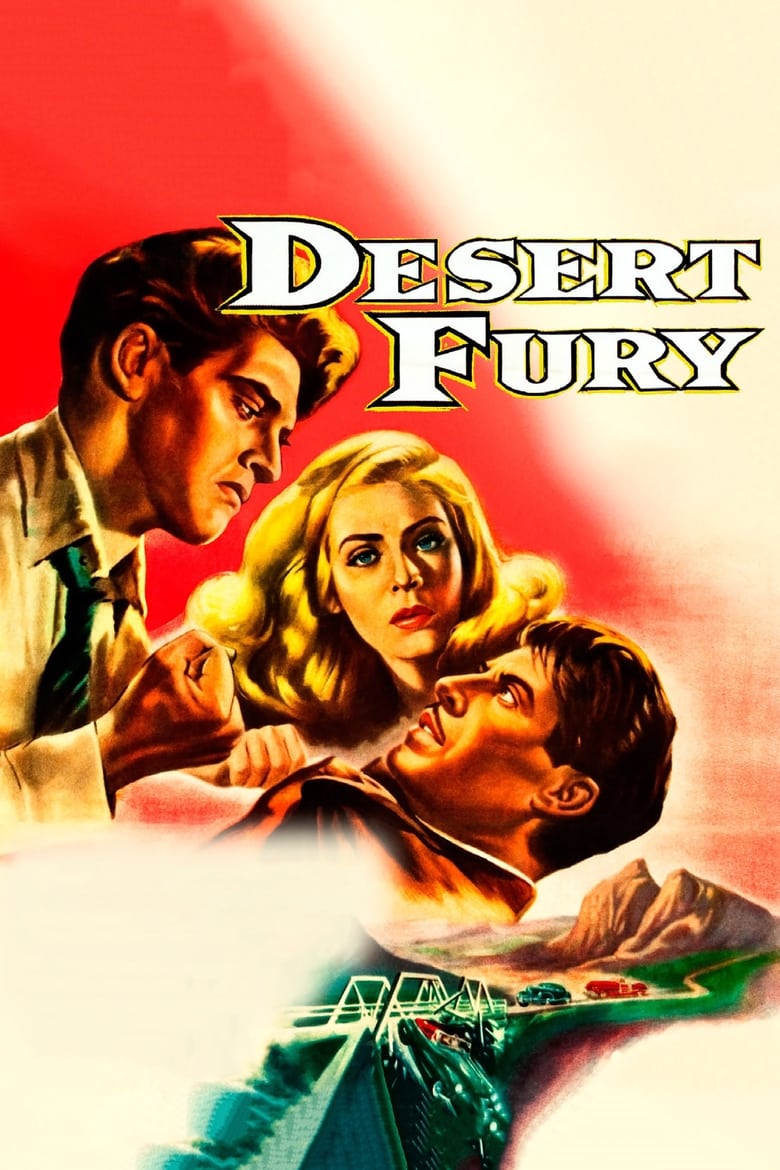
Paula Haller returns to Chuckawalla, Nevada, a sun-bleached gambling town where her mother Fritzi runs the local casino with the practiced authority of someone who has survived worse than she lets on. Paula is young, restless, and determined to live on her own terms – a posture that immediately puts her at odds with Tom Hanson, the county sheriff who knew her as a girl and now watches her with something between protectiveness and desire. Into this uneasy arrangement arrives Eddie Bendix, a smooth, dangerous man from the cities, accompanied by his quietly devoted associate Johnny Ryan. Eddie has history in Chuckawalla, and that history involves Fritzi.
Paula is drawn to Eddie with a velocity that alarms everyone around her. Fritzi's opposition is fierce and personal in ways she will not explain. Tom's authority gives him grounds to harass Eddie, but his motives are entangled with his feelings for Paula. The relationship between Eddie and Johnny carries its own unspoken weight – a loyalty so absolute it curdles into something possessive and airless. As Paula presses closer to Eddie and the truth about his past surfaces in fragments, the film reveals that Chuckawalla's desert isolation does not protect its inhabitants from the world outside; it merely concentrates its poisons.
Desert Fury operates at the intersection of the domestic melodrama and the crime picture, using the Nevada landscape as a moral geography where heat and light expose rather than illuminate. The film's central tension is not whether Eddie is dangerous – that is established early – but whether desire can override the evidence plainly before Paula's eyes. It belongs to that postwar cycle of noirs in which women navigate a world where the men who claim to protect them and the men who attract them are equally hazardous, and where the family unit conceals as much as it shelters.
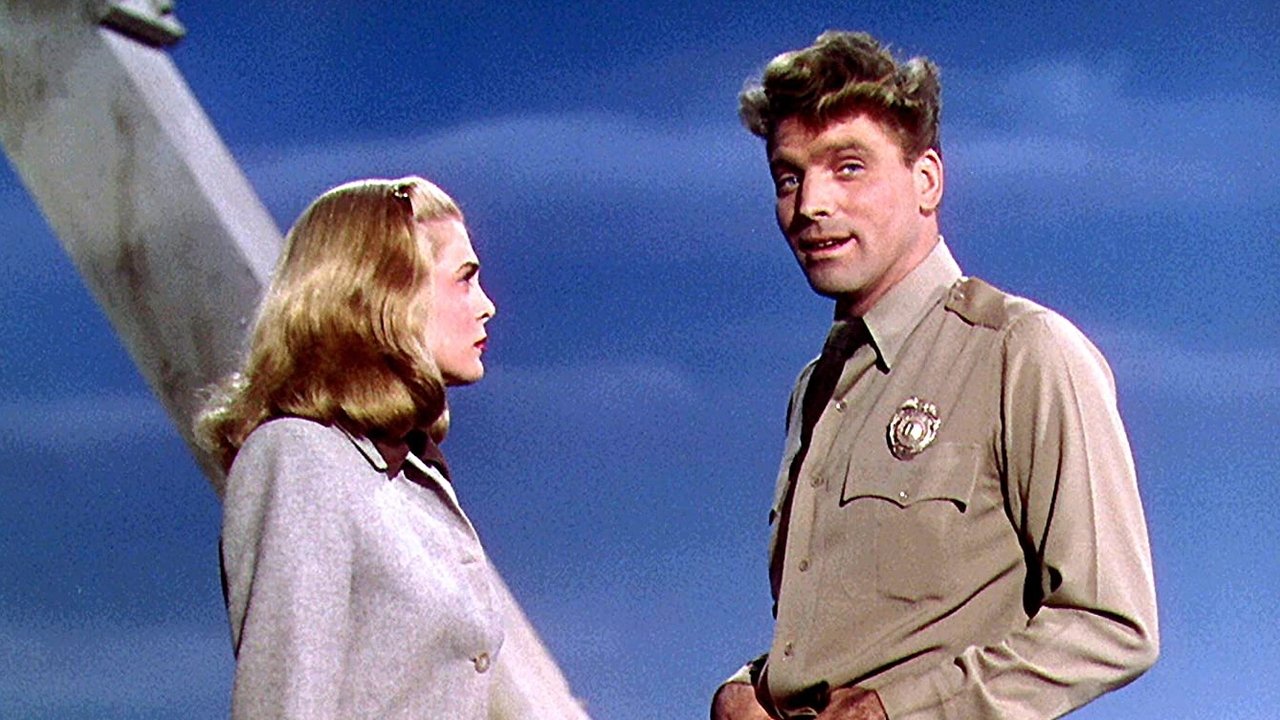
Desert Fury occupies an instructive position in the Hal Wallis noir cycle: technically polished, thematically serious, and slightly constrained by the Production Code in ways that give the film its peculiar tension. Lewis Allen directs with economy, never overselling the menace that surrounds Eddie Bendix and Johnny Ryan, whose dynamic – shot through with a possessive intimacy that the script cannot name outright – registers as one of the more quietly subversive elements in the postwar crime film. Lizabeth Scott carries the film's moral weight without sentimentality; her Paula is not naive but willful, which is a more interesting character problem. Mary Astor's Fritzi is the picture's most complex figure, a woman who has arranged her own survival and recognises the price of it. Where the film falls short is in its resolution, which tidies what the preceding eighty minutes has deliberately left ragged. Even so, Desert Fury rewards attention as a document of what studio noir could accomplish within its constraints – and what it revealed despite them.
– Classic Noir
Allen and cinematographer Charles Lang position the exchange on the casino floor at night, the frame populated with the ambient activity of gambling but cleared of distraction at its centre. Lang allows the overhead light to fall hard on Astor's face while Scott stands slightly back, caught between planes of illumination. The camera maintains a middle distance that refuses intimacy, holding both women in frame simultaneously so that the spatial geometry itself registers as argument – neither yielding ground, neither quite occupying the same moral plane.
The scene crystallises the film's central tension: Fritzi's opposition to Eddie is not maternal instinct but informed experience, and the refusal to disclose that experience is itself a kind of protection and a kind of wound. Paula reads her mother's resistance as control; the audience is given enough to suspect it is closer to a confession. What Lang's framing insists on is that both women are correct and that this irresolvability is the condition under which the film operates – knowledge withheld is not the same as knowledge absent.
Charles Lang's work on Desert Fury is among the more formally interesting cinematography jobs of the Wallis unit, not least because it refuses the obvious. The Nevada setting offered Lang an exterior logic of bleached light and hard shadow – the desert as a place where nothing hides – and he uses it deliberately before pulling the action back into studio interiors that replicate that same quality of exposure. Lang opts for contrast ratios that edge toward the expressionist without tipping into it; faces are lit to read motive as well as feature, and the colour palette – the film is shot in Technicolor, which was still unusual in crime pictures of the period – is managed so that warmth reads as threat rather than comfort. The purples and reds of the casino are not glamorous; they are faintly sickening, the hues of something overripe. Lang's lens choices keep depth of field tight in scenes of emotional confrontation, flattening space around characters who are already running out of room.
TCM holds Desert Fury in regular rotation and broadcasts it in its correct Technicolor format without cropping; checking the TCM schedule or the Max bundle with TCM access is the most reliable route to a clean presentation.
Amazon Prime VideoRentalAvailable for digital rental in HD; a reasonable option when TCM broadcast timing is inconvenient, though verify the aspect ratio before purchasing.
TubiFree (Ad-Supported)Tubi has carried Desert Fury in its classic Hollywood catalogue; availability shifts, so confirm before streaming, and note that the transfer quality may vary from the TCM broadcast version.