David Graham, a recovering alcoholic writer, arrives in London from Canada with only hours to spare before his son Alec is hanged for the murder of a young woman. David has been absent from his son's life for years, and Alec – convicted on what seems like solid circumstantial evidence – refuses to help his own cause. Desperate and barely sober, David begins to investigate on his own, circling the world of Robert Stanford, a powerful industrialist whose household the dead girl had moved through.
The closer David gets to Stanford, the more the comfortable surface of respectable English life begins to crack. Stanford's wife Honor is a woman holding herself together through sheer will, and their son Brian carries secrets of his own. David's inquiries – erratic, sometimes humiliating, driven by guilt as much as love – unsettle allegiances and expose the machinery by which wealth insulates itself from consequence. The ticking clock is not only judicial but moral: each hour David spends sober and purposeful is also a reckoning with his own failures as a father.
Time Without Pity belongs to a strand of 1950s British noir that turned the crime film into a vehicle for social criticism. The whodunit mechanism is almost beside the point; what the film examines is how guilt is distributed, how class protects the guilty, and what it costs a flawed man to act with integrity when the stakes are absolute. Losey, then working in Britain as an exile from the Hollywood blacklist, brings to the material a cold outsider's clarity about English institutions and the violence they conceal.
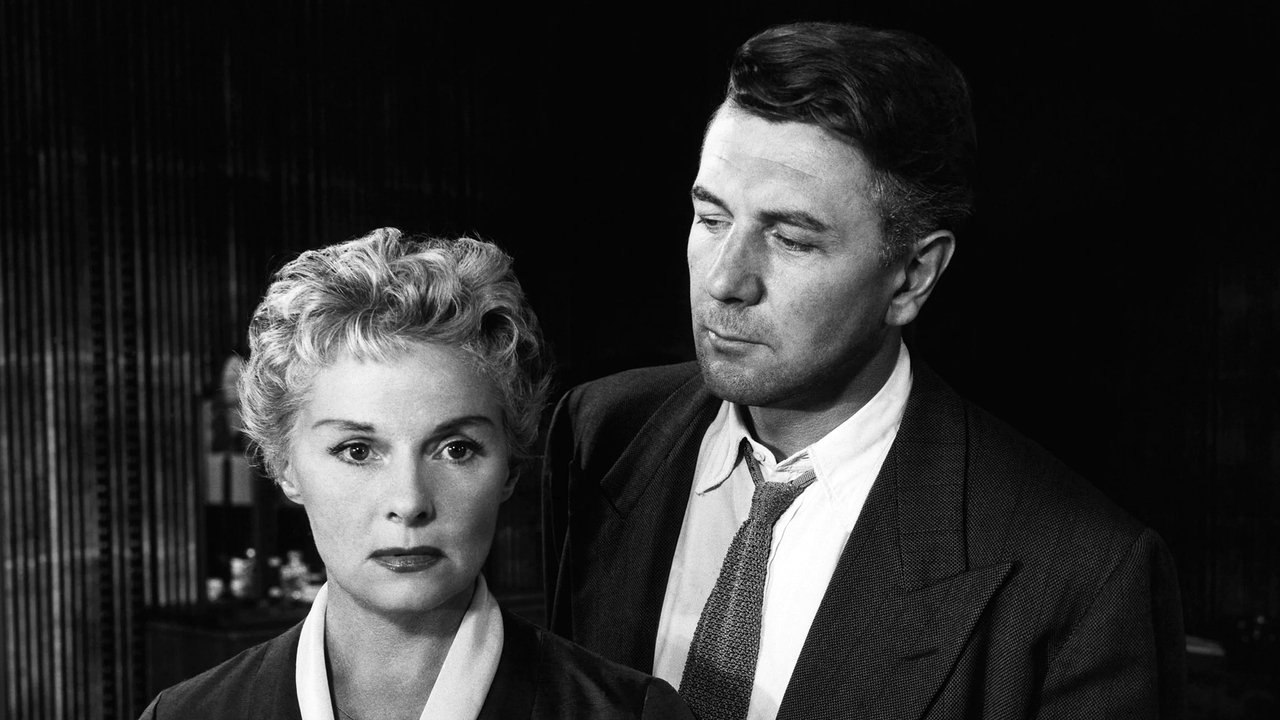
Joseph Losey made Time Without Pity near the beginning of his most productive British period, and the film bears the marks of a director working with compressed resources and sharpened convictions. Adapted from Emlyn Williams's play Someone Waiting, it converts a domestic thriller into something close to a polemic – against capital punishment, against the English class system, against the conspiracy of silence that allows powerful men to remain powerful. Leo McKern's Robert Stanford is among the more disturbing figures in British noir of the decade: not a shadowy criminal but a man of standing whose violence is an extension of his entitlement. Michael Redgrave plays David Graham as genuinely impaired – the character's alcoholism is treated as a real condition rather than a plot inconvenience, and his halting, unreliable progress through the investigation carries genuine tension. The film's politics occasionally harden into schematism, and the final act resolves too neatly for the ambiguity the preceding reels have built. But as a document of what serious filmmakers could do within the British crime film in the late 1950s, it remains a significant and underexamined work.
– Classic Noir
Losey and cinematographer Freddie Francis stage a late confrontation in Stanford's study against walls of deep arterial red – a production design choice that the camera makes no effort to naturalise. Francis holds the frame wide enough to let the colour dominate, then cuts to tighter angles that compress the two men into the saturated space. Light falls hard from a single practical source, leaving half of Stanford's face in shadow while Graham stands exposed, lit flatly, nowhere to retreat.
The scene concentrates everything the film has been building: the red is simultaneously money, blood, and the heat of a man who has never had to account for himself. Graham's exposure in the light is not heroism – it is vulnerability. He has arrived at the truth, but the truth is inside a room that belongs entirely to Stanford, and the geometry of the frame makes clear who controls the space. The film's argument about power and impunity is made here not through dialogue but through the camera's refusal to grant the protagonist any territorial advantage.
Freddie Francis, shooting one of his earliest features as director of photography, brings a control to Time Without Pity that belies the film's modest budget. He works throughout with high-contrast lighting setups that isolate faces and deny characters the comfort of ambient fill, a choice that reinforces Losey's moral logic: no one in this film is allowed to hide in the middle tones. The London locations – rain-wet streets, institutional corridors, a motor-racing sequence shot at Brands Hatch – are used to establish social texture rather than atmosphere for its own sake, and the shift to studio interiors for the Stanford household scenes is deliberate: those spaces feel sealed, constructed, wrong. Francis favours close focal lengths in the confrontational scenes, flattening depth and pushing characters against their backgrounds, a technique that registers status and entrapment simultaneously. The overall palette is cool except where production design forces warmth – and those moments of warmth, particularly in the Stanford interiors, read as danger.
MUBI has carried Losey's British films in curated retrospectives and represents the most likely current home for a restored presentation of this title.
Criterion ChannelSubscriptionThe Criterion Channel periodically programmes British noir and Losey retrospectives; availability rotates, so check the current catalogue.
Archive.orgFreeA public-domain-era upload may be available, though transfer quality is unverified and the version in circulation is likely sourced from a worn print.