Films People Pull a Fast One Night Beat Reading Room On TV Shop
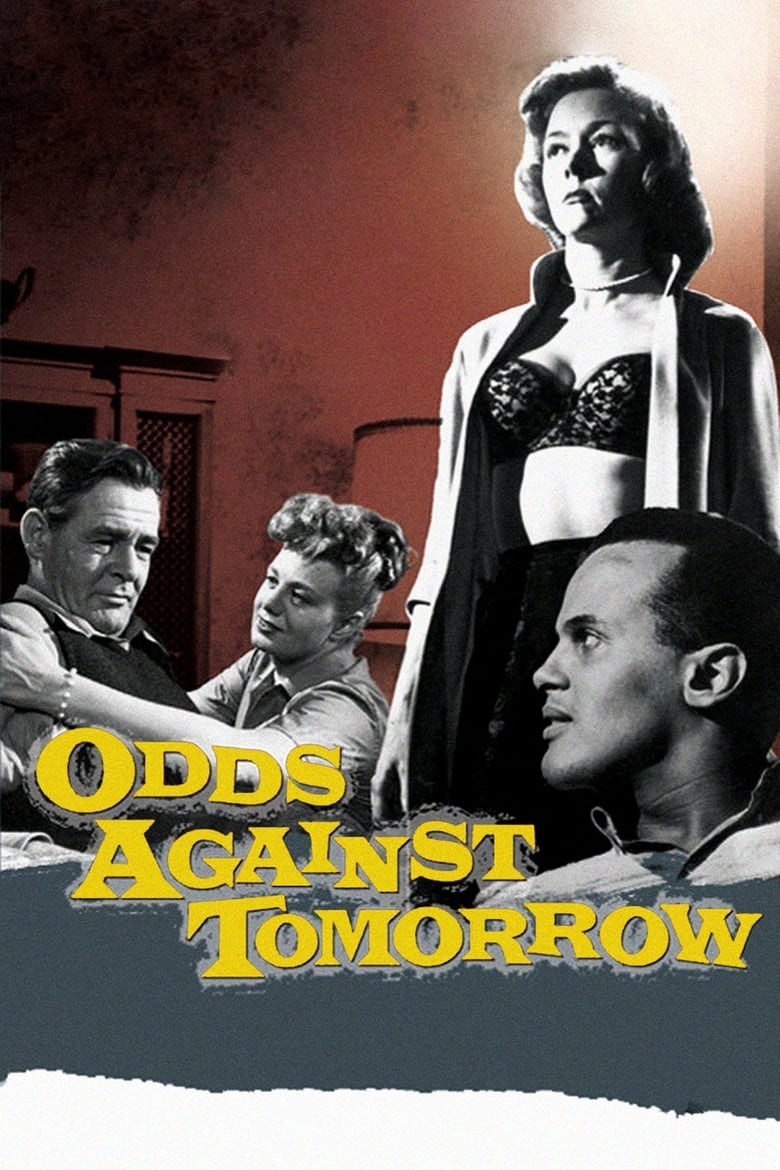
Odds Against Tomorrow 1959
1959 HarBel Productions
★★★★☆ Recommended
Film Noir · 96 minutes · Black & White

Odds Against Tomorrow

Directed by Robert Wise
Year 1959
Runtime 96 min
Studio HarBel Productions
TMDB 6.8 / 10
"Three men, one bank, and a hatred that makes the plan impossible from the start."

Dave Burke, a disgraced ex-cop with a scheme and no future, recruits two men to rob a small upstate New York bank. Earle Slater is a bitter, debt-ridden drifter and former Korean War veteran who carries his resentments like a second skin. Johnny Ingram is a jazz musician drowning in gambling debts, pressed into the job by a loan shark named Bacco who holds his family's safety as collateral. Burke needs both men. The problem is that Slater, white and corrosive with racial contempt, cannot tolerate working alongside Ingram, and Ingram has enough self-respect left to know it.

The film moves between the men's separate lives in New York City and the cold geometry of the plan itself. Ingram's estranged wife Ruth and their daughter represent everything he stands to lose; Lorry, Slater's devoted girlfriend, absorbs his violence and delusion without complaint; Helen, a neighbor, offers Slater a different kind of attention. These domestic margins are not relief from the noir pressure – they are part of it. Burke holds the operation together through sheer desperation, but the real fault line is between Slater and Ingram, and it runs deeper than the job.

Odds Against Tomorrow belongs to the cycle of late noir heist films in which the mechanics of a robbery are less important than the moral weight pressing down on every participant. Based on William P. McGivern's novel and scripted under a front by Abraham Polonsky – himself blacklisted – the film uses the procedural form to examine racial animus and postwar American failure. It does not soften its argument or spare its characters, and it arrives at an ending that refuses the comfort of ambiguity.
Classic Noir

Odds Against Tomorrow arrives at the end of classical noir carrying freight that most films in the cycle avoided entirely. Robert Wise, working with a script credited to John O. Killens but written by the blacklisted Abraham Polonsky, uses the heist framework not as genre exercise but as structural metaphor: a plan that cannot work because the people executing it are poisoned by something older than greed. Robert Ryan's Earle Slater is among the most precisely rendered racists in American cinema of the period – not cartoonish, not redeemable, simply a man whose hatred has become his entire personality. Harry Belafonte, who co-produced through HarBel Productions, plays Ingram with a controlled exhaustion that refuses victimhood without denying vulnerability. The film's willingness to name racism as the mechanism of self-destruction, in 1959, and to follow that logic to its terminal conclusion, marks it as a document of its cultural moment as much as a work of genre craft.

– Classic Noir
4 ★★★★☆ Recommended
Credits

The Crew

DirectorRobert Wise
ScreenplayAbraham Polonsky
CinematographyJoseph C. Brun
MusicJohn Lewis
EditingDede Allen
CostumesAnna Hill Johnstone
ProducerRobert Wise
Performances

The Cast

Close Reading

The Signature Scene

Odds Against Tomorrow – scene
The Oil Storage Tanks, Final Sequence Fire and Indistinguishable Ash

Joseph C. Brun's camera holds at a distance as the storage tanks erupt, the frame overwhelmed by industrial fire and black smoke against a pale sky. The geometry that has organized the film – clean lines, divided spaces, men kept visually separate by Brun's compositions – collapses into formless combustion. When the camera moves closer, it finds only wreckage, two charred bodies beyond identification, the landscape stripped of any information that would let a viewer assign meaning to what remains.

The ending does not function as punishment so much as erasure. The film has argued throughout that Slater's racism and Ingram's compromised desperation are products of the same broken system, and the final image makes that argument literally: the two men are reduced to identical ruin, their hatred and their difference burned away into ash that cannot be told apart. It is the bleakest possible resolution to the film's central question, and it refuses any reading that would find tragedy ennobling.

Visual Language

The Cinematography

🎞️
Joseph C. Brun – Director of Photography

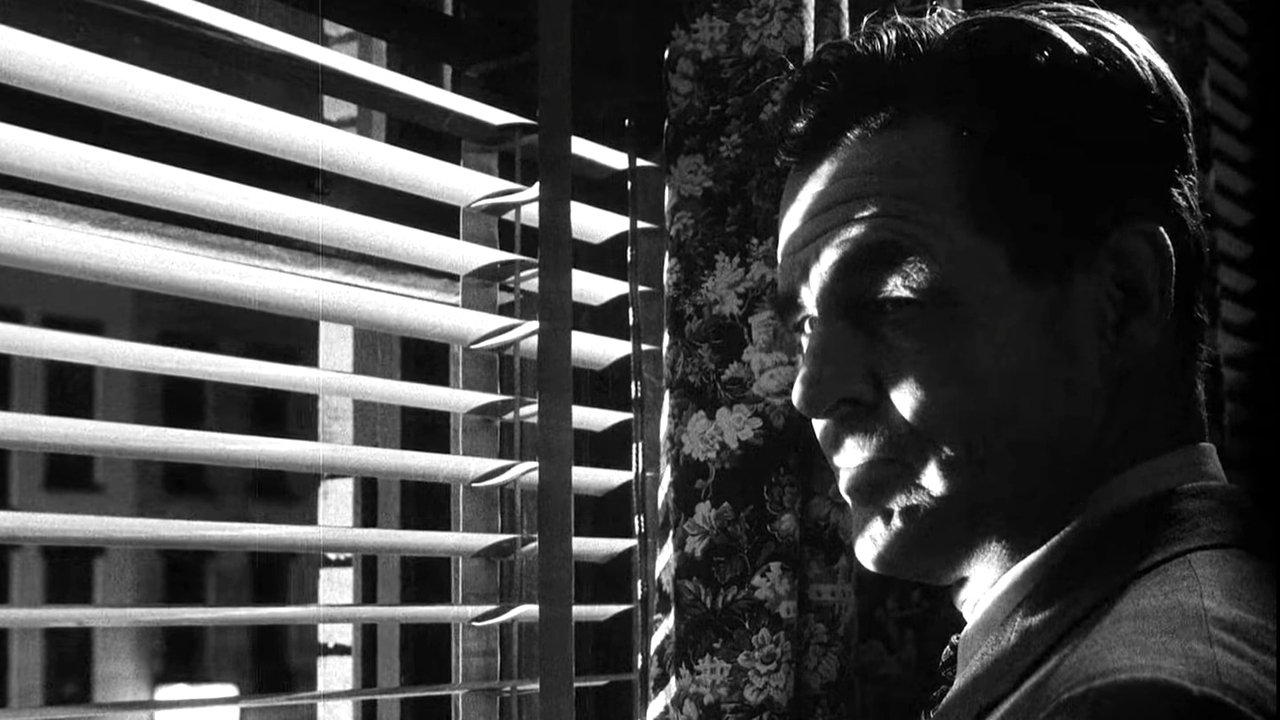
Joseph C. Brun shoots Odds Against Tomorrow with a rigorous economy that keeps the film's moral logic visible in every frame. Working largely on location in New York City and the Hudson Valley, Brun avoids the expressionist shadow play of earlier noir in favor of a harder, more documentary light – the streets are cold and flat, the interiors cramped and underlit without theatrical distortion. He uses tight framing and shallow depth to isolate characters within their own spaces, reinforcing the film's argument about men who cannot occupy common ground. The widescreen compositions frequently divide the frame between Slater and Ingram, placing negative space between them even in shared rooms. In the planning sequences, the camera observes rather than dramatizes, holding back in a way that drains the heist of excitement and replaces it with dread. This restraint is not neutrality – it is Brun working in direct service of Polonsky's thesis, using visual distance to deny the audience the comfort of genre spectacle.

In the Catalogue

Themes & Motifs

Availability

Where to Watch

Also in the Directory

See Also