Films People Pull a Fast One Night Beat Reading Room On TV Shop
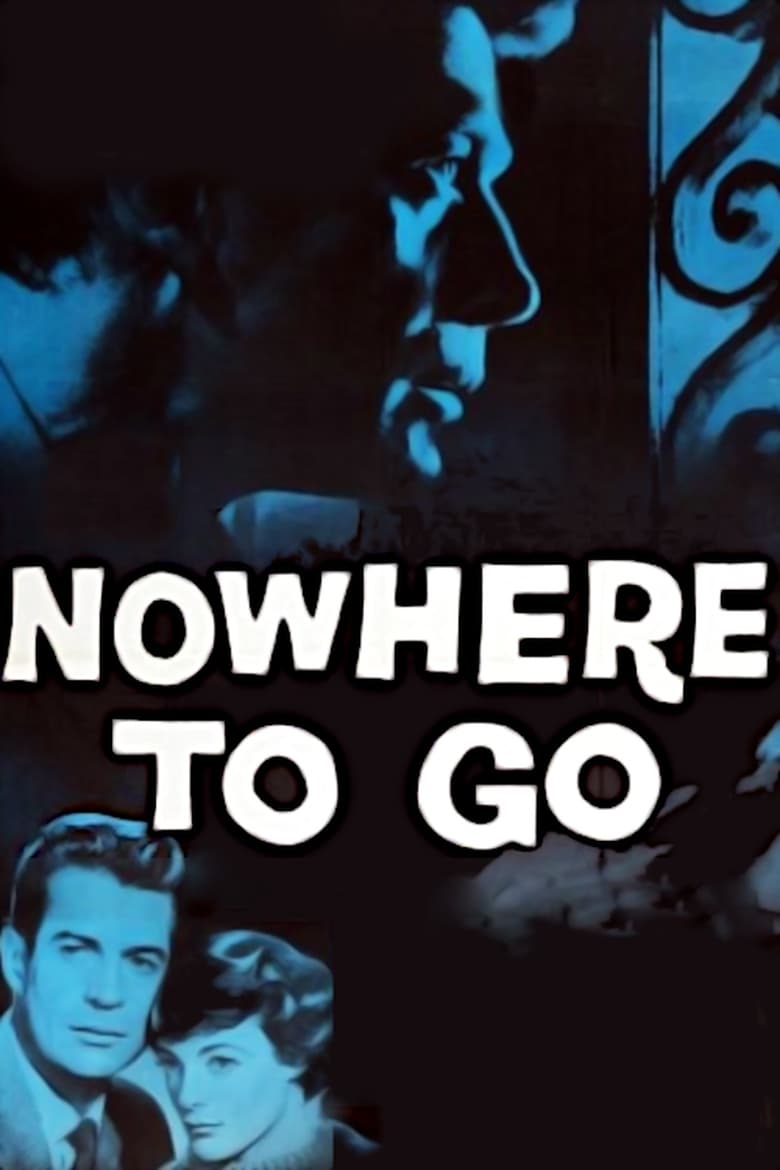
Nowhere to Go 1958
1958 Ealing Studios
★★★☆☆ Notable
Film Noir · 99 minutes · Black & White

Nowhere to Go

Directed by Seth Holt
Year 1958
Runtime 99 min
Studio Ealing Studios
TMDB 6.6 / 10
"A man without a country runs out of road."

Paul Gregory, an American con man serving time in a Canadian prison, engineers a daring escape and makes his way to England with a stolen fortune in securities – the proceeds of a scheme he ran with a duplicitous partner named Victor Sloane. Gregory is calculating and self-sufficient, accustomed to working alone, and England represents little more than a transit point toward a life beyond extradition. What he does not anticipate is how thoroughly the country will resist him: the police, led by the tenacious Inspector Scott, move quickly, and the fences and contacts Gregory assumed were in place prove unreliable or compromised.

Stranded and running short of options, Gregory falls into an uneasy alliance with Bridget Howard, a well-bred young woman whose motivations remain opaque for much of the film. She is neither a femme fatale nor a passive accomplice – her choice to help Gregory seems to arise from boredom, principle, and something closer to recklessness than love. Meanwhile, Sloane re-enters the picture, and the question of who is betraying whom becomes the film's central negotiation. Gregory, who trusts no one by habit, finds that distrust offers diminishing returns when every exit is closing.

Nowhere to Go belongs to the cycle of tightly constructed British crime films that Ealing produced in its final years, films that borrowed the American fugitive template and subjected it to a distinctly English geography of hedgerows, country houses, and provincial police stations. The film is less interested in action than in attrition – the slow compression of a man's possibilities until the moral and physical landscapes collapse into one another. It is a film about the arithmetic of flight, and what is subtracted from a person by the act of running.
Classic Noir

Nowhere to Go arrived at a transitional moment for Ealing Studios, whose identity had been built on comedies and procedurals rather than noir, and Seth Holt's direction reflects both the studio's residual tidiness and his own instinct for psychological pressure. The film never fully commits to the expressionist darkness of American noir, but it does something more particular: it maps a fugitive's diminishing options onto the English class system, so that Gregory's foreignness becomes an index of his moral exposure. George Nader is competent rather than charismatic, which suits the material – this is not a film about magnetism but about endurance. Maggie Smith, in an early screen role, brings an alertness to Bridget that the script under-rewards; she locates a genuine ambivalence in a character that could easily have been decorative. Bernard Lee, playing against type, registers as genuinely untrustworthy. What the film achieves is a sustained atmosphere of diminishment – a world in which no alliance holds and no geography offers shelter.

– Classic Noir
3 ★★★☆☆ Notable
Credits

The Crew

DirectorSeth Holt
ScreenplaySeth Holt
CinematographyPaul Beeson
MusicDizzy Reece
EditingHarry Aldous
Art DirectionAlan Withy
ProducerMichael Balcon
Performances

The Cast

Close Reading

The Signature Scene

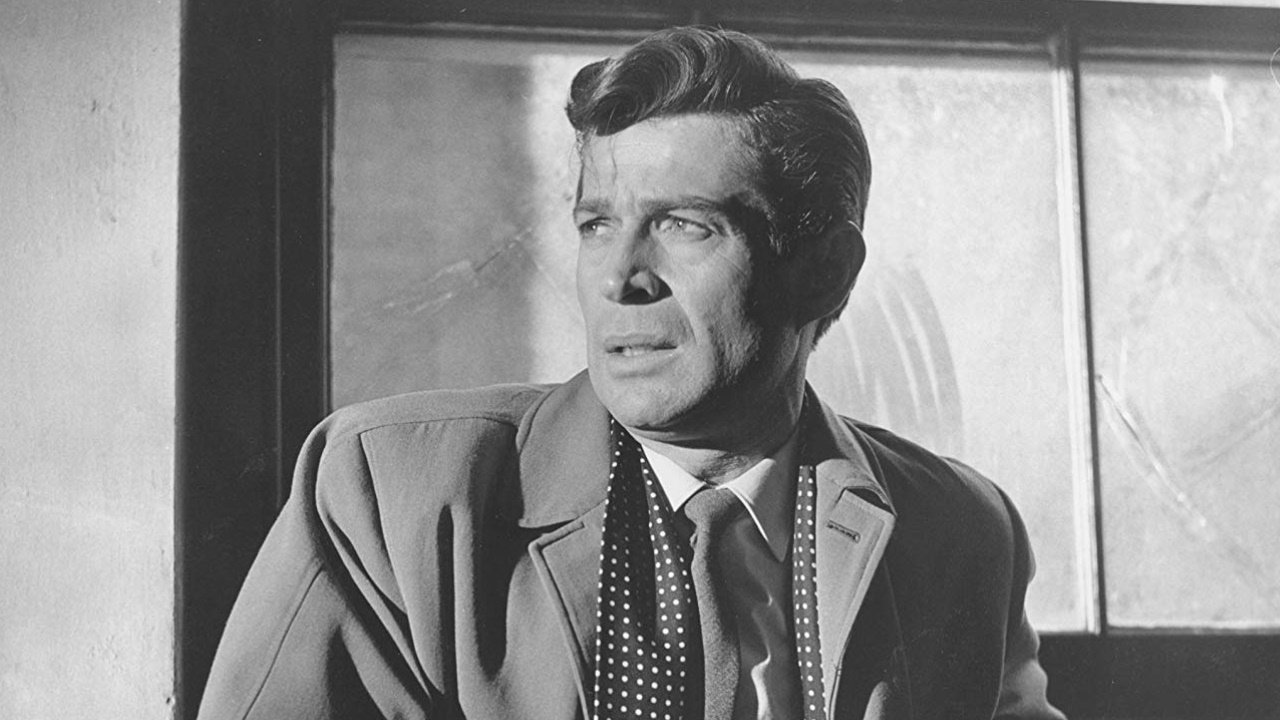
Nowhere to Go – scene
The Country House, Late Night Stillness Before the Net Closes

Paul Beeson lights the interior of the country house with a cold, lateral source that cuts across the room without filling it, leaving the far walls in an unresolved grey. Gregory stands near a window, framed so that the darkness outside and the darkness inside share the same tonal register – there is no perceptible haven in either direction. The camera holds at a medium distance, declining to move in for emphasis, as though the scene's tension resides in geometry rather than expression. Beeson's restraint here is deliberate: soft fill is withheld, and the faces of both Gregory and Bridget are caught in a half-light that makes certainty impossible.

The scene encapsulates the film's central argument about shelter. Gregory has accepted Bridget's assistance not out of trust but out of arithmetic – she is the last variable that has not yet resolved against him. That the house should look so much like a trap, its architecture rendered in the same shadow tones as the prison he escaped, is the film's quiet thesis: the fugitive does not move from confinement to freedom but from one form of enclosure to another, each one slightly less legible than the last.

Visual Language

The Cinematography

🎞️
Paul Beeson – Director of Photography

Paul Beeson's cinematography for Nowhere to Go is grounded in a restrained, almost procedural naturalism that refuses the expressionist excess available to it. Shooting on a combination of studio interiors and practical British locations – the English countryside rendered in overcast greys, city streets stripped of glamour – Beeson works with available tonal flatness rather than against it, using modest contrast to reinforce the film's argument that nowhere Gregory goes is fundamentally different from where he has been. His lighting setups favour lateral or raking sources that model faces without dramatising them; shadow work is present but unshowy, closer to Graham Greene's prose than to the high-contrast chiaroscuro of American B-noir. Lens choices remain in the middle range, avoiding wide-angle distortion and the consequent expressionism. The effect is a world that looks reasonable and proves relentlessly hostile – a moral landscape disguised as a mundane one, which is precisely the kind of visual logic the story requires.

In the Catalogue

Themes & Motifs

Availability

Where to Watch

Also in the Directory

See Also