In an unnamed Italian port city, a nameless stranger (Paul Muni) arrives with nothing but a gun and the desperate logic of a man already past saving. When a robbery goes wrong and he kills a grocery store clerk, the city closes around him. The police, led by a methodical Inspector-in-Charge (Arnoldo Foà), begin tightening their net through the narrow streets and sun-bleached courtyards while the stranger moves through the margins of a society that has no place for him.
Chance throws the stranger together with Giacomo (Vittorio Manunta), a fatherless boy navigating the same postwar poverty with a child's fragile optimism. The stranger, who inspires fear in adults, finds himself unexpectedly bound to Giacomo by something neither can name – a provisional tenderness that neither fits his violent history nor survives contact with it. Angela (Joan Lorring), a woman acquainted with loneliness, orbits this arrangement uneasily, her own sympathies divided between what she knows and what she wants to believe.
Stranger on the Prowl operates in the tradition of the hunted-man film, but its Italian location and its portrait of a city still marked by deprivation give it a texture distinct from its American counterparts. The film is less interested in suspense mechanics than in the question of whether a man defined entirely by what he has done can be witnessed, even briefly, as something more. That question, left deliberately unresolved, is the film's real subject.
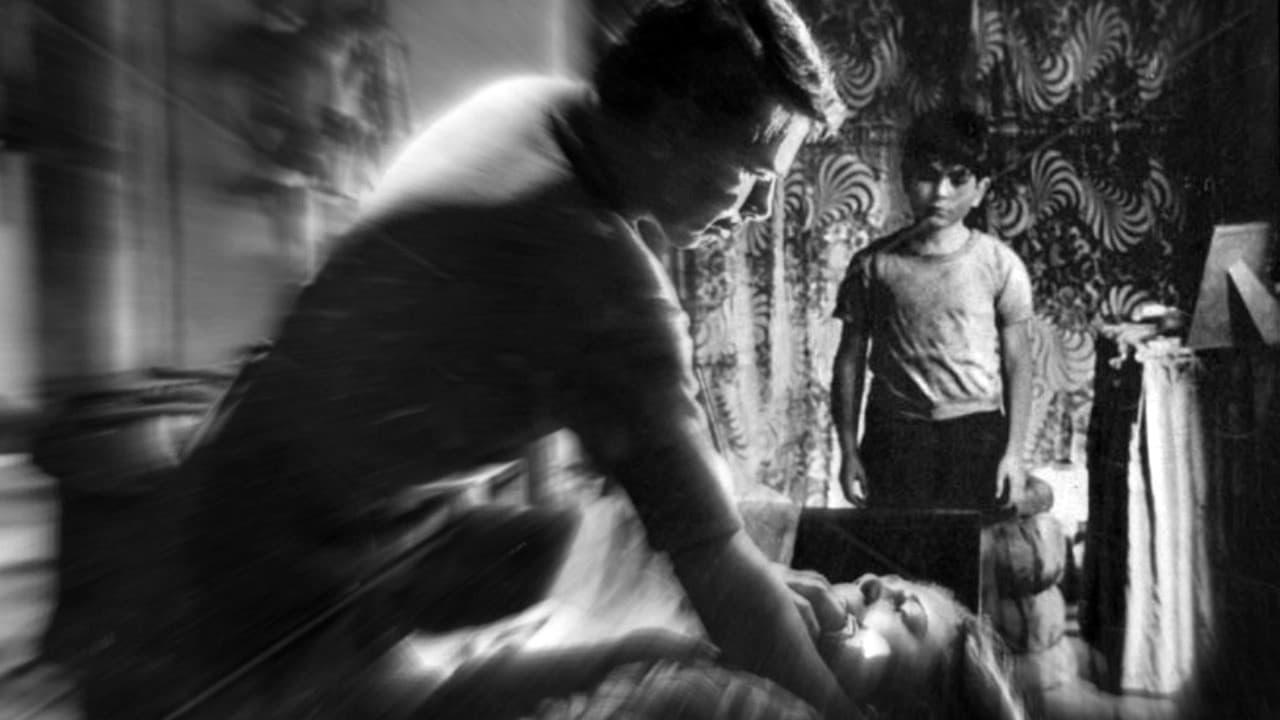
Stranger on the Prowl occupies an unusual position in the Losey filmography and in postwar noir more broadly. Shot in Italy during Losey's exile from Hollywood – the blacklist having effectively ended his American career – the film carries the displaced, stateless quality of its protagonist into its very production circumstances. Paul Muni, himself near the end of a long career, brings a quality of exhausted interiority that suits a character for whom violence has become reflexive rather than chosen. The collaboration with French cinematographer Henri Alekan grounds the film in a documentary realism that pushes against the expressionist conventions noir usually favors, making the city itself a kind of moral environment rather than a stylized backdrop. The result is a film that argues, quietly, that social conditions produce men like the stranger as reliably as individual failures do. Released in Italy in 1952, it received limited circulation under various titles and has remained critically underexamined, which is a loss: as a record of what American genre filmmaking looked like when it was forced to think from the outside, it has few equivalents.
– Classic Noir
Alekan places Giacomo at the far end of a narrow alley, the light arriving from a high, off-screen source that catches the pale stone of the walls and leaves the boy half-dissolved in shadow. The stranger enters the frame from the foreground, his back to camera, and the composition holds them at opposite ends of a deep, compressed space. Neither moves toward the other. The camera does not cut; it waits, as they wait, the silence given physical weight by the architecture pressing in on both sides.
The scene encodes the film's central problem without commentary: the stranger cannot protect what he has, briefly, come to care for, because his presence is itself the danger. The boy's stillness reads not as passivity but as a child's version of knowing – he senses something the frame has already told us. The distance between them, held in a single long take, is the film's moral geometry made visible.
Henri Alekan, who had already distinguished himself on Beauty and the Beast (1946) and Les Jeux sont faits (1947), brings to Stranger on the Prowl a mode of photography closer to Italian neorealism than to the high-contrast studio noir of his American contemporaries. Shooting on location in the port districts of Livorno, Alekan works with available architectural light wherever possible, using the angled Mediterranean sun to carve sharp shadows from ordinary streets and letting interiors fall into a natural, unglamourized darkness. He resists the centered, theatrical lighting setups common to studio noir in favor of asymmetrical, ambient illumination that makes characters look as though they belong to their environment rather than performing within it. The moral effect is significant: the stranger is not singled out by expressionist shadow as a figure of evil; he is simply visible in the same flat, indifferent light as everyone else. That refusal to aestheticize guilt or danger is among the most considered choices in the film.
A public domain print is available for streaming and download, though the transfer quality is inconsistent and sourced from an older dupe negative.
MUBISubscriptionMUBI has periodically programmed the film as part of Losey retrospectives; availability rotates, so check current listings.
Criterion ChannelSubscriptionNot currently confirmed in the catalogue, but the Channel's coverage of blacklist-era and European co-productions makes it the most plausible home for a restored version should one become available.