Films People Pull a Fast One Night Beat Reading Room On TV Shop
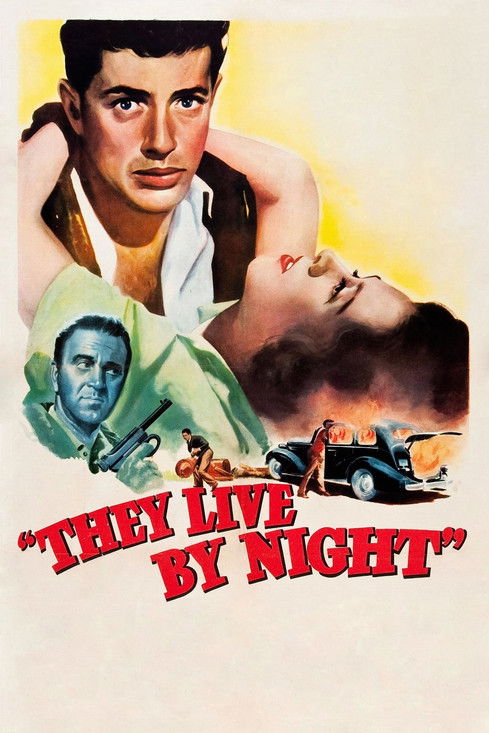
They Live by Night 1949
1949 RKO Radio Pictures
★★★★☆ Recommended
Film Noir · 96 minutes · Black & White

They Live by Night

Directed by Nicholas Ray
Year 1949
Runtime 96 min
Studio RKO Radio Pictures
TMDB 6.9 / 10
"Two young people in love with nowhere left to run."

Arthur 'Bowie' Bowers is a young man with no criminal record who has nonetheless landed in prison through bad circumstance and worse company. When a jailbreak engineered by hardened convicts Chicamaw and T-Dub pulls him out, Bowie finds himself on the run across a bleak American landscape with no clear destination and no legitimate path back to ordinary life. His only human connection emerges in Keechie Mobley, the quiet, watchful daughter of a one-eyed bootlegger, who shelters the fugitives and gradually allows Bowie close enough to matter.

Bowie and Keechie marry in a roadside ceremony and attempt, briefly, to live as though the past has no claim on them. It does. Chicamaw and T-Dub draw Bowie back into bank robberies he has no stomach for, and the web of criminal obligation tightens around a young man who genuinely wants out. Mattie, a woman connected to T-Dub, occupies a morally compromised position that the film refuses to simplify, and the money that funds Bowie and Keechie's fragile domesticity carries costs neither of them can fully account for.

They Live by Night belongs to the postwar cycle of fugitive-couple films in which the American road offers not freedom but a long detour toward reckoning. Nicholas Ray positions his protagonists outside the usual noir typology: Bowie is neither the cynical opportunist nor the fatally weak man, and Keechie is no femme fatale. What the film examines is the gap between the lives people deserve and the ones they are permitted by circumstance and class, a question that gives this modest RKO production a moral seriousness beyond its genre assignment.
Classic Noir

They Live by Night was Nicholas Ray's first feature, shot in 1947 and held by RKO until 1949, and it arrives with a formal confidence that has nothing provisional about it. Ray works from Edward Anderson's 1937 novel Thieves Like Us and constructs a film less interested in crime mechanics than in the texture of confinement, the way social circumstance narrows the possible. Farley Granger and Cathy O'Donnell bring an unaffected quality to their performances that prevents the film from tipping into sentiment; their tenderness reads as genuine without becoming decorative. George E. Diskant's cinematography establishes the visual grammar of entrapment, favoring compositions that crowd the young lovers against walls, windows, and the edges of the frame. The film anticipates the romantic-fatalist tradition that would extend through Godard's Breathless and Terrence Malick's Badlands, but it earns that lineage through its own plainspoken rigor rather than through borrowed sophistication. For a genre often preoccupied with corruption, They Live by Night is notable for locating tragedy in innocence that the world declines to accommodate.

– Classic Noir
4 ★★★★☆ Recommended
Credits

The Crew

DirectorNicholas Ray
ScreenplayCharles Schnee
CinematographyGeorge E. Diskant
MusicLeigh Harline
EditingSherman Todd
Art DirectionAlbert S. D'Agostino
CostumesAdele Balkan
ProducerJohn Houseman
Performances

The Cast

Close Reading

The Signature Scene

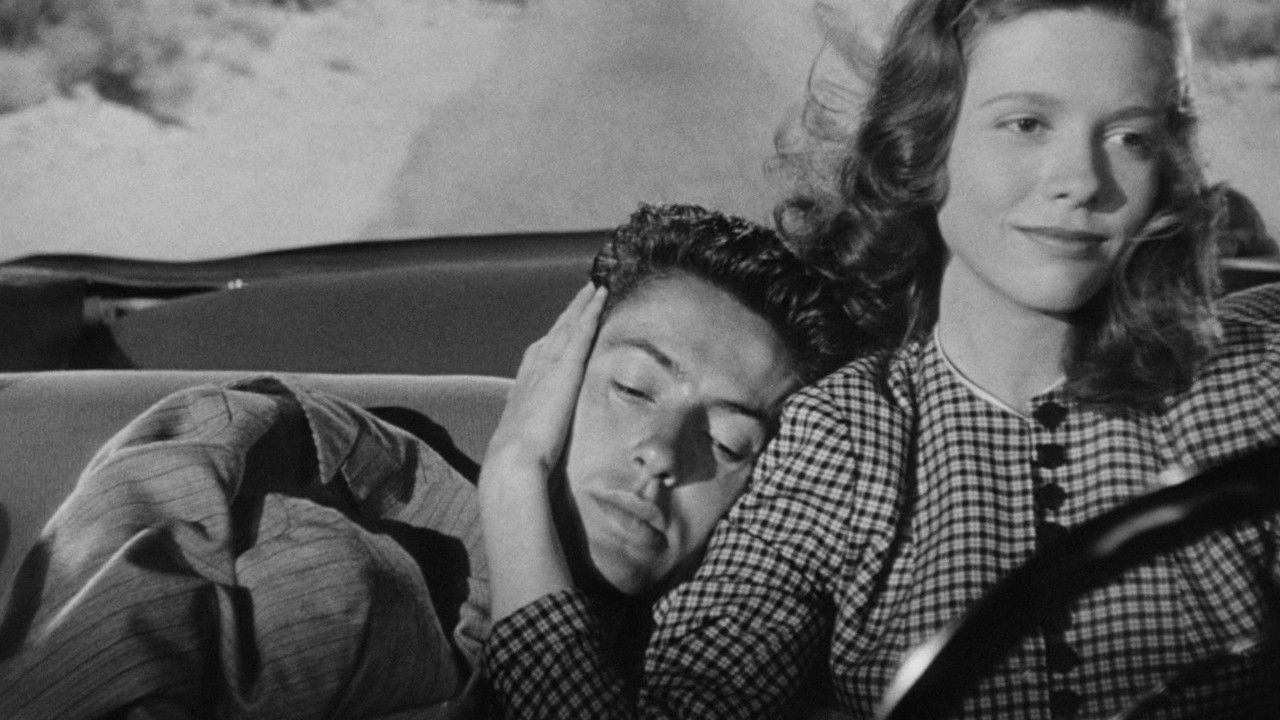
They Live by Night – scene
The Roadside Wedding Married in Half-Light

Ray shoots the wedding sequence in a cramped, low-ceilinged room where the available light barely separates the figures from the background. Diskant keeps the camera close without crowding out the negative space around Bowie and Keechie; the frame acknowledges how little room they occupy in the world. The justice of the peace reads the ceremony with bureaucratic neutrality, and Ray cuts between the two faces at an angle that isolates each one briefly before reuniting them in the same shot, a formal gesture that registers both union and solitude.

The scene is the film's emotional fulcrum and its saddest argument. Bowie and Keechie want only the ordinary, and the ceremony they manage – furtive, underlit, conducted among strangers – is the closest they will come to it. Ray does not undercut the moment with irony or shadow it with menace. He lets it stand as something real, which makes the weight of what surrounds it more precise. The film's central argument is here: that the desire for a normal life, in the wrong circumstances, becomes its own form of vulnerability.

Visual Language

The Cinematography

🎞️
George E. Diskant – Director of Photography

George E. Diskant's work on They Live by Night establishes a visual logic organized around enclosure and impermanence. Shooting largely on location and on spare RKO sets, Diskant uses wide-angle lenses that push backgrounds into the composition and deny characters the breathing room that a longer focal length would provide. Interiors are lit with practical sources reinforced by carefully placed fills that produce shadows without the dramatic chiaroscuro typical of the period; the result is a gray, flattened light that reads as the absence of hope rather than the presence of menace. Exteriors – gas stations, roadsides, sparse motel rooms – are shot with an unglamorous directness that removes any romance from the open road. The famous aerial shot that opens the film, observing Bowie and Keechie from above before descending, establishes the surveilling eye of fate as an organizing principle. Throughout, Diskant keeps the camera at human height or just below, refusing the god's-eye distance that would turn the characters into types.

In the Catalogue

Themes & Motifs

Availability

Where to Watch

Also in the Directory

See Also