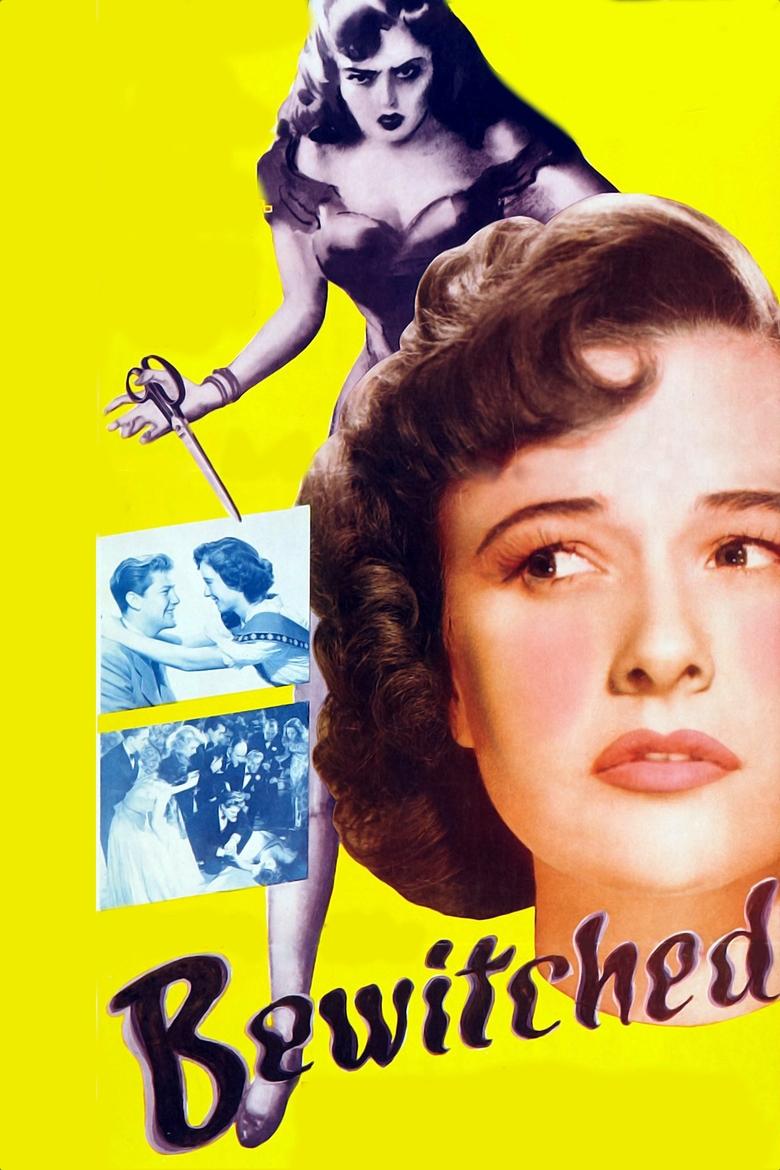
Joan Alris Ellis is a young woman living under the quiet pressure of a respectable life she did not choose. Engaged to the steady, decent Bob Arnold, she finds herself unable to move toward the future he represents, haunted by an inner voice that speaks with a cruelty and clarity entirely at odds with her outward composure. That voice belongs to Karen, a malevolent alternate personality that surfaces with increasing force, pushing Joan toward violent impulse. The story opens as Joan, already aware of her condition, seeks help from Dr. Bergson, an elderly psychiatrist who becomes the film's moral anchor.
As Dr. Bergson attempts to untangle the two identities warring inside Joan, the film traces her deterioration with clinical patience. Karen engineers the murder of a man from Joan's past – a killing Joan cannot fully account for and cannot confess to without condemning herself. The legal machinery closes in around her, indifferent to the interior catastrophe the audience has witnessed. Bob Arnold, loyal and uncomprehending, remains on the periphery of a crisis he lacks the framework to understand. Joan is tried, convicted, and sentenced, even as the doctors who know the truth struggle against institutional procedure.
Bewitched belongs to a narrow corridor of 1940s psychological noir that locates danger not in the criminal underworld but inside the mind of an ostensibly ordinary woman. Where most noir displaces anxiety outward – onto corrupt cities, duplicitous femmes, or shadowy conspirators – Oboler's film turns the camera inward, treating dissociated identity as both a clinical subject and a moral problem the law is structurally unequipped to adjudicate. The film asks, without resolution, where culpability resides when the self is not singular.
Arch Oboler arrived in Hollywood with a reputation built on radio – his Lights Out series had conditioned audiences to fear what they could not see – and Bewitched transfers that discipline to the screen with mixed but genuine results. The film's central gambit, giving voice to Karen as an audible presence layered over Phyllis Thaxter's performance, is a radio technique finding visual expression, and it works more often than it should. Thaxter carries an enormous burden: she must register possession from within, conveying victimhood and menace simultaneously without the luxury of a second performer to play against. Edmund Gwenn's Dr. Bergson provides the film's ethical counterweight, a figure of humane reason set against a legal system incapable of processing psychological complexity. Made in 1945 at MGM – a studio not naturally hospitable to the low-key existential dread noir required – the film's institutional gloss occasionally softens what should cut harder. Nevertheless, Bewitched stands as a credible early example of psychological noir's ambitions, anticipating the more fully realized dissociation studies that would follow in the late 1940s.
– Classic Noir
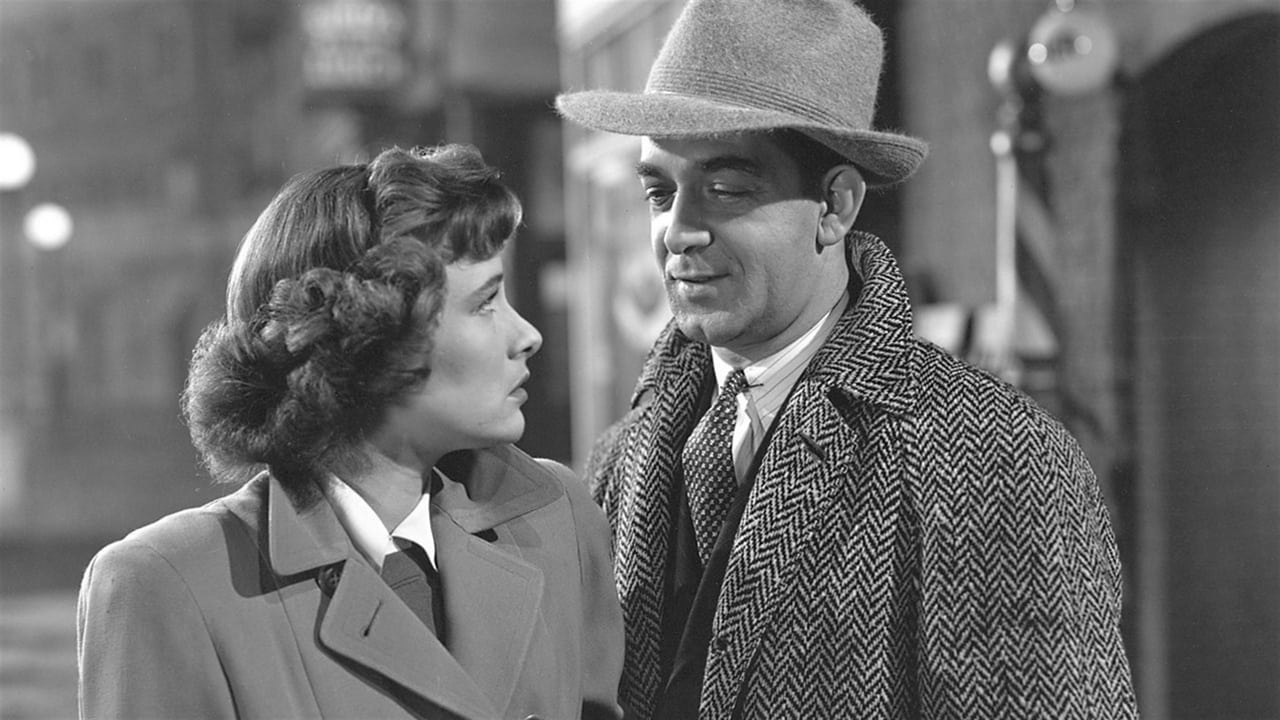
The camera holds on Thaxter's face as the verdict is delivered, the frame tight enough to exclude most of the courtroom's institutional architecture. Charles Salerno Jr. keeps the light flat and institutional – no dramatic shadows, no expressionist angles – which is itself a formal statement: the law does not deal in interior darkness. The composition isolates Joan within the frame even as the room is populated, the surrounding figures rendered shallow and slightly soft, reinforcing her absolute solitude at the moment of judgment.
What the scene argues, through its refusal of dramatic lighting rather than through its deployment of it, is that the legal system's blindness is not corrupt but structural. Joan is not railroaded; she is simply legible to the court only as a murderer. The psychological truth Bergson holds cannot be entered into evidence in any form the proceeding recognizes. The scene's formal plainness becomes its moral content: institutions see surfaces, and surfaces convict.
Charles Salerno Jr. was not a cinematographer with an extensive noir pedigree, and that relative distance from the genre's established visual grammar may partly explain Bewitched's unusual approach to lighting. Rather than defaulting to the high-contrast chiaroscuro that defined contemporaneous noir production, Salerno works in a more naturalistic register for much of the film, reserving shadow and visual distortion for moments tied directly to Karen's intrusions. This creates a legible moral grammar: Joan's world is rendered in ordinary, even institutional light; Karen's influence darkens the frame incrementally. The studio setting – MGM's controlled environments rather than location work – gives Salerno precise command over this gradation. Lens choices remain conservative, favoring mid-range focal lengths that observe rather than distort, though occasional close framings on Thaxter's face push into an intimacy that the film's psychological subject demands. The result is a visual schema in which abnormality is defined by its deviation from a carefully maintained norm.
Bewitched has entered the public domain and is available on Archive.org in multiple transfers; quality varies, but the site offers the most accessible free viewing option.
TubiFreeTubi periodically carries MGM catalog titles from this period; availability fluctuates, so confirm before seeking it out.
TCMSubscriptionTCM remains the most reliable source for a properly framed, contextualized broadcast of minor MGM titles from the 1940s, often accompanied by brief historical framing.