Films People Pull a Fast One Night Beat Reading Room On TV Shop
Somewhere in the Night 1946
1946 20th Century Fox
★★★☆☆ Notable
Film Noir · 110 minutes · Black & White

Somewhere in the Night

Directed by Joseph L. Mankiewicz
Year 1946
Runtime 110 min
Studio 20th Century Fox
TMDB 6.7 / 10
"A man without a past walks into a city that remembers everything."

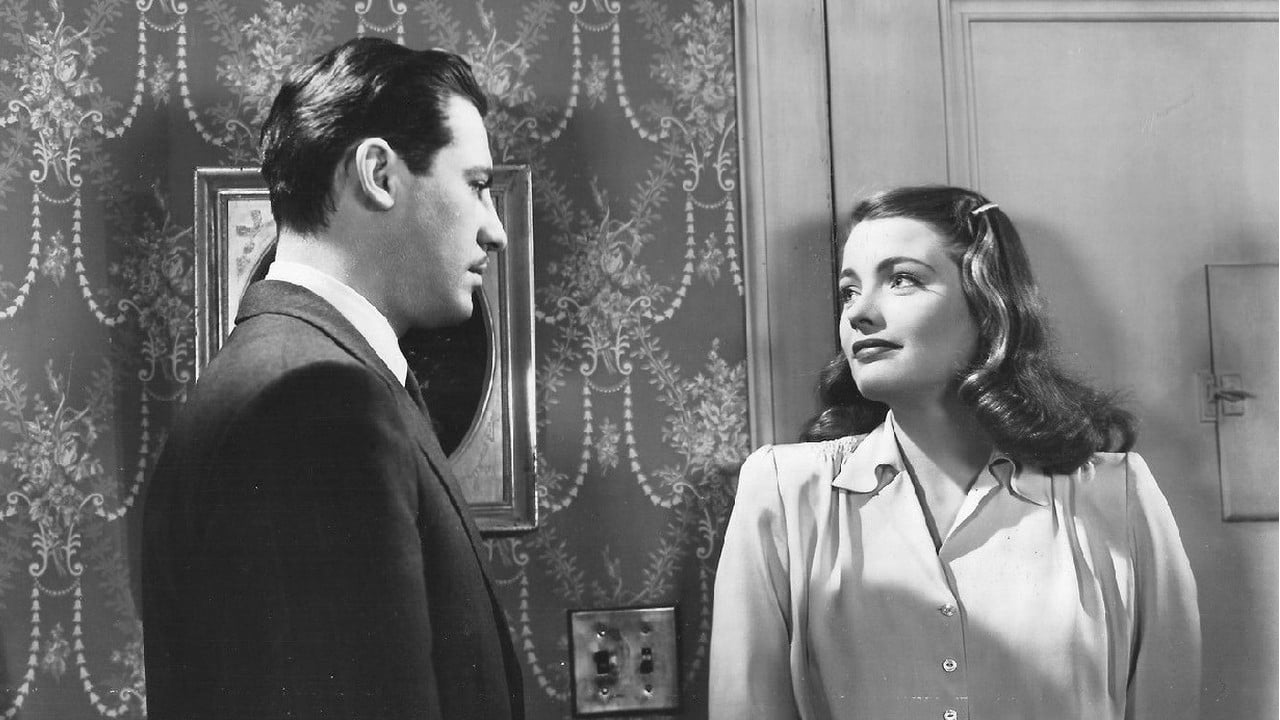
George W. Taylor (John Hodiak) returns from the Pacific theater with no memory of who he was before the war. Among his few possessions is a letter addressed to himself, mentioning a man named Larry Cravat and a sum of money large enough to kill for. With nothing but a name and a city – Los Angeles – Taylor begins working backward through his own obliterated identity, moving through nightclubs, back rooms, and the margins of postwar urban life in search of a self that may not be worth recovering.

His search draws him into the orbit of Christy Smith (Nancy Guild), a nightclub singer whose involvement with the missing Cravat runs deeper than she admits, and Police Lt. Donald Kendall (Lloyd Nolan), a detective who has been tracking Cravat through channels of his own. The criminal world Taylor navigates is populated by figures who know more than they reveal: the sinister Anzelmo (Fritz Kortner), operating under the alias Dr. Oracle, and the cold-blooded Mel Phillips (Richard Conte), who treats human life as a ledger entry. Each new contact tightens the net around Taylor, who cannot be certain whether he is the hunter or the quarry.

Somewhere in the Night belongs to a cycle of postwar amnesia thrillers – films preoccupied with the returning veteran as a figure of radical displacement, a man for whom civilian identity has become as foreign as enemy territory. Mankiewicz uses the amnesiac premise not merely as a plot mechanism but as a moral condition: Taylor's inability to vouch for his own past raises the possibility that the man he is looking for may be someone he would not choose to be.
Classic Noir

Somewhere in the Night is among the more philosophically coherent of the Fox noir productions, distinguished less by visual excess than by the precision of its narrative architecture. Joseph L. Mankiewicz, then still consolidating his reputation as a writer-director of ideas, keeps the amnesia conceit tethered to a genuine postwar unease: the returning soldier as a man unmade by history, who must reconstruct a self from evidence rather than memory. The film is also notable for its ensemble. Lloyd Nolan's Kendall is an unusually functional police figure for the genre – competent, not corrupt – and Richard Conte brings a studied menace to Phillips that anticipates the syndicate heavies he would play across the following decade. Nancy Guild, in her debut, is measured rather than electric, which suits a film that distrusts easy emotion. Where the picture strains is in its final act, which resolves questions the film had been wise to leave open. At 110 minutes, it carries some weight it might have shed. What remains is a serious, probing work – one that earns its place in the noir canon through argument rather than atmosphere alone.

– Classic Noir
3 ★★★☆☆ Notable
Credits

The Crew

DirectorJoseph L. Mankiewicz
ScreenplayJoseph L. Mankiewicz
CinematographyNorbert Brodine
MusicDavid Buttolph
Art DirectionJames Basevi
CostumesKay Nelson
ProducerAnderson Lawler
Performances

The Cast

Close Reading

The Signature Scene

Somewhere in the Night – scene
The Dr. Oracle Interrogation Truth Purchased in Shadow

Anzelmo's workspace is lit from a single overhead source that isolates faces while leaving the room's perimeter in total darkness – a deliberate evocation of the interrogation lamp turned inward. Norbert Brodine positions the camera at a slight low angle on Fritz Kortner, so that the ceiling shadows compress downward onto his features, making his already unsettling stillness read as something close to menace. Taylor, shot from slightly above, appears diminished in contrast: a man seeking answers framed as a man already at a disadvantage. The blocking keeps the two figures in separate pools of light, never allowing the frame to suggest equality between them.

The scene argues for the film's central proposition – that knowledge, in this world, is always owned by someone else and sold at a price. Taylor cannot buy information about himself with money he does not have; he can only offer exposure, leverage, the threat of what he might remember. Anzelmo's composure in the face of that threat suggests he has calculated the odds already. For Taylor, the encounter is less an interrogation than a mirror: what he learns about Cravat he may be learning about himself, and the camera's framing refuses to let him forget it.

Visual Language

The Cinematography

🎞️
Norbert Brodine – Director of Photography

Norbert Brodine, whose work at Fox across this period favored controlled studio environments over location grit, brings a classical precision to Somewhere in the Night that resists the more expressionistic tendencies of the genre's German-influenced wing. His lighting setups favor hard single sources that carve faces from darkness without resorting to the exaggerated shadow geometry of a Lang or a Siodmak – the effect is colder, more clinical, appropriate to a film about a man analyzing his own past as though it belonged to a stranger. Street sequences use depth of field to place Taylor within a city that registers as indifferent rather than predatory: crowds move past him in focus while he occupies a middle ground that is neither safe nor threatened. Interior framings compress space, particularly in the nightclub scenes, where Brodine uses foreground elements – pillars, bar fixtures, the backs of seated figures – to fence Taylor in without the camera ever announcing the confinement. The cinematography serves the film's moral logic: a world in which clarity is available but never free.

In the Catalogue

Themes & Motifs

Availability

Where to Watch

Also in the Directory

See Also