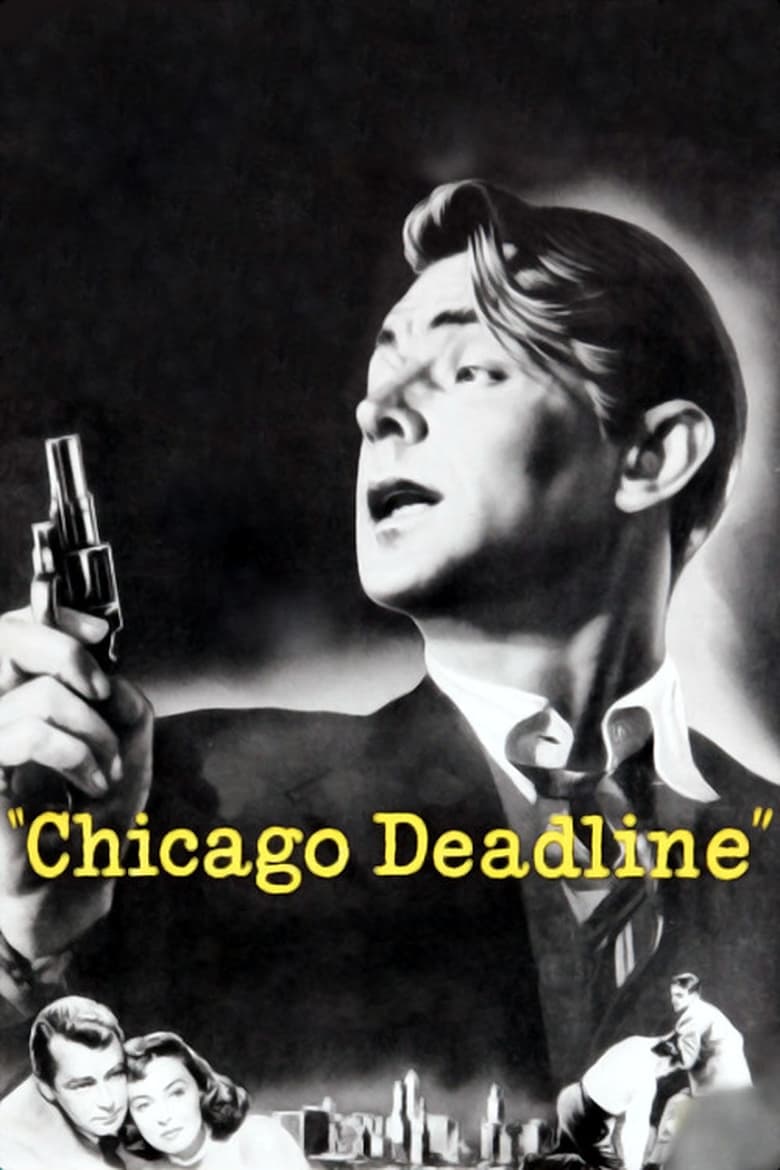
Chicago newspaper reporter Ed Adams finds the body of a young woman named Rosita Jean D'Ur in a cheap rooming house and, unable to shake his curiosity, begins piecing together her life from a small address book found among her effects. The investigation is unofficial – no assignment, no editor pushing him – which makes it entirely his own, and therefore more dangerous. As Adams works backward through Rosita's past, he encounters a collection of men and women whose relationships with her were never innocent: the nightclub operator Solly Wellman, the crooked political fixer Anstruder, and the brittle, knowing woman called Leona who understood Rosita better than most.
Each name in the address book leads Adams deeper into a Chicago where respectability and corruption share the same address. Rosita, seen only in flashback and in the memories of those who used or loved her, emerges as a figure shaped entirely by the city's appetites – passed between powerful men, never quite her own. The elegant Belle Dorset and the volatile Tommy Ditman complicate the picture further, suggesting that Rosita's death was not the result of accident or random violence but of something carefully arranged by someone with considerable resources. Adams finds himself increasingly compromised, his reporter's detachment eroding as the human cost of the story becomes clear.
Chicago Deadline positions itself within the cycle of postwar urban thrillers that used journalism as both method and metaphor: the reporter as the one figure permitted to cross social boundaries and ask inconvenient questions, though never without consequence. The film belongs to a tradition that includes Laura and D.O.A. in its use of a dead woman as the organizing mystery, reconstructing a life through the testimony of those who survive her. Whether Adams can turn what he has learned into justice, or whether the story simply consumes him, is the film's central dramatic pressure.
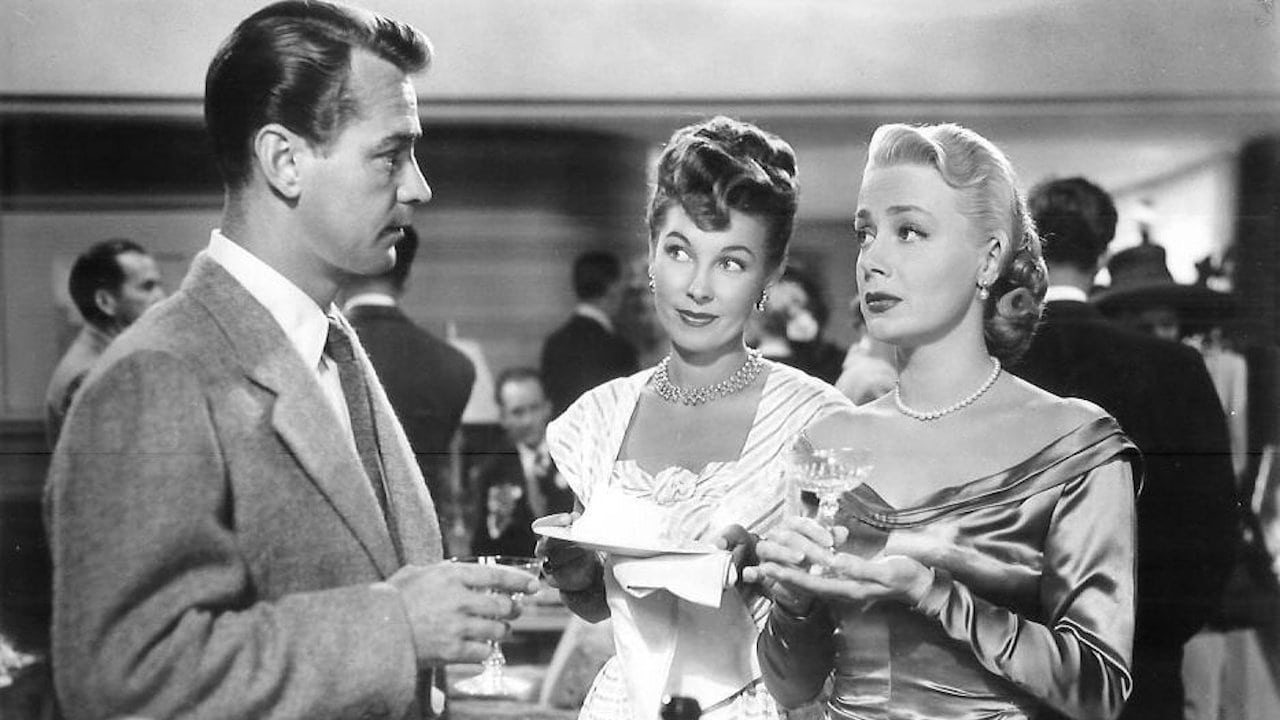
Chicago Deadline is a minor but coherent entry in the Paramount noir cycle of the late 1940s, distinguished less by formal innovation than by the intelligence of its narrative structure. The device of reconstructing a dead woman's life through an address book is quietly efficient – it gives Alan Ladd's typically laconic performance a procedural framework that suits him, and it allows the film to move through Chicago's social strata without requiring a conventional investigation. Donna Reed, cast against type in her pre-It's a Wonderful Life period, registers as a woman whose tragedy is inseparable from the city that produced her; the flashback construction prevents sentimentality from softening the portrait. Arthur Kennedy brings his customary coiled energy to Tommy Ditman, and Berry Kroeger's Wellman is a credible study in low-level menace. Lewis Allen, whose Paramount work includes the understated ghost story The Uninvited, handles the material with professional economy. The film does not transcend its B-picture origins, but it earns its running time and takes its subject – the expendability of women in a city built on transactions – with appropriate seriousness.
– Classic Noir
John F. Seitz lights the rooming house interior as a study in what has already ended. The camera holds on the small, sparsely furnished room with a stillness that refuses dramatic urgency – a single overhead source casts the bed and dresser in flat, institutional light, while the edges of the frame fall into shadow that suggests the room has been contracting for some time. Ladd moves through the space methodically, his face receiving just enough side light to register concentration rather than emotion. The address book, when he finds it, is lit as plainly as everything else; Seitz does not glamorize the discovery.
The scene establishes the film's moral premise without stating it: this woman lived in reduced circumstances, in a room that held almost nothing, and the city that produced those circumstances is the real subject of the investigation Adams is about to undertake. The camera's refusal to aestheticize the poverty is itself an argument – Chicago Deadline insists that Rosita's story is not romantic, and that the reporter who reads it as a puzzle rather than a life is already making an error he will spend the rest of the film correcting.
John F. Seitz, who had already shot Double Indemnity and Sunset Boulevard for Billy Wilder, brings to Chicago Deadline a more restrained version of the expressionist vocabulary he deployed on those films. Working largely on Paramount studio sets dressed to suggest Chicago's lower-middle-class geography, Seitz uses comparatively shallow pools of light to isolate characters within framings that emphasize the transactional nature of every relationship on screen. The nightclub sequences employ angled practicals and partial shadow to suggest an environment that flatters its occupants only in darkness. His flashback passages – where Rosita is seen alive – are lit with a slightly warmer, more diffuse quality that distinguishes memory from the hard present tense of Adams's investigation without tipping into nostalgia. Seitz's lens choices favor moderate focal lengths that keep backgrounds legible, a decision that makes Chicago feel inhabited and specific rather than stylized. The moral logic of the film is supported by this approach: in Seitz's Chicago, nothing is hidden by darkness – it is simply not worth illuminating.
Chicago Deadline has circulated on Tubi as part of its classic Paramount holdings; check current availability as the catalogue rotates.
Archive.orgFreeA public domain print is available on Archive.org, though transfer quality varies and the Tubi version is preferable if accessible.
Amazon Prime VideoRentA cleaned-up rental version has appeared on Amazon; confirm current availability, as classic Paramount titles move between services periodically.