Films People Pull a Fast One Night Beat Reading Room On TV Shop
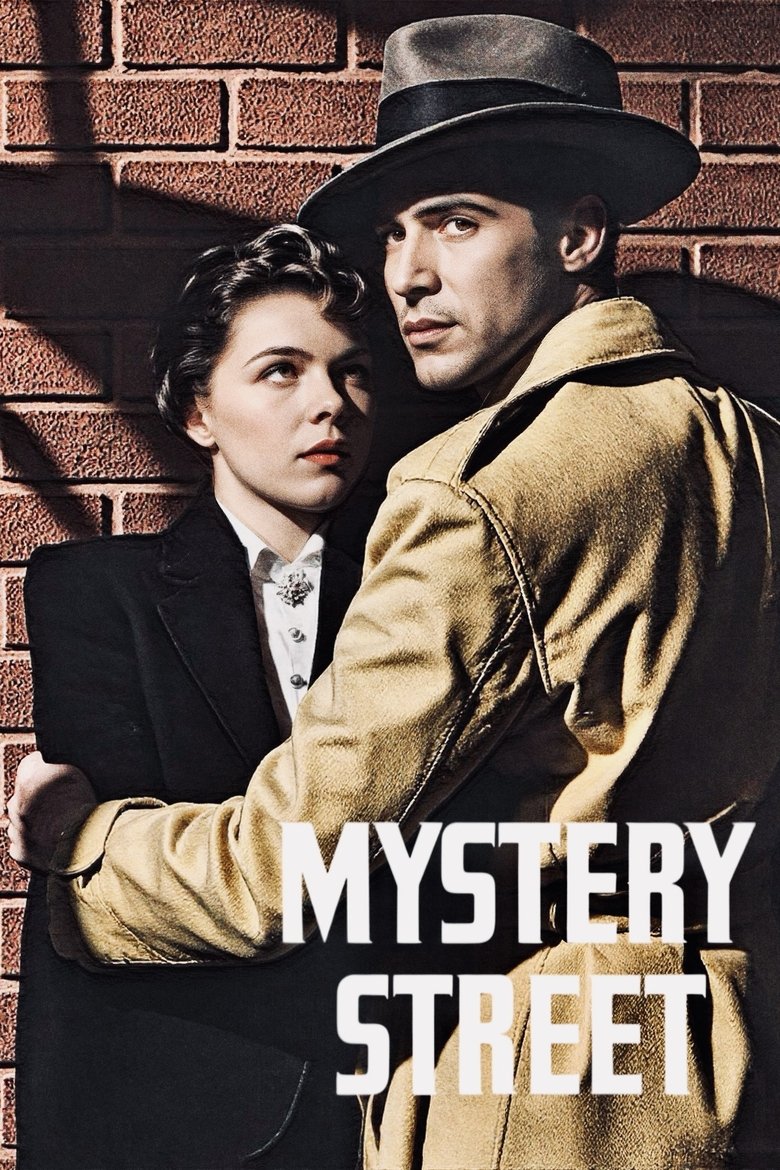
Mystery Street 1950
1950 Metro-Goldwyn-Mayer
★★★☆☆ Notable
Film Noir · 93 minutes · Black & White

Mystery Street

Directed by John Sturges
Year 1950
Runtime 93 min
Studio Metro-Goldwyn-Mayer
TMDB 6.8 / 10
"A skeleton on a Cape Cod beach sets a detective against the quiet machinery of other people's secrets."

When the skeletal remains of a young woman wash ashore near Provincetown, Massachusetts, Detective Lieutenant Peter Moralas of the state police is assigned the case. The victim – identified through the painstaking forensic work of Harvard physical anthropologist Dr. McAdoo – turns out to be Vivian Heldon, a Boston nightclub habitué with connections to wealth and desperation. Moralas is methodical, patient, and working at the margins of a social world that regards him with the kind of polite condescension reserved for men out of their expected place.

The investigation draws Moralas toward James Joshua Harkley, a married Boston lawyer whose affair with Vivian supplied her with both money and motive for blackmail. Meanwhile, Vivian's former landlady, the watchful and acquisitive Mrs. Smerrling, has been quietly holding onto evidence of her own – correspondence that she judges worth more kept than surrendered. Henry Shanway, husband of the quietly suffering Grace, drifts into suspicion as the net tightens, threatening to pull an ordinary family into the case's undertow.

Mystery Street belongs to the documentary-inflected strain of late-1940s and early-1950s noir that places institutional procedure – forensic science, police methodology, the witness stand – at the center of the frame. The film is less interested in moral ambiguity than in the friction between systematic truth-finding and the human capacity for concealment, and it uses the bleak beauty of Cape Cod's off-season shoreline to ground its story in geography as fate.
Classic Noir

Mystery Street occupies a specific and underexamined position in the noir canon: the procedural thriller that earns its resolution honestly, without sacrificing atmosphere to mechanics. John Sturges, not yet the director of large-scale action pictures, keeps the film close to its locations and its characters' limitations. What distinguishes the film is the casting of Ricardo Montalban as Moralas – a protagonist who is neither hardboiled nor naive, but a civil servant navigating a case and a social environment that are equally indifferent to his authority. The collaboration with Harvard's forensic department, depicted here with genuine technical detail, anticipates the forensic procedural by decades. Elsa Lanchester's Mrs. Smerrling is the film's real moral center of gravity: a petit-bourgeois opportunist whose cupidity turns the plot more decisively than any villain could. The film does not romanticize crime or punishment. It treats murder as an administrative problem with human wreckage at its edges, and that unsentimental posture is precisely what gives it its weight.

– Classic Noir
3 ★★★☆☆ Notable
Credits

The Crew

DirectorJohn Sturges
ScreenplaySydney Boehm
CinematographyJohn Alton
MusicRudolph G. Kopp
EditingFerris Webster
Art DirectionCedric Gibbons
ProducerFrank E. Taylor
Performances

The Cast

Close Reading

The Signature Scene

Mystery Street – scene
The Forensic Laboratory Bone by Bone, the Truth

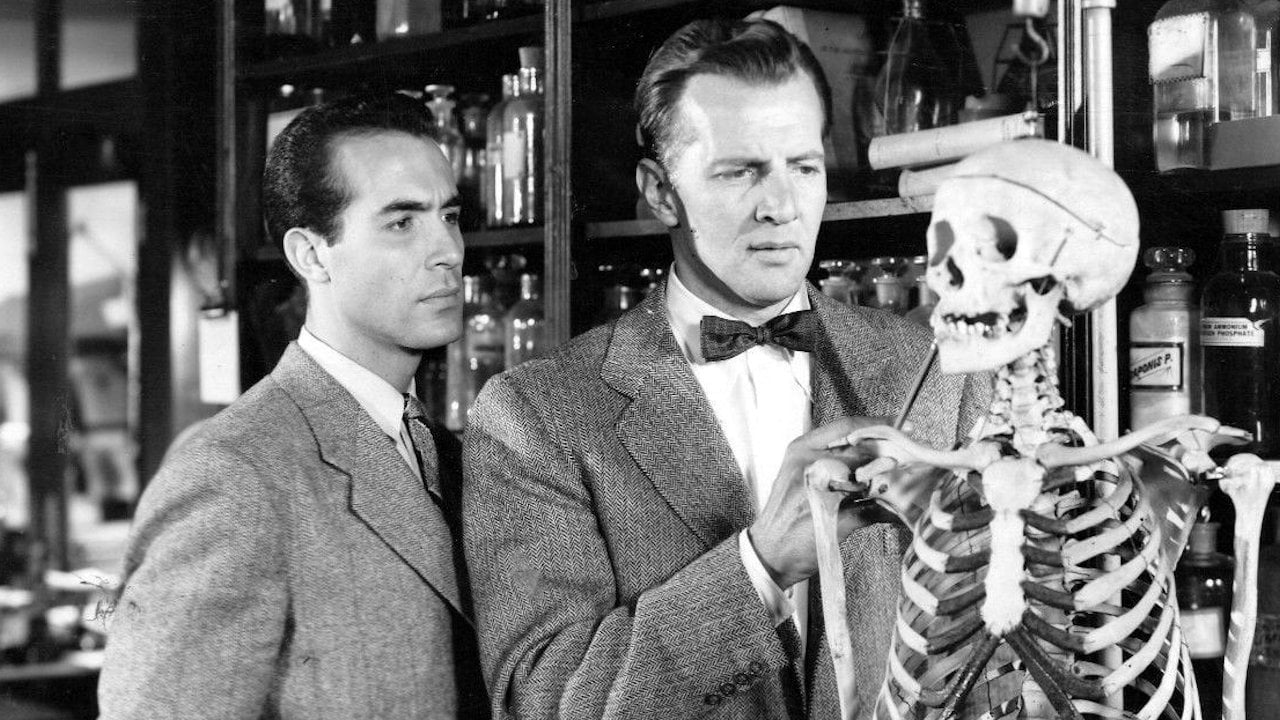
John Alton lights the Harvard laboratory as though knowledge itself casts shadows. The skeletal remains are arranged on a steel table at the frame's center, Dr. McAdoo moving around them with the unhurried authority of a man who reads the dead for a living. Alton's key light is cold and direct, throwing the bones into high relief against a dark institutional background, while Moralas stands slightly outside the cone of illumination – present but peripheral, dependent on a science he cannot himself perform. The camera holds at mid-range, reluctant to aestheticize what is on the table, then moves in slowly as McAdoo's narration begins to reconstruct a person from calcium and cartilage.

The scene defines the film's central argument: that identity survives death in recoverable form, that the body is a document. For Moralas, the laboratory sequence is an education in patience – the investigation cannot move faster than the evidence allows. The light that falls on the bones is the film's moral light too: impersonal, precise, indifferent to the social arrangements that put Vivian Heldon on that table.

Visual Language

The Cinematography

🎞️
John Alton – Director of Photography

John Alton's contribution to Mystery Street is inseparable from what the film achieves tonally. Working on location along the Cape Cod shoreline and in the institutional interiors of Boston and Cambridge, Alton refuses the studio gloss that MGM's resources might have encouraged. His exterior photography exploits the flat Atlantic light of the off-season coast – a grey, directionless illumination that strips the landscape of comfort and makes geography feel like circumstance. Indoors, he returns to the hard-contrast setups that defined his earlier work: deep blacks, narrow pools of motivated light, faces that emerge from shadow as though reluctantly. The laboratory sequences use a cooler, more even light that is not softness but clinical neutrality – a deliberate departure from the moody expressionism elsewhere in the film. This calibration between forensic clarity and street-level shadow is not incidental; it maps the film's two registers, scientific procedure and human opacity, onto a coherent visual grammar. Alton earns every shadow he places on screen.

In the Catalogue

Themes & Motifs

Availability

Where to Watch

Also in the Directory

See Also