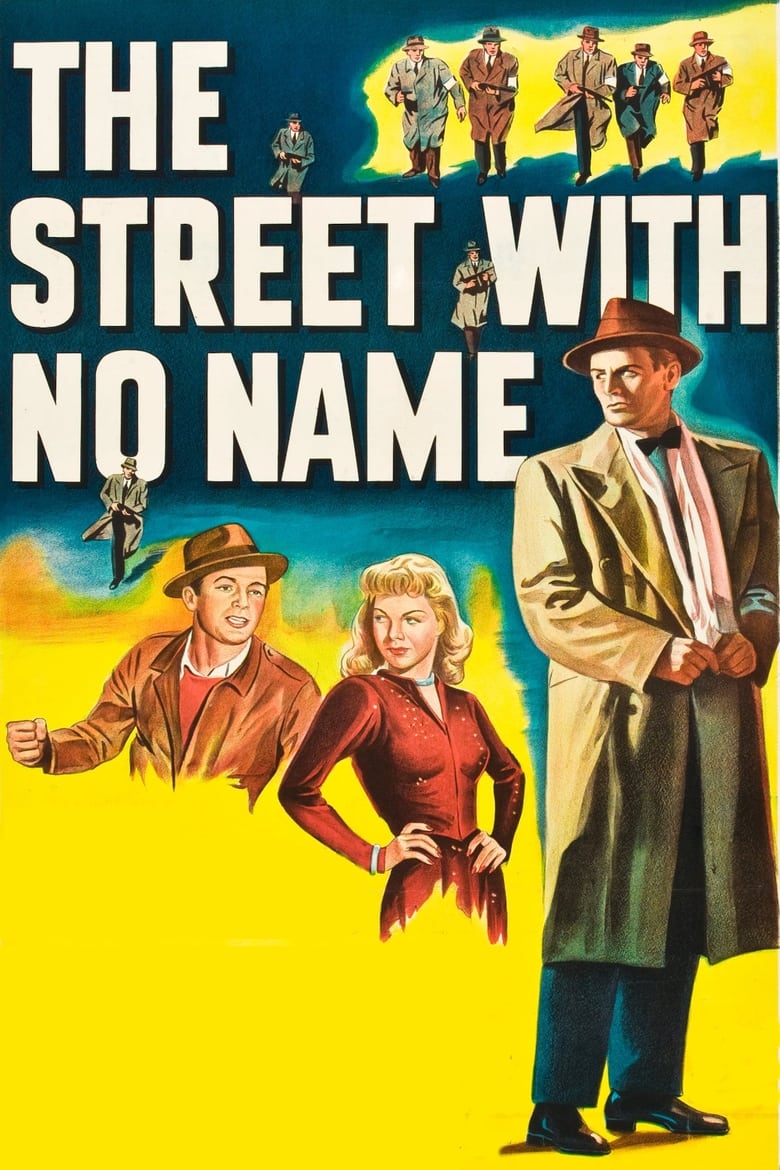
In the postwar American city of Hitchburg – a composite stand-in for any mid-century urban sprawl – the FBI dispatches young agent Gene Cordell undercover after a string of armed robberies leaves a trail of cold bodies and no leads. Cordell assumes the alias George Manly, a drifting ex-con, and works his way into the orbit of Alec Stiles, a vain, volatile gang boss with a pathological suspicion of weakness and an obsessive concern for personal hygiene. Inspector George Briggs, Cordell's contact at the local police level, anchors the procedural machinery, while Chief Harmatz moves through the bureaucratic corridors above both men.
As Cordell embeds himself deeper in Stiles's operation, the trust he is required to perform begins to exact a cost. Stiles is not simply brutal – he is perceptive, testing those around him with calculated provocations. Cordell's cover identity demands participation in the gang's activities, and each act of complicity narrows the distance between the man he is pretending to be and the man he is becoming. Stiles's wife Judy occupies an uneasy position within this world, her marriage less a domestic arrangement than a form of captivity, and her presence introduces a pressure that complicates Cordell's already fragile position.
Street With No Name sits at the intersection of the FBI procedural cycle – which Fox had refined with The House on 92nd Street and He Walked by Night – and the more psychologically textured strain of late-1940s noir. What distinguishes it from pure procedural is Richard Widmark's Stiles, a character whose paranoia and vanity push the film toward darker psychological terrain than its semidocumentary framing would ordinarily permit.
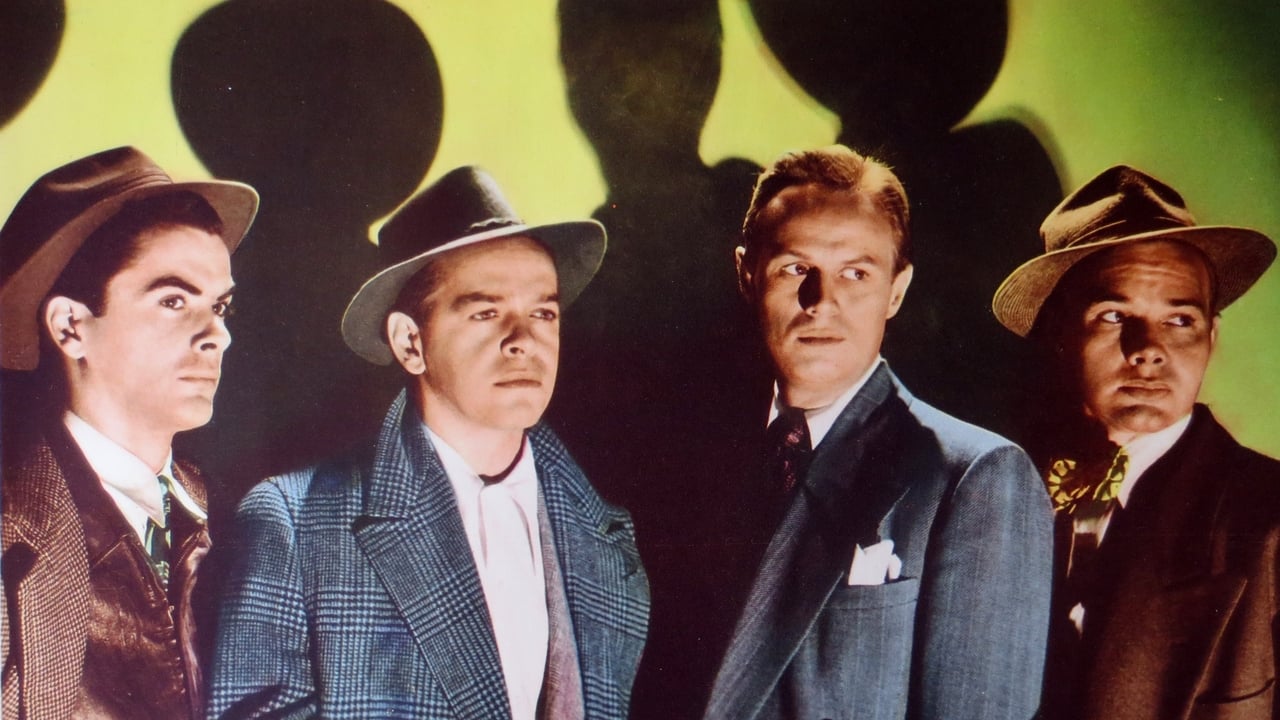
Street With No Name arrives two years after The House on 92nd Street established Fox's semidocumentary procedural template, and it both exploits and quietly strains against that format. William Keighley maintains the surface mechanics of the FBI crime film – location shooting, voice-of-authority narration, a fidelity to institutional method – but the film's actual center of gravity is Richard Widmark's Alec Stiles, a performance of coiled, hypochondriacal menace that consistently threatens to detach from the procedural frame entirely. Widmark had announced this register the year before in Kiss of Death, and Fox was clearly aware of what they possessed: Stiles is given enough screen time and psychological specificity to function as the film's moral argument rather than merely its obstacle. Mark Stevens is adequate as Cordell, but the film concedes dramatic authority to its villain in ways the procedural format was not designed to accommodate. That tension – between institutional reassurance and genuine psychological unease – is precisely where the film earns its place in the noir canon.
– Classic Noir
Joseph MacDonald frames the gymnasium sequence in a tight, low-ceilinged space where the available light falls hard from overhead practicals, carving deep shadow beneath eye sockets and along the jaw. Stiles moves through the frame with proprietary ease while Cordell is positioned slightly off-center, never quite anchored to any stable point in the composition. The camera stays close – mid-shots that deny either man the comfort of spatial distance – and cuts are held just long enough to accumulate pressure before releasing.
The scene functions as the film's most concentrated statement of its central anxiety: the undercover identity is not a costume but a performance that must be sustained under the gaze of a man who reads people for professional survival. Stiles's interrogation is not about facts he doesn't know – it is about watching how a man responds to being watched. That the scene resolves ambiguously, with Cordell passing the test but at some unspecified cost, is the film's most honest acknowledgment that institutional procedure cannot fully account for what happens to a person inside an undercover operation.
Joseph MacDonald, working in the same documentary-inflected register he would bring to Panic in the Streets two years later, shoots Street With No Name with a calculated tension between the authenticating openness of location photography and the controlled shadow grammar of studio noir. Exterior sequences in Hitchburg – drawn from actual urban locations – are lit with a flattening realism that serves the procedural argument: the city is knowable, mappable, subject to federal method. Interior scenes reverse that logic. MacDonald pulls the light source tight and low, using practical fixtures and hard single-source setups to isolate faces and compress space. Stiles's domestic environment is lit particularly close, the frame crowded with objects that cast competing shadows, suggesting a psychology in which control is performed rather than possessed. The contrast between these two visual registers is not incidental – it encodes the film's argument that the institutional world and the criminal one operate under different epistemological conditions, and that the agent who moves between them must navigate two incompatible grammars of light.
Tubi has carried Street With No Name in a serviceable public-domain or licensed print; verify availability in your region before seeking alternative sources.
Archive.orgFreeA public-domain version is available on Archive.org; print quality varies, but the transfer is adequate for analytical viewing.
TCMSubscriptionTCM periodically broadcasts Street With No Name as part of its Fox noir programming blocks, often in the best available broadcast transfer.