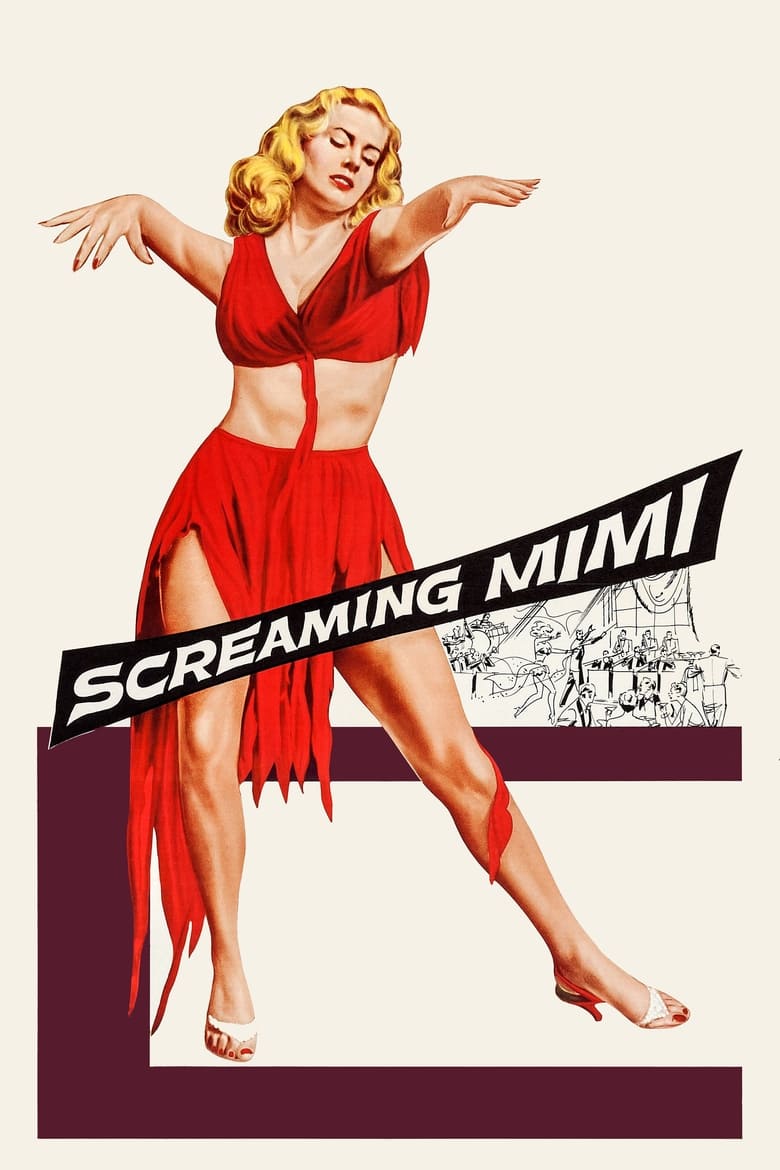
In late-1950s Los Angeles, Virginia Wilson (Anita Ekberg) survives a brutal assault by an intruder, an event that fractures her identity and leaves her in the care of Dr. Greenwood (Harry Townes), a psychiatrist whose professional interest shades into something more possessive. Reinvented as exotic dancer Yolanda Lange and installed at a nightclub owned by the sardonic Joann Masters (Gypsy Rose Lee), Virginia moves through her new life with the blankness of someone living inside another person's story.
Bill Sweeney (Philip Carey), a hard-drinking newspaper columnist, becomes obsessed with Yolanda after watching her perform, and his pursuit of the woman behind the act gradually intersects with a series of murders connected by a small, grotesque statuette – a screaming figurine that surfaces wherever violence has recently occurred. As Sweeney presses deeper into Virginia's past, the allegiances of those surrounding her – the doctor, the club owner, the staff – prove increasingly difficult to read, and the question of who is protecting her and who is controlling her resists easy resolution.
Screaming Mimi operates at the intersection of psychological thriller and procedural noir, using a woman's trauma and reconstructed identity as the mechanism through which male obsession and institutional power are examined. The film belongs to a cycle of late-1950s noirs in which the femme fatale is less a predator than a figure acted upon, and in which the ostensible hero's motivations remain ethically compromised throughout.
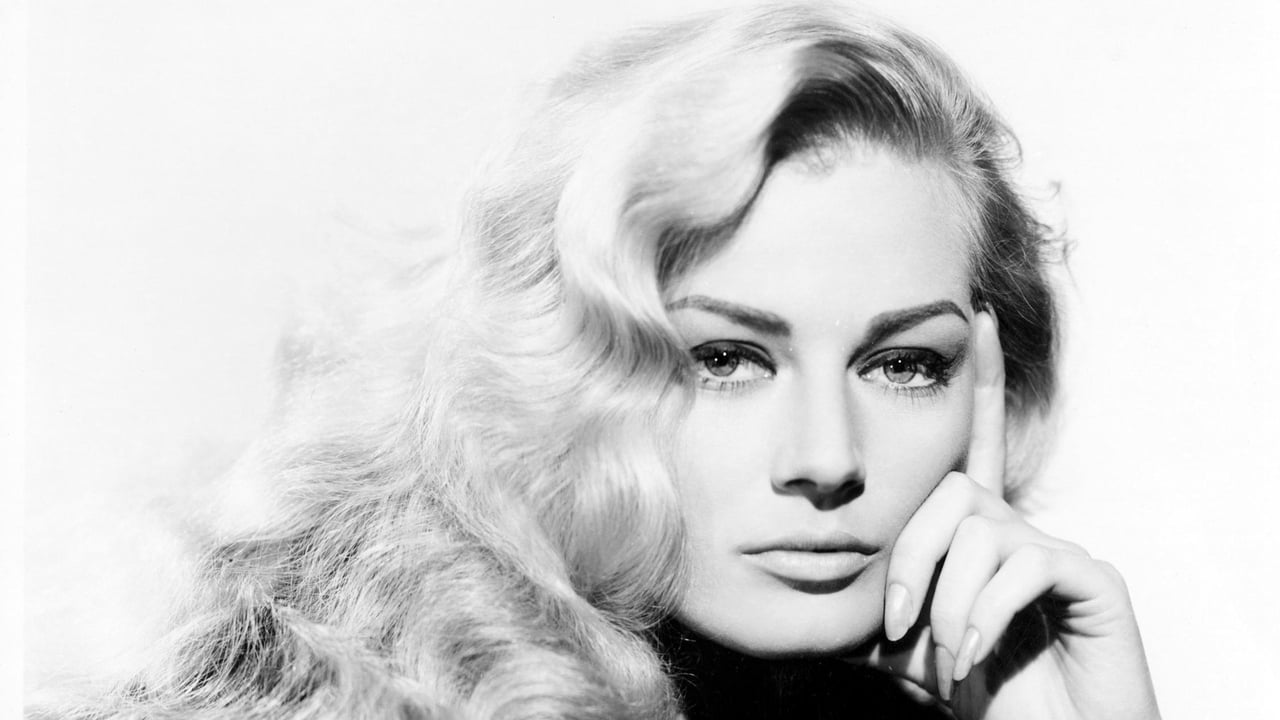
Screaming Mimi occupies a specific and underexamined corner of late noir: the point at which the genre begins absorbing the conventions of the psychological thriller and the proto-giallo without fully committing to either. Gerd Oswald, a director whose television work gave him a precise economy with confined spaces and reaction shots, keeps the film from dissolving into its own sensationalism. Anita Ekberg, typically deployed as spectacle, is here given a character whose blankness is structural rather than incidental – Virginia's dissociation is the film's subject, not its backdrop. Harry Townes delivers the more quietly unsettling performance, a man of professional standing whose authority over a damaged woman is presented with minimal editorializing. The film's source, Fredric Brown's 1949 novel, was influential enough that its central device would resurface in Italian genre cinema a decade later. As a document of its moment, Screaming Mimi registers the postwar anxiety around female vulnerability, male surveillance, and the therapeutic institution's proximity to control.
– Classic Noir
Burnett Guffey positions the camera at a low angle, tilted slightly upward so that Ekberg's figure fills the frame against a backdrop of undifferentiated darkness. The stage lighting is harsh and frontal, flattening depth while isolating the performer in a pool of white that has the quality of an interrogation lamp rather than a theatrical spot. The audience exists only as silhouette and ambient noise; the shot refuses to grant them an eyeline that would make the scene a performance. Instead, the frame presents Yolanda as an object under examination.
The scene encodes the film's central argument about visibility and concealment. Yolanda is the most publicly seen person in the narrative, and simultaneously the person whose actual self is most thoroughly hidden – from Sweeney, from the audience, and arguably from herself. The stage here is not liberation but a controlled exposure, a condition arranged by others, and Guffey's framing makes that condition legible without commentary.
Burnett Guffey, who would later photograph Bonnie and Clyde (1967), brings to Screaming Mimi a discipline that the material might not have demanded but clearly benefits from. Working largely on studio-built interiors, Guffey uses deep shadow not for atmosphere as an end in itself but as a way of partitioning space into zones of knowledge and ignorance. The nightclub sequences favor hard sources that create defined shadow lines across faces, suggesting that every character is partially concealed regardless of how openly they present themselves. In the more clinical settings – the doctor's office, the private rooms above the club – the lighting flattens slightly, draining the expressionistic contrast in favor of an institutional coldness that is, in its way, more unnerving. The camera moves are controlled and infrequent; Guffey and Oswald resist the restless handheld energy beginning to appear in crime films of the period, instead using static compositions that hold characters in frame long enough to become uncomfortable.
Screaming Mimi has circulated on Tubi in a serviceable print; free access makes it the most practical entry point for first-time viewers.
Archive.orgFreeA public domain version is available on Archive.org, though print quality varies and the transfer is unrestored.
Amazon Prime VideoRentalA rental option with a marginally cleaner transfer than the public domain copies is available; confirm current availability before seeking.