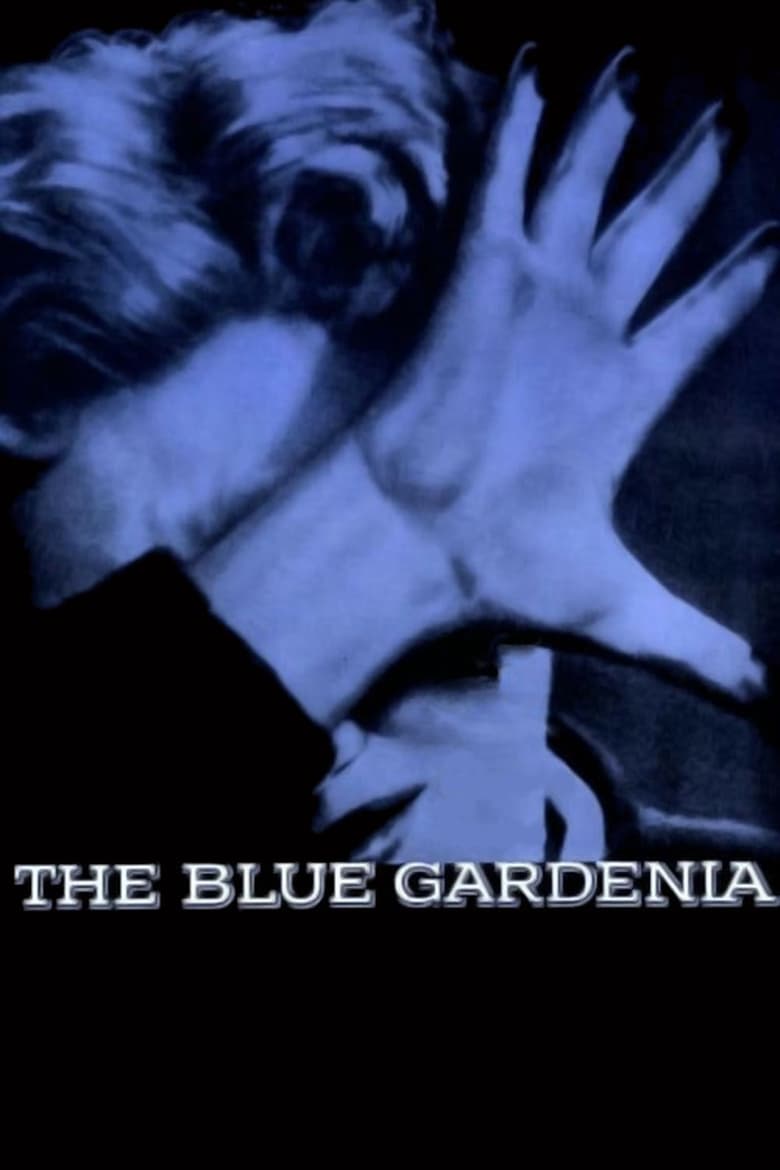
Norah Larkin, a telephone operator sharing a modest Los Angeles apartment with roommates Crystal and Sally, receives a Dear John letter from her soldier boyfriend overseas on the same evening she is stood up by a blind date. In a moment of lonely impulse she accepts a dinner invitation from Harry Prebble, a predatory commercial artist, and drinks far more than she can handle at the Blue Gardenia restaurant. She wakes the next morning in Prebble's apartment with no clear memory of the night before. Hours later, the radio reports that Prebble has been beaten to death with a fireplace poker.
With no alibi and a blackout where her memory should be, Norah lives in silent terror while the police investigation closes around her. Ambitious newspaper columnist Casey Mayo, sensing a story, launches a public appeal for the unknown woman last seen with Prebble – a maneuver that draws Norah into a cautious, complicated correspondence with him. Casey occupies an ambiguous position: he is simultaneously the man most capable of exposing her and the one figure who might believe in her innocence. The investigation implicates others, and the question of who actually killed Prebble remains genuinely open.
Blue Gardenia places a respectable working woman at the center of a murder case not through guilt but through circumstance, examining how quickly a single reckless evening can strip away the protections that social conformity provides. The film belongs to a cycle of postwar noirs concerned less with criminal enterprise than with the vulnerability of ordinary lives to sudden, irrational catastrophe – a preoccupation consistent with Fritz Lang's career-long interest in fate, institutional power, and the individual caught between them.
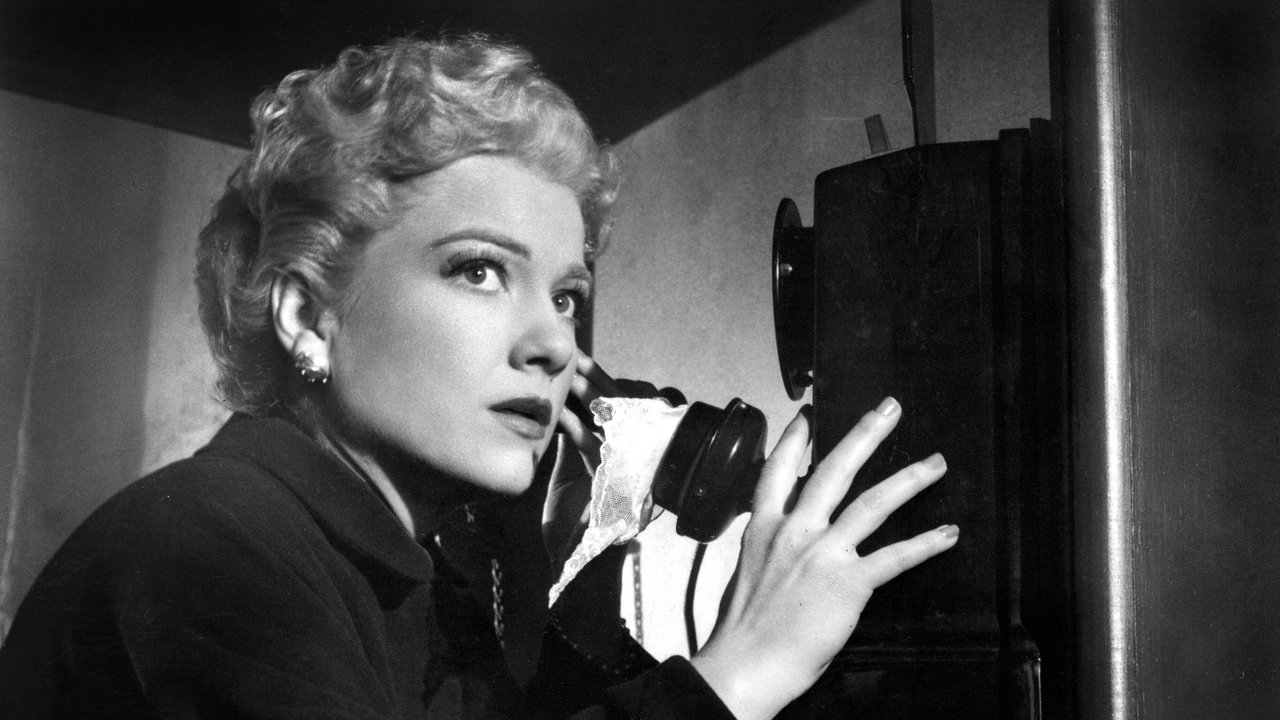
Blue Gardenia is a modest, undervalued entry in Fritz Lang's American period that rewards careful attention. The film's central concern is not crime in any procedural sense but the social exposure of a woman whose only transgression is grief and loneliness. Anne Baxter gives a controlled performance that keeps Norah's terror interior, and Raymond Burr's Prebble – barely on screen before his death – establishes menace with economy. What distinguishes the film from comparable B-noirs is Lang's refusal to let any institution function reliably: the press is predatory, the police are blunt instruments, and the romantic rescue, when it arrives, carries the faint unease of contingency rather than earned resolution. The script, by Charles Hoffman, is uneven, and the newspaper subplot occasionally slackens into formula. But the film's real argument – that a woman's reputation is always leveraged against her – belongs entirely to its era and lands with a precision that more celebrated noirs of the period do not always achieve.
– Classic Noir
Lang and cinematographer Nicholas Musuraca hold the camera at a remove as Norah wakes in Prebble's apartment, the frame organized so that she occupies one corner of a space whose dimensions she cannot yet account for. The light is flat and unforgiving – neither the warm glamour of the restaurant scene the night before nor the protective darkness of sleep, but the neutral grey of early morning that offers no cover. Objects in the foreground – a toppled glass, a displaced shoe – carry more compositional weight than Norah herself, as though the room has already begun to arrange itself as evidence.
The scene establishes the film's governing logic before a word is spoken: Norah's interiority is inaccessible to her, and the physical world has moved on without her consent. The gap between what she can see and what she can know defines her position throughout the film. Lang frames innocence not as a moral condition but as an epistemological one – you cannot prove what you cannot remember, and the camera, like the law, reads only surfaces.
Nicholas Musuraca, whose work on Cat People and Out of the Past made him one of the defining visual intelligences of RKO noir, brings a disciplined restraint to Blue Gardenia that suits Lang's tonal register. Working within the constraints of a low-budget production, Musuraca favors high-contrast interiors where pools of directed light isolate figures against walls or furniture that recede into shadow, creating environments that feel simultaneously domestic and threatening. The Blue Gardenia restaurant sequence uses soft, warm practical sources to lull the viewer into the same false security that the alcohol provides Norah, before subsequent scenes shift to harder, more directional lighting that strips that comfort away. Musuraca avoids expressionist excess – there are no Dutch angles or grotesque distortions – because the film's argument requires that its world look recognizable. The danger in Blue Gardenia is quotidian, and the cinematography confirms it: ordinary rooms, ordinary light, ordinary spaces that offer no protection.
Tubi has carried Blue Gardenia as a free, ad-supported stream and is among the most reliably accessible options for this title in the United States.
Archive.orgFreeA public domain print is available on Archive.org; transfer quality varies, but the upload is stable and requires no account.
Amazon Prime VideoRentalAvailable as a paid rental on Amazon, typically offering a cleaner transfer than public domain sources – worth the cost for a careful first viewing.