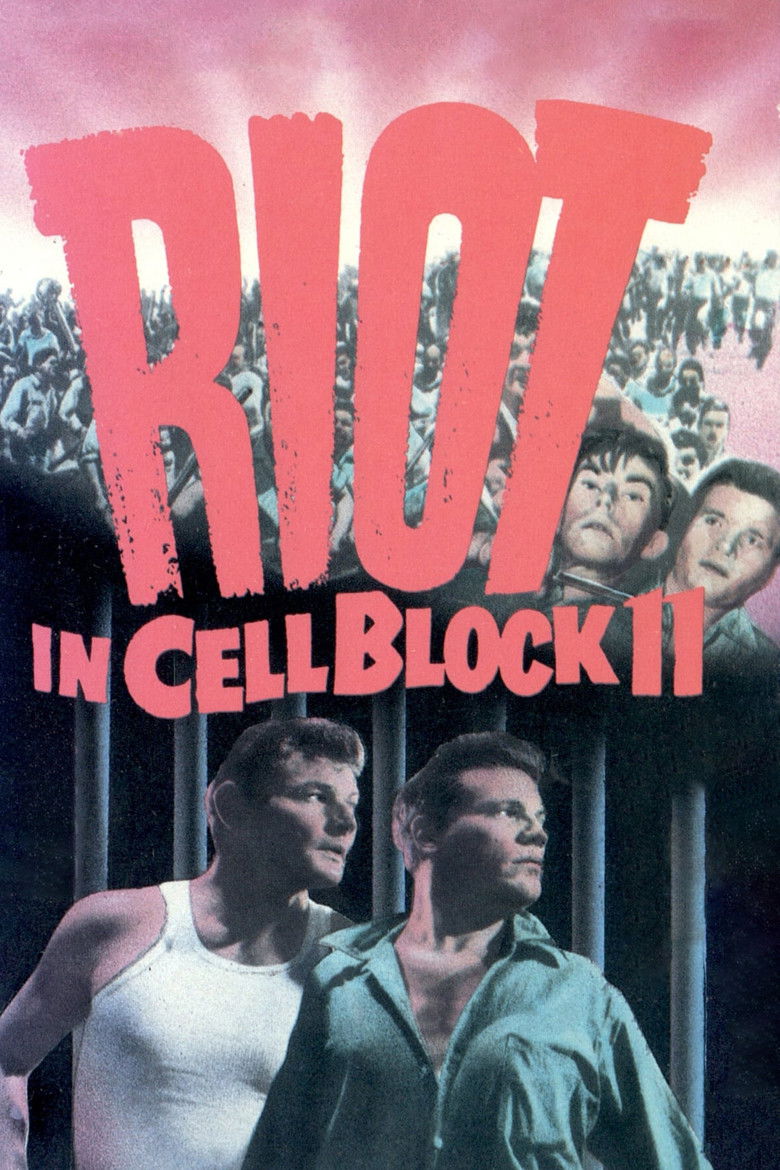
In a severely overcrowded state penitentiary, James V. Dunn – a calculating, politically minded convict – leads a coordinated uprising that seizes control of Cellblock 11. Dunn is no simple agitator; he is a man who has studied the system's failures with the patience of someone who has nothing left to lose. Warden Reynolds, a pragmatic administrator caught between institutional loyalty and a genuine recognition that the prison is broken, finds himself negotiating with the very men the state has warehoused and forgotten.
As the standoff hardens, Commissioner Haskell arrives representing a bureaucratic authority more concerned with public optics than reform, and the media presence – embodied by a watchful reporter – transforms the crisis into spectacle. Inside the walls, allegiances fracture. Crazy Mike Carne, volatile and unpredictable, represents the element Dunn cannot fully control, threatening to collapse the fragile leverage the prisoners have built. The Colonel, a steadier voice among the inmates, anchors the uneasy coalition between Dunn's calculated demands and the institution's survival instinct.
Riot in Cellblock 11 belongs to a strand of noir defined not by femmes fatales or rain-slicked streets but by institutional entrapment – the prison as a compression chamber where social failure becomes visible and unavoidable. The film operates simultaneously as procedural, social document, and moral argument, pressing the viewer to weigh order against justice without offering the comfort of an easy resolution.
Produced by Walter Wanger – himself a recent parolee following a 1952 shooting conviction – and directed by Don Siegel with the economy that would define his career, Riot in Cellblock 11 arrives in 1954 as one of American cinema's more candid confrontations with penal conditions. Siegel shot at Folsom Prison with actual inmates as background, a decision that anchors every frame in a specificity that studio sets could not manufacture. The film's refusal to cast its prisoner-protagonist as either hero or martyr is its central discipline; Neville Brand's Dunn is calculating, principled in his way, and entirely capable of violence. Emile Meyer's warden is not a villain but a tired man trapped in the same structure that imprisons his charges. What the film reveals about its era is the postwar American state's inability to reconcile its rhetoric of rehabilitation with the reality of human warehousing – a contradiction that neither administration nor reform movement had solved in 1954, and that the film declines to pretend otherwise.
– Classic Noir
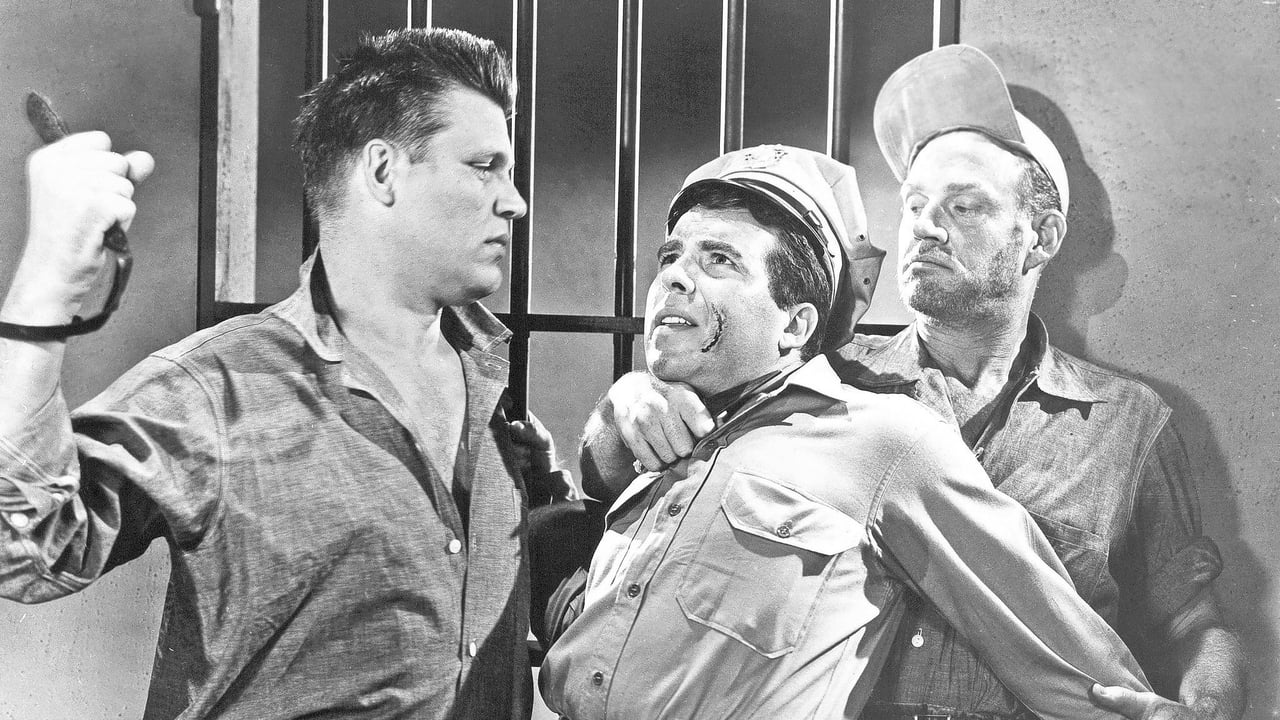
Siegel and Harlan frame the exchange between Dunn and Warden Reynolds through the actual bars of the cell tier, using the verticals of iron to bisect the image and keep both men simultaneously imprisoned – one literally, one by circumstance. The lighting is flat and institutional, the source apparently the overhead fixtures of the block, with no romantic shadows to soften the architecture of confinement. The camera stays close, holding faces in medium-close-up, allowing reaction to accumulate without editorial interference.
The composition makes the argument the screenplay is careful not to overstate: the bars divide the frame without clearly assigning guilt to either side. Dunn speaks with the measured diction of a man who has rehearsed this moment; Reynolds listens with the posture of someone who already knows the demands are not unreasonable. The scene turns not on confrontation but on recognition – two figures who understand the system's failure from opposite sides of the same structure.
Russell Harlan's cinematography on Riot in Cellblock 11 operates under severe practical constraints that become aesthetic decisions. Shooting on location at Folsom, Harlan works with available institutional light supplemented by portable sources, producing an image that carries the grain and flatness of documentary while maintaining compositional control. Wide lenses emphasize depth in the narrow corridors and exercise yards, making the confined spaces feel both claustrophobic and paradoxically exposed. Shadow work is restrained by necessity and design; this is not a chiaroscuro noir but one where overexposure and harsh frontlight serve the moral argument – nothing is obscured here, nothing romanticized. The long shots across the prison yard, with figures distributed across the frame like an inventory of human waste, are among the more politically articulate images in postwar American crime cinema. Harlan, working here between his collaborations with Hawks and later Kubrick, demonstrates that noir's visual grammar is adaptable to institutions as readily as to back alleys.
Tubi has carried this title as a free stream; verify current availability as catalogue rotation applies.
Archive.orgFreeThe film's public domain status means Archive.org hosts multiple transfers – quality varies, but the full 80-minute runtime is accessible without registration.
Amazon Prime VideoSubscription or RentalCheck current availability; public domain titles of this era cycle in and out of Prime's streaming catalogue.